

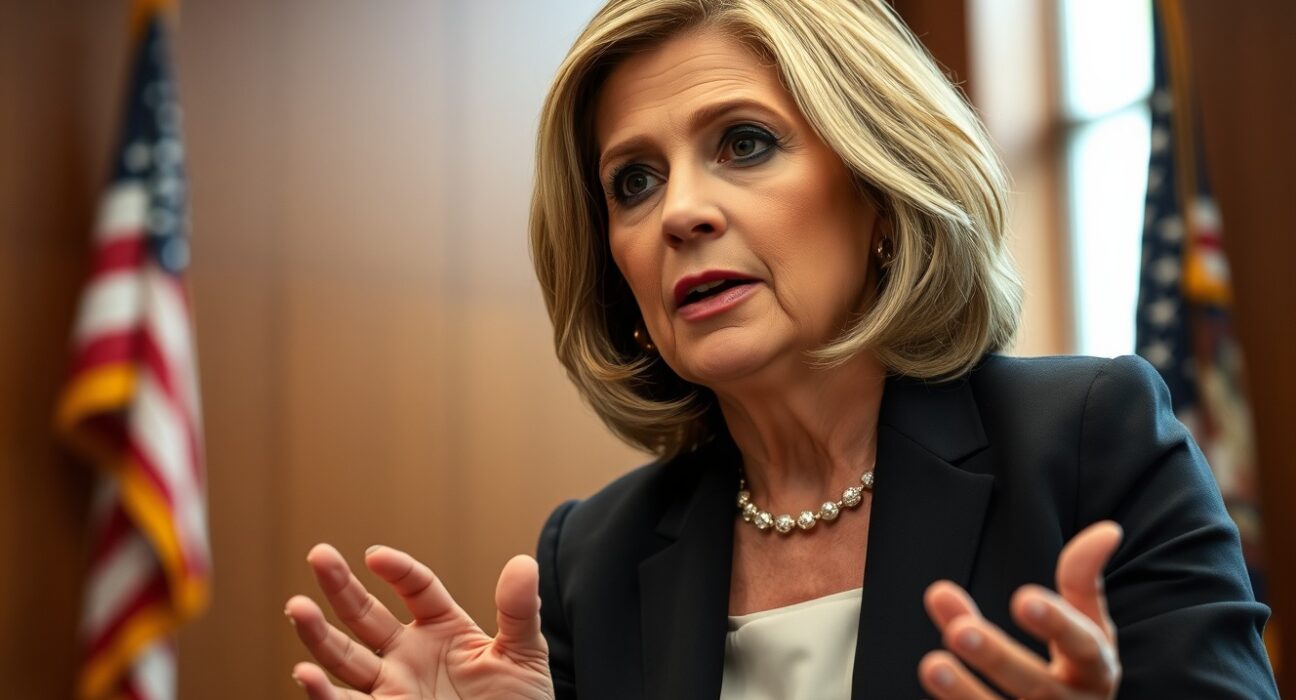
In a significant development for the cryptocurrency sector, US Senator Cynthia Lummis (R-WY) has declared that the pending market structure bill contains the strongest protections yet for decentralized finance (DeFi) developers, directly addressing and dismissing circulating claims about stringent KYC mandates as unfounded fear. Washington, D.C., March 2025.
Market Structure Bill Aims to Clarify DeFi Protections
Senator Lummis, a prominent pro-crypto voice in Congress, took to social media platform X to clarify the legislation’s intent. She specifically labeled assertions that the bill would impose Know Your Customer (KYC) requirements directly on software developers as “FUD”—an acronym for fear, uncertainty, and doubt. Consequently, she urged stakeholders not to be misled by this misinformation. The senator’s statement highlights a critical bipartisan effort to create regulatory clarity rather than impose burdensome restrictions. This legislative push responds directly to years of uncertainty within the decentralized finance ecosystem.
The Evolution of Crypto Legislation in Congress
The journey of cryptocurrency regulation through the US Senate has been complex and multi-faceted. For context, the market structure bill represents one of several major legislative efforts, including the Lummis-Gillibrand Responsible Financial Innovation Act. These proposals collectively seek to establish a comprehensive regulatory framework. Lawmakers have engaged in extensive negotiations over recent weeks. As a result, they are crafting a third amendment through bipartisan cooperation. This collaborative process aims to balance several key objectives:
- Consumer Protection: Safeguarding users from fraud and malpractice.
- Market Integrity: Ensuring stable and transparent financial operations.
- Innovation Encouragement: Fostering technological advancement within clear boundaries.
- Developer Safeguards: Providing legal certainty for those building open-source protocols.
This amendment process demonstrates a nuanced approach to a rapidly evolving technological landscape. Furthermore, it underscores a legislative shift from reactive to proactive governance.
Analyzing the Core Debate: Regulation vs. Innovation
The central tension in crypto legislation pits the need for regulatory oversight against the desire to nurture innovation. DeFi, by its nature, operates through non-custodial, automated smart contracts on public blockchains. Therefore, applying traditional financial regulations, designed for centralized intermediaries, presents unique challenges. Legal experts note that holding individual developers liable for how others use open-source code could stifle innovation significantly. Senator Lummis’s comments suggest the bill’s latest iteration seeks to address this precise concern. It aims to distinguish between active, liable entities and passive code contributors. This distinction is crucial for the future of open-source development in finance.
Potential Impacts on the DeFi Ecosystem
The passage of this bill could have profound implications for the decentralized finance landscape. Clear regulatory guidelines reduce legal uncertainty for projects based in or servicing the United States. First, established DeFi protocols may gain legitimacy, potentially attracting more institutional capital. Second, new developers might feel more secure launching projects, knowing the legal boundaries. However, the specifics of the “robust safeguards” remain key. The industry will scrutinize whether protections apply only to non-custodial protocol development or extend further. The following table contrasts potential regulatory approaches:
| Regulatory Focus | Potential Impact on Developers | Likely Industry Reaction |
|---|---|---|
| Liability on Protocol Creators | High risk, could deter development | Strong opposition, possible relocation |
| Liability on Front-End Interface Operators | Targeted risk, clarifies responsibility | Cautious acceptance, operational adjustments |
| Safe Harbor for Open-Source Code | Low risk, encourages innovation | Widespread support, increased development activity |
Ultimately, the bill’s final language will determine its real-world effect. Senator Lummis emphasizes that passing the legislation is essential to locking in these protective measures.
The Road Ahead for Crypto Regulation
The market structure bill’s progression signals a maturing political dialogue around digital assets. Bipartisan support, as mentioned by Senator Lummis, is critical for any chance of passage in a closely divided Congress. The amendment process itself reflects a learning curve among legislators. They are gradually understanding the technical nuances of blockchain technology. Observers note that successful regulation must achieve several goals simultaneously. It must protect consumers without crushing a nascent industry. It must also provide clear rules without being so rigid that they become instantly obsolete. The coming weeks will be pivotal as draft language circulates and stakeholders provide feedback. The outcome will set a precedent for how the United States governs the next generation of financial technology.
Conclusion
Senator Cynthia Lummis’s clarification regarding the market structure bill marks a pivotal moment for decentralized finance regulation. Her assertion that the bill offers the strongest-ever protections for DeFi developers aims to dispel significant industry anxiety. The ongoing bipartisan amendment process seeks to craft a balanced framework that safeguards innovation while addressing legitimate regulatory concerns. The success of this market structure bill could establish a foundational model for integrating decentralized technologies into the global financial system, making its progression and final form critically important for the entire crypto ecosystem.
FAQs
Q1: What is the main goal of the market structure bill mentioned by Senator Lummis?
The primary goal is to establish a clear regulatory framework for digital asset markets. It specifically aims to provide robust legal protections for decentralized finance (DeFi) developers while addressing concerns about market integrity and consumer protection.
Q2: Did Senator Lummis say the bill requires DeFi developers to implement KYC?
No. Senator Lummis explicitly called claims that the bill imposes Know Your Customer (KYC) requirements on DeFi developers “FUD” (fear, uncertainty, and doubt). She stated the bill is moving toward including strong safeguards for developers.
Q3: What is the current status of this cryptocurrency legislation?
According to the senator, the bill is pending in the U.S. Senate. Lawmakers are currently working on a third amendment through bipartisan cooperation to refine its provisions before a potential vote.
Q4: Why are protections for DeFi developers considered important?
Protections are crucial because DeFi is built on open-source, non-custodial software. Holding individual developers liable for anonymous users’ actions on a global network could severely stifle innovation and drive development activity outside the United States.
Q5: How does this bill relate to other crypto legislation like the Lummis-Gillibrand Act?
The market structure bill is a separate but related piece of legislation. It focuses more specifically on market operations and participant definitions. It works in tandem with broader proposals like the Lummis-Gillibrand Act to create a comprehensive regulatory landscape for digital assets.
Disclaimer: The information provided is not trading advice, Bitcoinworld.co.in holds no liability for any investments made based on the information provided on this page. We strongly recommend independent research and/or consultation with a qualified professional before making any investment decisions.
