

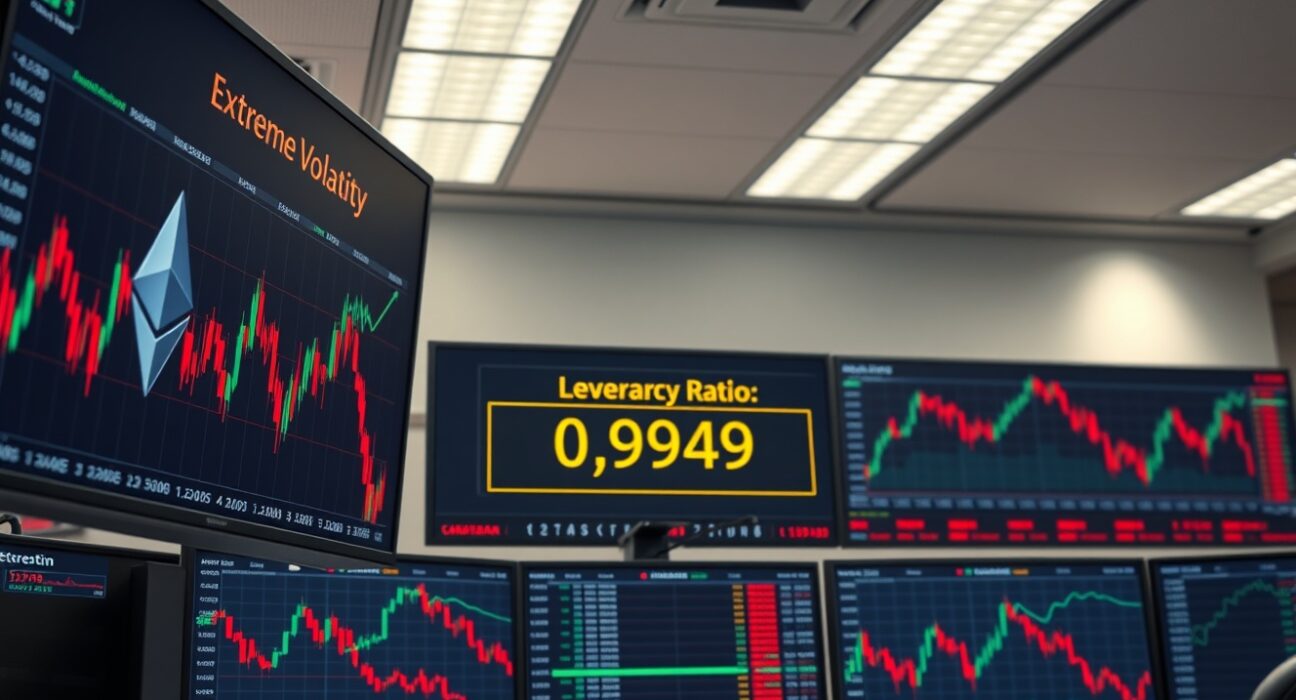
Ethereum futures leverage has reached unprecedented levels, triggering warnings from market analysts about potential volatility spikes in the cryptocurrency derivatives market. According to data analyzed by CryptoQuant contributor Carmelo Alemán, the Estimated Leverage Ratio for Ethereum futures climbed to a record 0.9949 over the weekend, indicating futures open interest now approaches 99% of total ETH supply held on exchanges. This development, recorded in global cryptocurrency markets on March 15, 2025, represents a significant milestone in Ethereum’s derivatives trading history and raises important questions about market stability.
Understanding Ethereum Futures Leverage Metrics
The Estimated Leverage Ratio serves as a crucial indicator for measuring risk exposure in cryptocurrency futures markets. This metric calculates the ratio between the total size of futures positions and the amount of Ethereum held on exchanges as reserves. When this ratio approaches 1.0, it signals that futures market activity has expanded to levels nearly equivalent to available exchange-held ETH. Market analysts monitor this ratio closely because it provides insight into how much leverage traders are employing relative to actual available assets.
Historically, extreme leverage ratios have preceded significant market corrections across various asset classes. In traditional finance, similar patterns emerged during the 2008 financial crisis when derivative exposure exceeded underlying asset values. The cryptocurrency market, while structurally different, follows comparable principles of leverage and risk management. The current Ethereum futures leverage situation represents the highest reading since comprehensive tracking began in 2018, surpassing previous peaks observed during the 2021 bull market and subsequent corrections.
Market Structure Implications
Carmelo Alemán’s analysis reveals several critical implications of the current leverage situation. First, the market structure becomes increasingly fragile as leverage ratios reach extreme levels. Second, relatively small price movements can trigger disproportionately large liquidations. Third, the concentration of leveraged positions creates systemic risk within the Ethereum ecosystem. These factors combine to create conditions where normal market fluctuations can escalate into cascading events.
Historical Context and Comparative Analysis
To understand the significance of the current Ethereum futures leverage reading, we must examine historical patterns. The following table illustrates key leverage ratio milestones in Ethereum’s derivatives market development:
| Date | Estimated Leverage Ratio | Market Context |
|---|---|---|
| December 2020 | 0.42 | Pre-bull market accumulation |
| May 2021 | 0.78 | Market peak before correction |
| November 2022 | 0.65 | Post-FTX collapse recovery |
| January 2024 | 0.83 | ETF approval speculation period |
| March 2025 | 0.9949 | Current record high |
The progression shows a clear trend toward increasing leverage utilization in Ethereum futures markets. Several factors contribute to this development:
- Institutional participation has grown significantly since 2023
- Derivatives product innovation has expanded available leverage options
- Market maturity has increased trader sophistication and risk appetite
- Regulatory clarity in certain jurisdictions has enabled more complex trading strategies
Mechanics of Liquidation Cascades
When leverage reaches extreme levels, the market becomes vulnerable to liquidation cascades. These events occur when price movements trigger automatic position closures, which then create additional selling pressure, leading to further liquidations. The process follows a predictable pattern:
- Initial price movement triggers margin calls
- Forced liquidations create additional selling pressure
- Price decline accelerates as more positions reach liquidation thresholds
- Market liquidity temporarily evaporates during peak volatility
- Recovery begins once excess leverage has been cleared from the system
The current Ethereum futures leverage situation increases the probability of such cascades because a higher percentage of positions operate with minimal margin buffers. Even modest price fluctuations of 5-10% could trigger significant liquidation events given the extreme leverage ratios observed.
Exchange Infrastructure Considerations
Major cryptocurrency exchanges have implemented various risk management measures to address high-leverage environments. These include:
- Dynamic margin requirements that adjust based on market conditions
- Position size limits for highly leveraged trades
- Insurance funds to cover liquidation gaps during extreme volatility
- Circuit breakers that temporarily halt trading during rapid price movements
Despite these safeguards, extreme leverage conditions test exchange infrastructure and risk management systems. Historical incidents, such as the March 2020 liquidity crisis, demonstrated how quickly leveraged positions can overwhelm normal market mechanisms.
Broader Market Implications
The record Ethereum futures leverage reading carries implications beyond derivatives markets. Several interconnected factors merit consideration:
Spot Market Correlation: High futures leverage typically increases correlation between spot and derivatives markets. Price movements in one market quickly transmit to the other, potentially amplifying volatility across the entire Ethereum ecosystem.
DeFi Protocol Exposure: Many decentralized finance protocols interact with both spot and derivatives markets. Extreme leverage conditions can create unexpected interactions and vulnerabilities within DeFi systems that rely on price oracles and collateral mechanisms.
Institutional Risk Management: Professional traders and institutional investors monitor leverage metrics as part of comprehensive risk assessment frameworks. Current readings may prompt position adjustments, hedging activities, or reduced exposure among sophisticated market participants.
Regulatory Attention: Financial regulators increasingly focus on cryptocurrency derivatives markets. Extreme leverage readings may attract additional regulatory scrutiny or prompt discussions about position limits and risk disclosure requirements.
Expert Perspectives on Market Stability
Market analysts beyond Carmelo Alemán have commented on the implications of current leverage levels. Dr. Sarah Chen, a financial risk specialist at Cambridge Digital Assets Programme, notes: “Extreme leverage ratios in cryptocurrency markets mirror patterns observed in traditional finance before volatility events. The key difference lies in market structure and settlement mechanisms, but the fundamental principles of leverage and risk remain consistent.”
Meanwhile, derivatives trader Michael Rodriguez observes: “Professional traders recognize that extreme leverage creates both risk and opportunity. The current Ethereum futures situation requires careful position sizing, enhanced risk management, and contingency planning for potential volatility spikes.”
These expert perspectives highlight the nuanced understanding required to navigate high-leverage environments. While risks increase significantly, experienced market participants develop strategies to manage exposure and potentially benefit from volatility.
Monitoring Tools and Indicators
Traders and analysts use several complementary metrics alongside the Estimated Leverage Ratio:
- Funding rates indicate whether longs or shorts pay premiums
- Open interest shows total outstanding contracts
- Liquidation heatmaps identify price levels with concentrated risk
- Volume ratios compare derivatives to spot trading activity
These indicators provide a more comprehensive picture of market conditions when analyzed together. The current situation shows not only extreme leverage but also elevated open interest and concentrated liquidation levels at specific price points.
Conclusion
The record Ethereum futures leverage reading represents a significant development in cryptocurrency market dynamics. While high leverage enables greater capital efficiency and trading opportunities, it also increases systemic risk and potential volatility. Market participants should monitor leverage metrics closely, implement robust risk management strategies, and prepare for potential volatility events. The current situation underscores the importance of understanding derivatives market mechanics and their interaction with broader cryptocurrency ecosystems. As Ethereum continues to evolve, derivatives market development will remain a critical area for analysis, risk assessment, and regulatory consideration.
FAQs
Q1: What does an Estimated Leverage Ratio of 0.9949 mean for Ethereum?
This ratio indicates that futures open interest has expanded to approximately 99% of the total ETH supply held on exchanges, suggesting extremely high leverage utilization in derivatives markets relative to available exchange reserves.
Q2: How does high futures leverage increase market volatility?
High leverage creates fragile market structures where small price movements can trigger large-scale liquidations. These forced position closures create additional selling pressure, potentially initiating cascading effects that amplify volatility.
Q3: What historical precedents exist for such leverage levels?
While this represents a record for Ethereum, similar extreme leverage conditions have occurred in traditional financial markets, typically preceding periods of heightened volatility and market corrections.
Q4: How do exchanges manage risk during high-leverage periods?
Exchanges implement dynamic margin requirements, position limits, insurance funds, and circuit breakers to manage risk. However, extreme conditions test these systems and may reveal limitations during rapid market movements.
Q5: What should traders consider in high-leverage environments?
Traders should focus on position sizing, risk management, contingency planning, and monitoring complementary indicators like funding rates and liquidation heatmaps to navigate volatile conditions effectively.
Disclaimer: The information provided is not trading advice, Bitcoinworld.co.in holds no liability for any investments made based on the information provided on this page. We strongly recommend independent research and/or consultation with a qualified professional before making any investment decisions.
