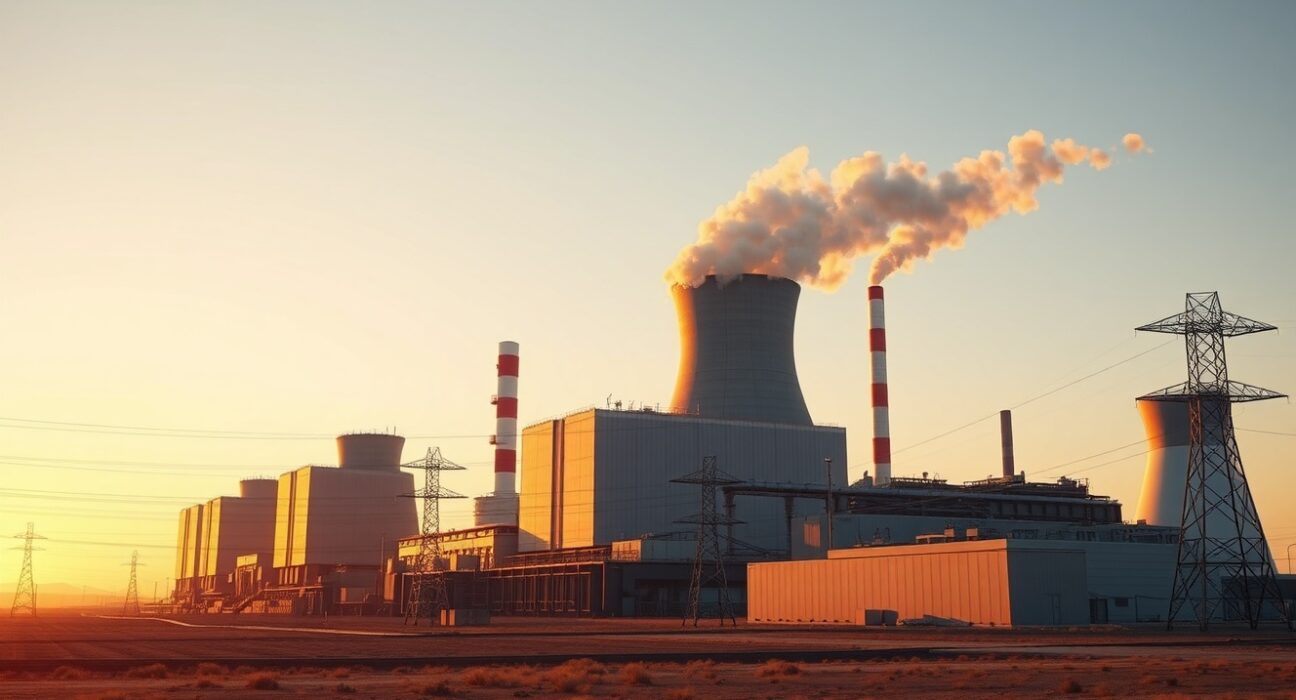
In an unprecedented scramble for computing power, the world’s largest technology companies are now racing to secure a finite resource: natural gas. The explosive growth of artificial intelligence has created a voracious appetite for electricity, leading Microsoft, Google, and Meta to announce massive investments in natural gas-fired power generation specifically for their data centers. This strategic pivot toward fossil fuels marks a significant moment in the tech industry’s relationship with energy infrastructure and raises critical questions about sustainability, market stability, and long-term planning.
The AI Power Crisis Driving Natural Gas Investments
Artificial intelligence models, particularly large language models and generative AI systems, require staggering amounts of computational power. Training these models consumes exponentially more electricity than traditional cloud computing. Consequently, data center operators face a fundamental challenge: securing reliable, baseload power at scale. Renewable energy sources like wind and solar, while growing rapidly, often face intermittency issues that make them less suitable for the constant, high-demand operations of AI data centers.
This technological reality has triggered what industry analysts describe as a “mad dash” for natural gas infrastructure. Natural gas power plants offer several advantages for tech companies. They provide dispatchable, 24/7 power generation. They can be built relatively quickly compared to nuclear facilities. Furthermore, they represent a known technology with established supply chains—at least until recently.
Major Tech Players Forge Energy Partnerships
The scale of recent announcements reveals the magnitude of this shift. On April 30, 2025, Microsoft confirmed a partnership with energy giants Chevron and Engine No. 1 to develop a natural gas power plant in West Texas. The project could eventually scale to produce 5 gigawatts of electricity—enough to power approximately 3.75 million homes. Simultaneously, Google disclosed its collaboration with Crusoe Energy Systems on a 933-megawatt natural gas plant in North Texas.
Meta’s strategy involves significant expansion at its Hyperion data center complex in Louisiana. The company recently announced plans to add seven natural gas power plants to the site, bringing its total capacity to 7.46 gigawatts. To put this in perspective, that output exceeds the entire electricity consumption of South Dakota. These investments are concentrated in the southern United States, particularly Texas and Louisiana, regions sitting atop some of the world’s largest natural gas deposits.
The Supply Chain Bottleneck: A Six-Year Wait for Turbines
The sudden surge in demand has created severe supply chain constraints. According to analysis from Wood Mackenzie, prices for gas turbines—which constitute 20% to 30% of a power plant’s total cost—have skyrocketed. Prices are projected to be 195% higher by the end of 2025 compared to 2019 levels. More critically, lead times have stretched to unprecedented lengths.
“Companies cannot place new orders for large gas turbines until 2028,” a Wood Mackenzie analyst noted. “The delivery timeline currently stands at six years from order to installation.” This bottleneck forces tech companies to make billion-dollar bets today on infrastructure that won’t be operational for most of the decade. It represents a massive gamble that AI’s power demands will continue their exponential growth trajectory.
Behind-the-Meter Operations and Market Implications
A key feature of these new projects is their “behind-the-meter” configuration. Instead of drawing power from the public electrical grid, these plants will connect directly to the companies’ own data centers. This approach allows tech firms to claim they are bringing new power generation online without straining existing grid infrastructure. However, energy economists point to a significant caveat.
“They are simply shifting their demand from the electrical grid to the natural gas pipeline network,” explained Dr. Elena Rodriguez, an energy markets professor at Stanford University. “Natural gas generates about 40% of U.S. electricity. Large, concentrated demand from tech data centers could still influence regional gas prices, which in turn affect electricity prices for everyone.”
The contracts between tech companies and energy suppliers remain confidential. The degree of price insulation these companies have secured is unknown. If their contracts are not firmly priced, they remain exposed to the volatility of the global natural gas market, which can be affected by geopolitical events, extreme weather, and production fluctuations.
Geological Bounty Meets Production Reality
The United States possesses enormous natural gas reserves. The U.S. Geological Survey estimates that the Wolfcamp Shale in the Permian Basin alone contains enough technically recoverable gas to supply the entire country for nearly ten months. This abundance has historically provided price stability and energy security. However, recent production trends introduce complexity.
Growth in the three major U.S. shale gas regions—the Appalachia, Permian, and Haynesville basins—has slowed considerably. These regions account for three-quarters of the nation’s shale gas output. While reserves are vast, the rate at which they can be extracted economically is not infinite. The tech industry’s new demand represents a substantial incremental load on this system.
Other industrial sectors are watching closely. Industries like petrochemical manufacturing, fertilizer production, and heavy manufacturing remain heavily dependent on natural gas as both a fuel and a feedstock. Unlike data centers, these industries cannot easily switch to renewable alternatives. A competition for resources could emerge, pitting digital infrastructure against foundational physical industries.
The Weather Wild Card and Ethical Questions
Extreme weather events present another layer of risk. The winter storm of 2021 in Texas demonstrated how cold snaps can freeze wellheads and cripple gas supply, leading to blackouts and price spikes. In a supply-constrained scenario, difficult prioritization decisions could arise. Should available gas flow to data centers running AI models or to residential heating systems?
This scenario highlights the physical constraints of the digital economy. The AI revolution, often perceived as purely virtual, is fundamentally tethered to vast physical infrastructure—semiconductor fabs, fiber optic cables, and now, massive power generation facilities. The industry’s current trajectory represents a substantial bet on the continued availability and affordability of a finite fossil resource.
Conclusion
The race to build natural gas plants for AI data centers underscores a pivotal moment in technological and energy history. Companies like Microsoft, Google, and Meta are making long-term, capital-intensive bets to secure the power required for the next generation of artificial intelligence. While these investments may provide short-term solutions for powering AI growth, they introduce new dependencies on fossil fuel markets, create potential conflicts with other energy consumers, and present significant logistical and ethical challenges. The industry’s fear of missing out on AI dominance is now physically manifesting in the landscape of West Texas and beyond, reminding us that even the most advanced digital technologies remain rooted in the material world of turbines, pipelines, and gigawatts.
FAQs
Q1: Why are tech companies building natural gas plants instead of using more renewable energy?
AI data centers require constant, reliable “baseload” power 24 hours a day. While tech companies are major investors in renewables, wind and solar power are intermittent. Natural gas plants can generate power on demand, making them a practical choice for meeting the massive, unwavering electricity demands of AI training and inference workloads.
Q2: What does “behind-the-meter” mean in this context?
A behind-the-meter power plant is directly connected to a specific facility—in this case, a data center—rather than feeding electricity into the public grid. This allows the tech company to be its own power provider, potentially avoiding grid congestion charges and increasing reliability. However, it still consumes fuel from the public natural gas pipeline network.
Q3: How much power do these new natural gas plants produce?
The announced projects are enormous. Microsoft’s Texas project could reach 5 gigawatts (GW). Meta’s Louisiana expansion will bring its site to 7.46 GW. For comparison, a single gigawatt can power roughly 750,000 average U.S. homes. These are utility-scale power generation facilities rivaling those built by traditional energy companies.
Q4: Are there supply chain issues affecting these projects?
Yes, a major bottleneck exists. The specialized turbines required for large natural gas power plants are in short supply. Lead times have stretched to six years, and new orders cannot be placed until 2028. This forces companies to plan far in advance and bet heavily on continued AI growth.
Q5: Could this push for natural gas raise energy prices for consumers?
Economists suggest it’s possible. Natural gas fuels about 40% of U.S. electricity generation. If tech companies secure large, long-term contracts or consume significant volumes, it could reduce supply available for other users or electricity generation, potentially applying upward pressure on market prices, especially during periods of high demand or supply constraint.
Disclaimer: The information provided is not trading advice, Bitcoinworld.co.in holds no liability for any investments made based on the information provided on this page. We strongly recommend independent research and/or consultation with a qualified professional before making any investment decisions.