

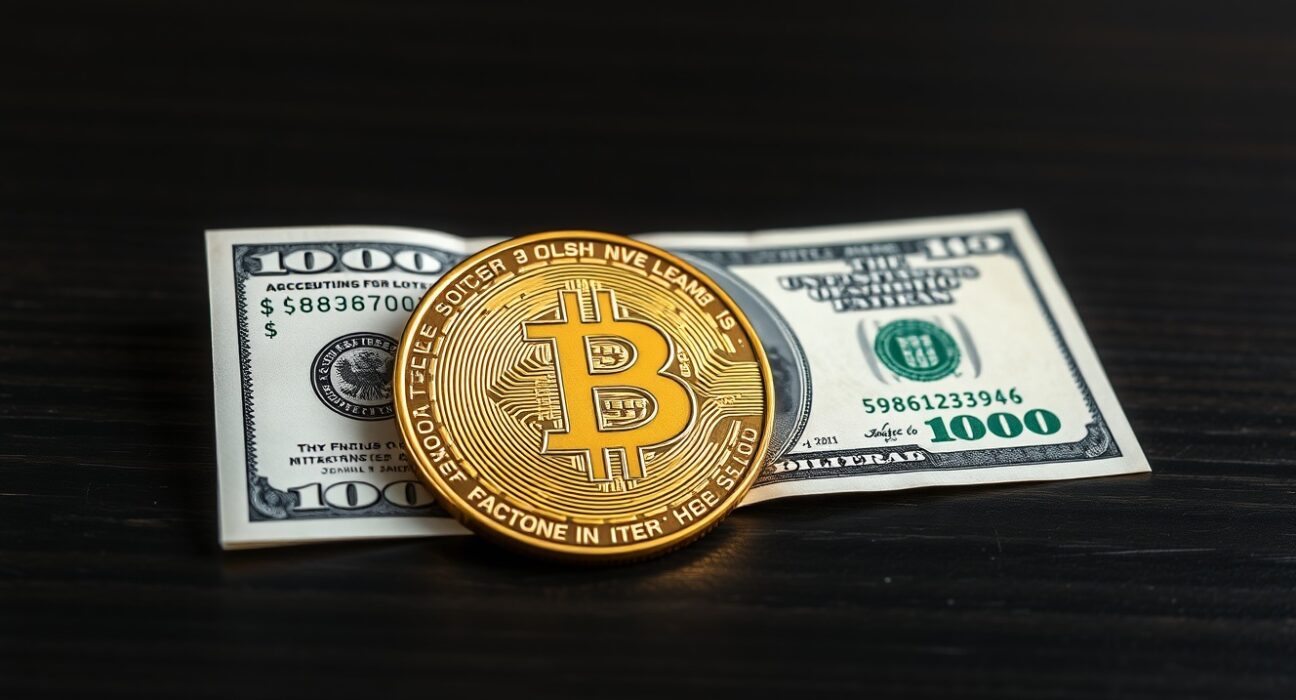
WASHINGTON, D.C., March 2025 – Bitcoin and the United States dollar maintain a de facto symbiotic relationship that generates mutual demand, according to new analysis from the Bitcoin Policy Institute. Contrary to conventional perceptions of cryptocurrency as a dollar competitor, research indicates Bitcoin’s primary trading pairs actually reinforce the global position of the U.S. currency.
Bitcoin and US Dollar Relationship Analysis
The Bitcoin Policy Institute (BPI) recently presented compelling evidence about the interconnected nature of Bitcoin and the U.S. dollar. Sam Lyman, the institute’s director of research, explained this relationship to Cointelegraph. He emphasized that BTC/USD and BTC/USDT trading pairs dominate cryptocurrency markets. Consequently, Bitcoin transactions frequently require dollar exposure. This dynamic creates substantial demand for U.S. currency within digital asset ecosystems.
Furthermore, Lyman compared this relationship to historical monetary systems. Specifically, he referenced the petrodollar arrangement established during the 1970s. Under that system, oil transactions priced in dollars bolstered global demand for U.S. currency. Similarly, Bitcoin trading predominantly against dollar-pegged assets generates comparable effects. Therefore, cryptocurrency markets may unintentionally strengthen dollar hegemony rather than undermine it.
Trading Dynamics and Market Structure
Cryptocurrency exchanges consistently report trading volume statistics. These reports reveal overwhelming dominance by dollar-denominated pairs. For instance, BTC/USD and BTC/USDT typically account for approximately 70% of Bitcoin’s global trading volume. This concentration creates structural dollar demand within cryptocurrency markets. Additionally, stablecoins like USDT maintain explicit dollar pegs through reserve mechanisms.
Market analysts observe several important implications from this structure. First, dollar liquidity facilitates Bitcoin price discovery. Second, institutional investors prefer regulated dollar gateways. Third, global traders use dollar pairs as reference prices. Consequently, the dollar serves as cryptocurrency’s primary valuation benchmark. This role mirrors its function in traditional commodity markets.
Expert Perspectives on Monetary Complementarity
Sam Lyman’s analysis challenges common cryptocurrency narratives. Many proponents historically positioned Bitcoin as a dollar alternative. However, trading patterns suggest complementary functions instead. Lyman explained this apparent contradiction thoroughly. He noted that Bitcoin provides censorship-resistant settlement layers. Meanwhile, the dollar supplies liquid trading denominators. Together, they create hybrid financial infrastructure.
Academic researchers have documented similar observations. A 2024 International Monetary Fund working paper examined cryptocurrency-dollar correlations. The study found significant co-movement during market stress periods. Moreover, dollar strength frequently influences Bitcoin valuation metrics. These findings support the symbiotic relationship hypothesis presented by BPI researchers.
Global Regulatory Responses and Market Adaptations
China’s comprehensive cryptocurrency ban provides instructive context. According to Lyman, Chinese authorities perceive digital assets as threats to capital controls. Specifically, stablecoins enable cross-border value transfer outside traditional banking channels. Therefore, China implemented strict prohibitions against cryptocurrency trading and mining. Despite these restrictions, evidence suggests continued Chinese participation in Bitcoin networks.
Recent data from mining pool distributions reveals surprising persistence. Mining pools with Chinese origins still command significant market share. Cambridge Centre for Alternative Finance estimates indicate approximately 36% of global Bitcoin hashrate originates from China-connected operations. This persistence demonstrates cryptocurrency’s resilience against regulatory barriers. Additionally, stablecoin inflows reportedly continue through informal channels.
Historical Parallels and Future Implications
The petrodollar system offers valuable historical comparison points. During the 1970s, the United States negotiated oil pricing exclusively in dollars. This arrangement created structural global demand for U.S. currency. Similarly, Bitcoin’s dollar-denominated trading establishes comparable dynamics. However, important distinctions exist between these systems. Petrodollar arrangements involved explicit government agreements. Bitcoin’s dollar orientation emerges from organic market preferences.
Future developments could alter this relationship significantly. Central bank digital currencies (CBDCs) might introduce alternative settlement layers. Additionally, Bitcoin adoption as legal tender in certain nations may reduce dollar reliance. Nevertheless, current market structures strongly favor continued symbiosis. The following table summarizes key relationship aspects:
| Aspect | Petrodollar System | Bitcoin-Dollar Relationship |
|---|---|---|
| Establishment Mechanism | Government agreements | Market preference |
| Primary Function | Oil trade settlement | Crypto trading pairs |
| Dollar Demand Driver | Commodity pricing | Liquidity and valuation |
| Geographic Scope | Global energy markets | Digital asset exchanges |
Structural Considerations and Monetary Policy
Federal Reserve officials have acknowledged cryptocurrency market developments. Recent congressional testimony included questions about digital asset implications. Generally, policymakers recognize Bitcoin’s growing financial system integration. However, regulatory frameworks continue evolving cautiously. The Commodity Futures Trading Commission classifies Bitcoin as a commodity. Meanwhile, the Securities and Exchange Commission evaluates specific token characteristics.
Monetary policy transmission mechanisms may experience subtle influences. Bitcoin’s dollar trading could potentially amplify dollar liquidity effects. During quantitative easing periods, cryptocurrency markets frequently demonstrate increased activity. Conversely, tightening cycles sometimes correlate with reduced trading volumes. These patterns suggest interconnected monetary conditions.
Institutional Adoption and Market Maturation
Traditional financial institutions increasingly engage with cryptocurrency markets. Major banks now offer Bitcoin custody services and trading products. Investment firms provide cryptocurrency exposure through exchange-traded funds. These developments further cement dollar-Bitcoin connections. Institutional participation typically occurs through regulated dollar channels. Therefore, professional market entry reinforces existing trading pair dominance.
Market infrastructure continues developing rapidly. Regulated futures exchanges offer Bitcoin derivatives settled in dollars. Clearing houses provide risk management services. Payment processors enable dollar conversions. This infrastructure layer strengthens the symbiotic relationship. Each component facilitates seamless movement between traditional and digital asset systems.
Conclusion
The Bitcoin and US dollar relationship demonstrates unexpected complementarity according to Bitcoin Policy Institute analysis. Trading patterns reveal structural interdependence between the world’s dominant cryptocurrency and its primary reserve currency. Contrary to zero-sum assumptions, Bitcoin’s dollar-denominated trading generates substantial demand for U.S. currency. This dynamic resembles historical monetary arrangements like the petrodollar system. Global regulatory responses, particularly China’s cryptocurrency ban, highlight perceived threats to capital control regimes. However, market adaptations suggest persistent cross-border cryptocurrency flows. As digital asset markets mature, this Bitcoin-dollar symbiosis will likely influence monetary policy transmission and financial system evolution.
FAQs
Q1: What does ‘symbiotic relationship’ mean regarding Bitcoin and the dollar?
The term describes mutual benefit where Bitcoin trading creates dollar demand while dollar liquidity enables cryptocurrency markets. Each strengthens the other’s position within global finance.
Q2: How do BTC/USD trading pairs support the U.S. dollar?
These pairs require dollar exposure for Bitcoin transactions, generating consistent demand for U.S. currency across global cryptocurrency exchanges and reinforcing dollar liquidity.
Q3: Why did China ban cryptocurrencies according to this analysis?
Chinese authorities perceive stablecoins and cryptocurrency networks as threats to capital control systems by enabling cross-border value transfers outside regulated banking channels.
Q4: What percentage of Bitcoin mining still has Chinese connections?
Approximately 36% of global Bitcoin hashrate originates from mining pools with Chinese roots despite the country’s official cryptocurrency ban.
Q5: How does this relationship compare to the petrodollar system?
Both create structural dollar demand through specific transaction types (oil trading versus cryptocurrency exchanges), though petrodollar involved government agreements while Bitcoin-dollar relations emerged from market preferences.
Disclaimer: The information provided is not trading advice, Bitcoinworld.co.in holds no liability for any investments made based on the information provided on this page. We strongly recommend independent research and/or consultation with a qualified professional before making any investment decisions.
