

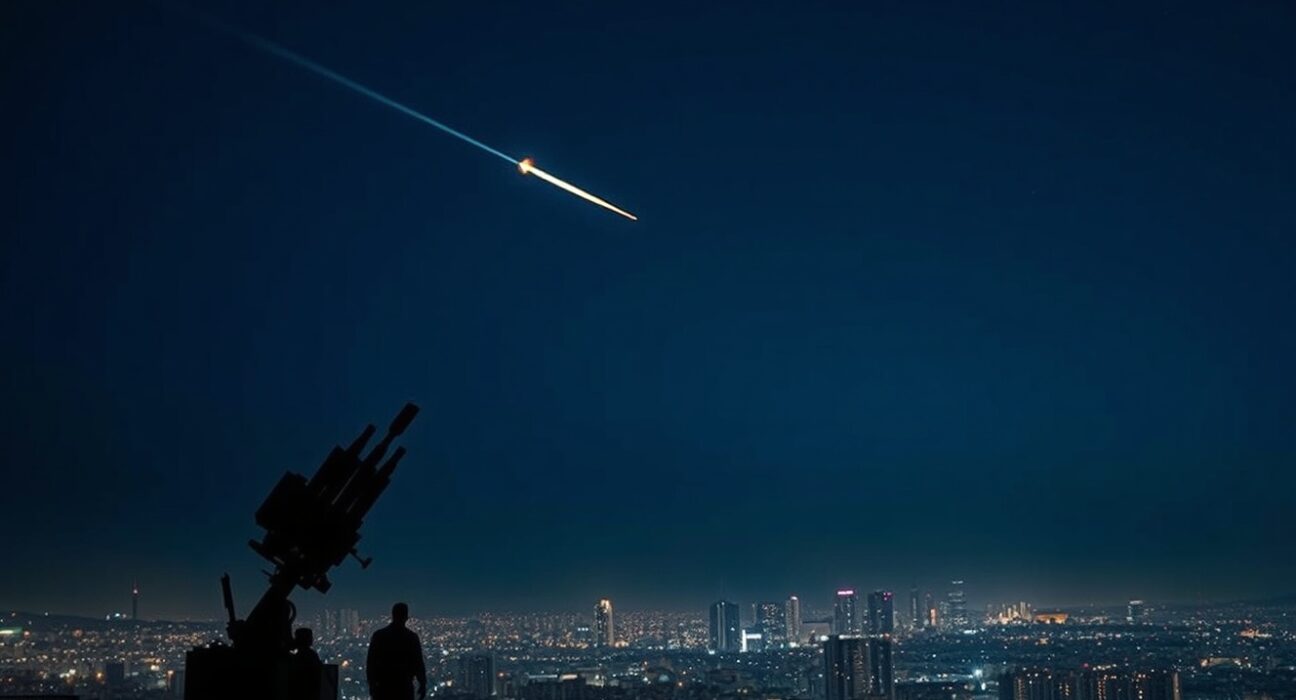
JERUSALEM, ISRAEL – The Israel Defense Forces (IDF) announced a critical development, confirming the detection of missiles launched from Iranian territory flying toward Israel. This immediate escalation triggered the full activation of Israel’s layered air defense network. Consequently, the situation marks a significant and direct military confrontation between the two regional powers, raising immediate concerns about broader regional stability.
IDF Detects Missiles from Iran: The Immediate Alert
The IDF’s statement was concise and operational. Military spokespeople reported that advanced radar systems had tracked the inbound projectiles. Subsequently, air raid sirens sounded in multiple locations across the country. Israel’s multi-tiered defense architecture, including the Iron Dome, David’s Sling, and Arrow systems, shifted to full operational status. Importantly, this event represents a potential shift from long-standing proxy conflicts to a state of direct engagement.
Military analysts quickly noted the unprecedented nature of a direct ballistic missile barrage from Iranian soil. Historically, tensions have manifested through allied militias or cyber operations. Therefore, this launch crosses a previously uncrossed threshold. The IDF’s detection capability, a product of extensive intelligence and surveillance networks with key allies, provided the crucial minutes needed for a defensive response.
Context and Escalation: A Timeline of Rising Tensions
This missile launch did not occur in a vacuum. It follows a period of intensifying hostilities between Israel and Iran, often conducted through third parties.
- April 2024: Israel reportedly strikes an Iranian diplomatic facility in Damascus, Syria, resulting in casualties among Iran’s Islamic Revolutionary Guard Corps (IRGC). Iranian leadership vows retaliation.
- Ongoing Shadow War: For years, incidents involving maritime attacks, cyber operations, and strikes on Iranian nuclear scientists have characterized the conflict.
- Nuclear Concerns: International negotiations regarding Iran’s nuclear program have stalled, adding a layer of existential threat to the military calculations of both nations.
Furthermore, regional alliances play a crucial role. Israel maintains normalization agreements with several Arab states, while Iran supports proxy forces like Hezbollah in Lebanon and the Houthis in Yemen. This launch risks pulling these actors into a wider conflagration.
Expert Analysis on Defense Capabilities
Security experts emphasize the technological sophistication of Israel’s air defenses. “The integration of radar, command-and-control, and interceptor systems is among the world’s most tested,” notes Dr. Elena Mirsky, a senior fellow at the Center for Strategic Defense Studies. “However, no system boasts a 100% interception rate, especially against a saturated or complex attack involving drones and missiles simultaneously.”
The table below outlines the primary components of Israel’s air defense matrix activated during the alert:
| System | Primary Role | Range | Developer/Partner |
|---|---|---|---|
| Iron Dome | Short-range rocket & artillery interception | Up to 70 km | Rafael Advanced Defense Systems |
| David’s Sling | Medium-to-long-range missile & aircraft interception | 40-300 km | Rafael & Raytheon (US) |
| Arrow 2 & 3 | Exo-atmospheric interception of ballistic missiles | Hundreds of km | Israel Aerospace Industries & Boeing (US) |
Potential Impacts and Global Response
The immediate impact centers on civilian safety and infrastructure within Israel. Authorities directed citizens to shelters, disrupting daily life and economic activity. In the longer term, such an attack could severely destabilize global energy markets, given the region’s pivotal role in oil and gas production. Additionally, major shipping lanes through the Strait of Hormuz and the Red Sea could face immediate disruption.
International reactions began swiftly. The United States, a key Israeli ally with military assets in the region, reaffirmed its “ironclad commitment” to Israel’s defense. European Union officials called for maximum restraint to prevent a regional war. Meanwhile, the United Nations Security Council convened an emergency session. The global community now faces the urgent task of de-escalation to prevent a conflict with widespread humanitarian and economic consequences.
Conclusion
The event where the IDF detects missiles from Iran signifies a dangerous and direct escalation in Middle Eastern geopolitics. It tests the limits of advanced air defense technology against determined state-level aggression. While Israel’s defensive systems are active and highly capable, the successful interception of the threat remains just one part of a much larger strategic equation. The international community’s next steps will be critical in determining whether this incident becomes an isolated flare-up or the opening chapter of a broader regional conflict. The priority for all actors must be immediate de-escalation to safeguard civilian lives and regional stability.
FAQs
Q1: What exactly did the IDF announce?
The Israel Defense Forces announced that their surveillance systems had detected missiles launched from Iranian territory heading toward Israel. They confirmed their air defense systems were operational and actively engaging to intercept the incoming threats.
Q2: What air defense systems does Israel use?
Israel employs a multi-layered defense system. This includes the short-range Iron Dome for rockets, the medium-range David’s Sling, and the long-range Arrow system designed to intercept ballistic missiles outside the atmosphere.
Q3: Why is this launch significant?
This launch is significant because it appears to be a direct attack from Iranian soil on Israeli territory, moving beyond the long-standing “shadow war” conducted through proxies. It represents a major escalation that risks sparking a wider regional conflict.
Q4: What has been the international response?
Key allies like the United States have reaffirmed support for Israel’s defense. Global bodies like the UN Security Council have convened emergency meetings, with widespread calls for restraint and de-escalation from world capitals to prevent a broader war.
Q5: What are the potential global impacts?
Beyond immediate security concerns, a major conflict between Iran and Israel could disrupt global energy supplies, spike oil prices, disrupt critical shipping lanes, and create a significant humanitarian crisis, affecting economies worldwide.
Disclaimer: The information provided is not trading advice, Bitcoinworld.co.in holds no liability for any investments made based on the information provided on this page. We strongly recommend independent research and/or consultation with a qualified professional before making any investment decisions.
