

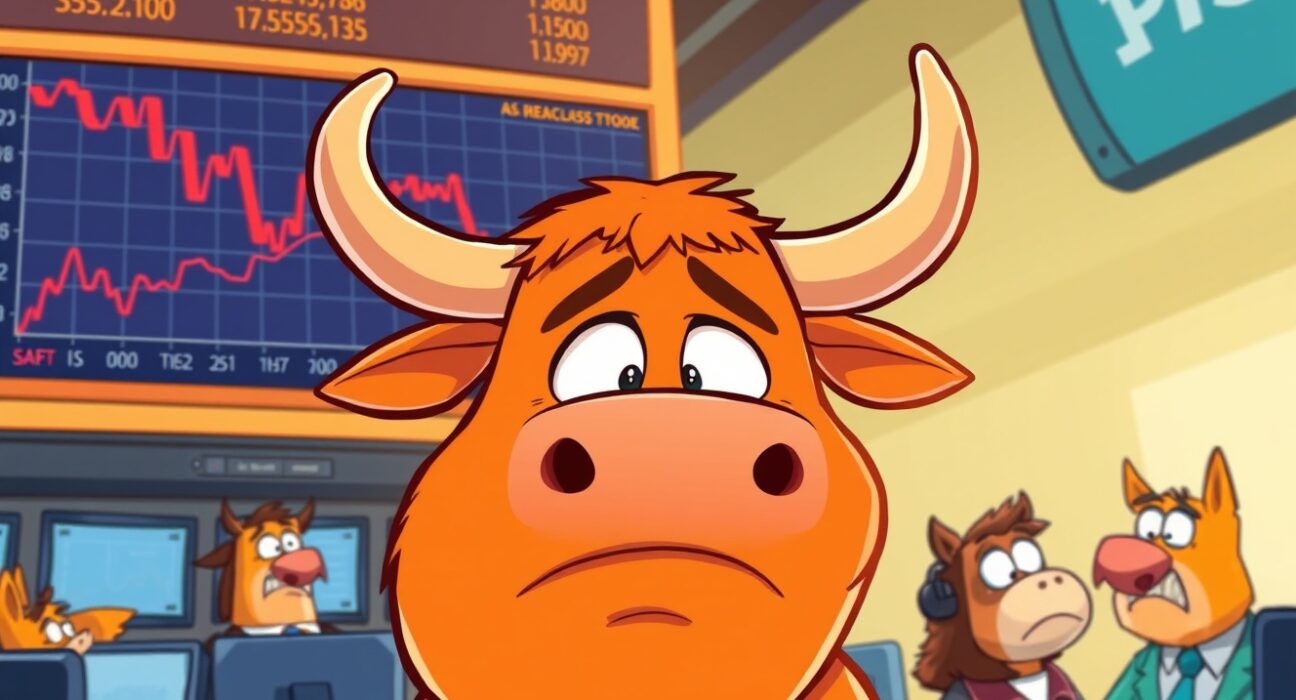
NEW YORK, NY – U.S. stocks opened lower today, marking a cautious start to the trading session as the three major indices all edged into negative territory. The immediate market movement reflects ongoing investor assessment of economic data, corporate earnings, and geopolitical developments. Consequently, the S&P 500 fell 0.18%, the Nasdaq Composite declined 0.3%, and the Dow Jones Industrial Average dropped 0.2% at the opening bell. This initial dip follows a period of notable volatility and sets the tone for a session where traders are parsing signals about the health of the economy.
US Stocks Open Lower: Analyzing the Morning’s Market Data
The opening bell on Wall Street signaled a broad, albeit modest, retreat across major equity benchmarks. This movement provides a real-time snapshot of investor sentiment at a critical juncture. Market analysts immediately scrutinized the sector performance beneath the headline numbers. For instance, technology and consumer discretionary stocks often lead declines on the Nasdaq, while the Dow’s composition of industrial and financial giants can reflect concerns about economic growth. Furthermore, trading volume in the first hour is a key metric watched by institutional investors to gauge conviction behind the price moves. The simultaneous decline across all three major indices, though slight, suggests a market-wide hesitation rather than isolated sector weakness.
Context and Drivers Behind the Market Dip
Understanding why US stocks opened lower requires examining the preceding days’ events and scheduled economic catalysts. Often, overnight movements in Asian and European markets set a directional tone. Additionally, futures trading before the market open can predict the initial move. In the current environment, several factors typically contribute to a risk-off open. These include stronger-than-expected inflation readings, which may alter interest rate expectations. Also, geopolitical tensions or specific corporate news from major index components can create downward pressure. Market technicians also note key resistance levels that, if tested and held, can trigger automated selling programs.
Historical Precedents and Market Psychology
A minor opening decline is a common market occurrence. Historical data from sources like Bloomberg and Refinitiv shows that the S&P 500 opens lower approximately 40% of all trading days. However, the trajectory for the rest of the session is far from predetermined. According to analysis from firms like LPL Financial, roughly 60% of sessions that open lower actually close higher, a phenomenon known as a ‘reversal.’ This pattern underscores the importance of distinguishing between initial sentiment and the day’s final outcome. The morning dip often represents profit-taking after prior gains or positioning ahead of scheduled events like Federal Reserve announcements or major earnings reports later in the day.
Sector Performance and Key Stock Movements
While the index-level changes are small, the underlying sector rotation tells a more detailed story. A granular look often reveals which areas of the market are under the most pressure. For example:
- Technology: Often sensitive to interest rate expectations, leading Nasdaq moves.
- Financials: React to changes in the yield curve and economic outlook.
- Energy: Can be volatile based on crude oil price fluctuations.
| Index | Change | Key Influence |
|---|---|---|
| S&P 500 | -0.18% | Broad market sentiment |
| Nasdaq Composite | -0.30% | Technology stock weighting |
| Dow Jones Industrial Average | -0.20% | Blue-chip industrial & financial stocks |
Simultaneously, movements in the bond market, specifically Treasury yields, offer a crucial counterpoint. Rising yields can make bonds more attractive relative to stocks, prompting equity selling. The US Dollar Index (DXY) also plays a role, as a stronger dollar can pressure multinational corporate earnings.
The Role of Economic Indicators and Central Bank Policy
The macroeconomic backdrop is the ultimate driver of sustained market trends. Investors constantly integrate new data into their models. Recent reports on employment, consumer spending, and manufacturing activity directly inform earnings forecasts. More importantly, the Federal Reserve’s dual mandate of price stability and maximum employment guides monetary policy, which heavily influences asset prices. Comments from Fed officials, detailed in minutes from Federal Open Market Committee (FOMC) meetings, are parsed for hints about the future path of interest rates. A perceived hawkish shift can cause immediate market repricing, often manifesting as a lower open. Therefore, today’s dip may reflect a recalibration of expectations ahead of the next inflation data release or Fed speaker commentary.
Expert Perspective on Market Volatility
Financial economists and seasoned portfolio managers emphasize that short-term volatility is a normal feature of healthy markets. “A modest pullback at the open is often a sign of markets digesting information rather than panicking,” notes a common refrain from investment strategists at firms like Charles Schwab or Vanguard. Their research indicates that trying to time the market based on daily opens is a flawed strategy for long-term investors. Instead, they advocate for a focus on asset allocation and fundamental analysis of individual companies. The morning’s price action, while noteworthy for traders, represents just one data point in a long-term financial plan.
Global Market Correlation and External Influences
US markets do not operate in a vacuum. The opening trade on Wall Street is frequently influenced by the closing performance in Asian markets like the Nikkei and Hang Seng and the concurrent session in European markets like the FTSE and DAX. Supply chain issues, commodity price shocks, or significant political events abroad can ripple through global equities. For instance, a manufacturing slowdown in China can affect revenue projections for S&P 500 multinationals. Similarly, energy price spikes due to international conflict can stoke inflation fears, prompting a defensive market open. This interconnectedness means the reason for a lower open may have originated hours before and thousands of miles away.
Conclusion
In summary, the fact that US stocks opened lower today is a routine event within the constant flux of financial markets. The slight declines in the S&P 500, Nasdaq, and Dow Jones reflect a moment of collective investor caution as new information is processed. While the opening tick provides an important sentiment gauge, the subsequent hours of trading will determine whether this is a brief pause or the start of a broader trend. For market participants, the key takeaways are the underlying sector movements, the volume accompanying the sell-off, and the evolving macroeconomic narrative. Ultimately, single-day opens are best viewed within the wider context of economic cycles and long-term investment horizons.
FAQs
Q1: What does it mean when US stocks open lower?
It means the three major US stock market indices—the S&P 500, Nasdaq, and Dow Jones—began the trading day at a price level below the previous day’s closing price, indicating initial selling pressure.
Q2: Is a lower market open a sign of a bad day for stocks?
Not necessarily. Markets often reverse direction intraday. Historical data shows many sessions that open lower end up closing higher, as investors find buying opportunities.
Q3: What typically causes stocks to open lower?
Causes can include negative overnight news, weak economic data from other global markets, disappointing corporate earnings reported before the bell, or a shift in expectations regarding interest rates.
Q4: How should a long-term investor react to a lower open?
Long-term investors are generally advised not to react to short-term price movements. Focus should remain on asset allocation, diversification, and the fundamental strength of investments, not daily volatility.
Q5: Do all stocks usually go down when the market opens lower?
While a lower open suggests broad selling, it is an average. Some individual stocks or sectors may still open higher due to company-specific positive news, demonstrating the importance of looking beneath the index-level headline.
Disclaimer: The information provided is not trading advice, Bitcoinworld.co.in holds no liability for any investments made based on the information provided on this page. We strongly recommend independent research and/or consultation with a qualified professional before making any investment decisions.
