

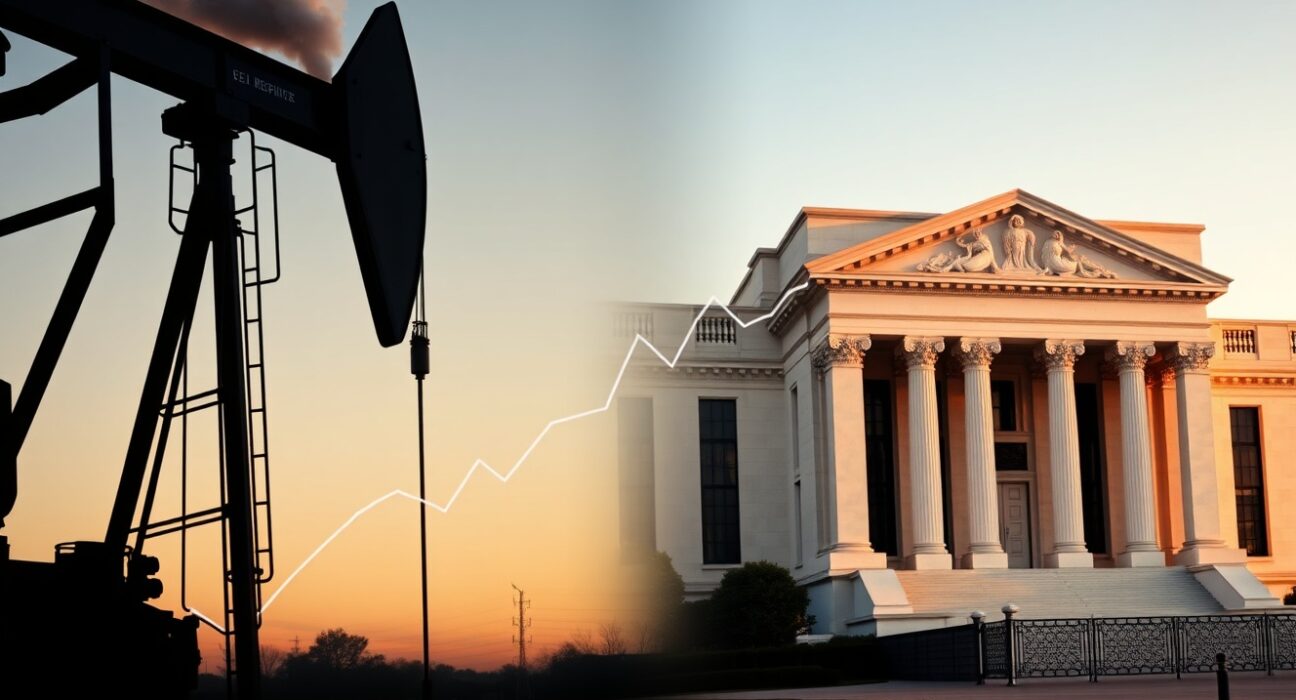
WASHINGTON, D.C. – March 2025: A sustained surge in global oil prices is creating a daunting challenge for the Federal Reserve, significantly complicating its path toward stable inflation and predictable interest rates, according to a new analysis from Mitsubishi UFJ Financial Group (MUFG). This development forces policymakers to navigate between persistent inflationary pressures and the risk of stifling economic growth, a scenario with profound implications for markets and consumers alike.
Federal Reserve Policy Confronts a Familiar Foe: The Oil Price Shock
Historically, oil price shocks have presented severe tests for central banks. The Federal Reserve now confronts a similar dilemma. Rising energy costs directly increase headline inflation figures. Furthermore, they indirectly pressure prices throughout the supply chain, from transportation to manufacturing. Consequently, the Fed’s primary tool for managing inflation—adjusting the federal funds rate—faces increased scrutiny. MUFG economists highlight that this environment demands exceptional precision from the Federal Open Market Committee (FOMC).
Several key factors are driving the current oil market tension:
- Geopolitical instability in major oil-producing regions disrupting supply flows.
- OPEC+ production decisions maintaining a relatively tight market.
- Stronger-than-expected global demand, particularly from emerging economies.
- Limited investment in new production capacity following the energy transition push.
These elements combine to create a supply-demand imbalance. Therefore, the Federal Reserve must now account for a persistent external inflationary force.
Inflation Dynamics and the Central Bank’s Dual Mandate
The Federal Reserve operates under a dual mandate from Congress: to promote maximum employment and stable prices. An oil shock directly threatens the price stability objective. When energy prices rise, the Consumer Price Index (CPI) and Personal Consumption Expenditures (PCE) index—the Fed’s preferred inflation gauge—tend to spike. However, core inflation measures, which exclude volatile food and energy prices, also face upward pressure over time.
MUFG’s analysis suggests the transmission mechanism works through several channels. First, higher fuel costs increase expenses for businesses, which may pass these costs to consumers. Second, rising energy bills reduce household disposable income, potentially weakening consumer spending in other areas. This creates a stagflationary risk where inflation remains high even as growth slows. The Federal Reserve must carefully distinguish between these temporary cost-push factors and more entrenched, demand-driven inflation.
Historical Precedents and Policy Lessons
Examining past episodes provides crucial context. The 1970s oil crises famously led to a period of high inflation and aggressive monetary tightening. In contrast, the 2008 price spike was followed by the global financial crisis, prompting dramatic easing. More recently, the 2022 inflation surge prompted the Fed’s most rapid hiking cycle in decades. MUFG experts note that today’s Federal Reserve, armed with forward guidance and a stronger credibility anchor, aims to avoid the policy mistakes of the past. Its response will likely be data-dependent, focusing on whether rising oil prices trigger a broader wage-price spiral.
The Complicated Path for Interest Rate Decisions
This complexity directly impacts the timeline and trajectory of interest rate decisions. Markets had previously anticipated a steady path of rate cuts from the Federal Reserve in 2025. Now, forecasts are becoming uncertain. The Fed must ask a critical question: Is this oil-driven inflation a temporary blip or a sign of deeper structural issues? Answering incorrectly carries significant risk.
If the Fed tightens policy too aggressively to combat energy-led inflation, it could unnecessarily weaken the labor market and trigger a recession. Conversely, if it dismisses the shock as transient and maintains an accommodative stance, inflation expectations could become unanchored, requiring even more painful policy later. MUFG’s report outlines a probable scenario where the Fed adopts a “higher-for-longer” stance on rates, delaying cuts until the inflationary impact of the oil shock is fully understood.
| Scenario | Inflation Outcome | Likely Fed Policy Response |
|---|---|---|
| Short-term spike, quick resolution | Headline inflation rises temporarily, core remains stable | Delay rate cuts, maintain vigilant communication |
| Prolonged price increase with wage spillover | Both headline and core inflation accelerate | Consider rate hikes or extended pause |
| Price spike triggers economic slowdown | Inflation rises amid weakening demand (stagflation risk) | Balanced, highly data-dependent approach |
Global Implications and Market Reactions
The Federal Reserve’s dilemma reverberates globally. As the world’s de facto central bank, its policy influences capital flows, currency valuations, and borrowing costs worldwide. A more hawkish Fed, compelled by oil prices, could strengthen the US dollar. This dollar appreciation, in turn, makes dollar-denominated oil even more expensive for other nations, potentially exacerbating global inflationary pressures. Financial markets are already reflecting this uncertainty, with increased volatility in bond yields and equity sectors sensitive to interest rates and energy costs.
MUFG concludes that the path forward requires clear communication from Chair Jerome Powell and the FOMC. The Fed must reassure markets that it has the tools and resolve to maintain price stability without derailing the economic expansion. Its upcoming statements and economic projections will be parsed for any shift in tone regarding the persistence of inflation risks.
Conclusion
The emerging oil price shock presents a significant complication for the Federal Reserve’s carefully charted monetary policy path. Navigating this challenge requires the central bank to balance its reaction to immediate inflationary pressures against the longer-term health of the economy. As MUFG’s analysis underscores, the Fed’s credibility and its data-dependent framework will be critically tested. The decisions made in the coming months will have lasting consequences for inflation control, employment, and financial stability, defining the economic landscape for 2025 and beyond.
FAQs
Q1: What is an “oil price shock” and how does it affect the economy?
An oil price shock is a sudden, significant increase in the price of crude oil. It affects the economy by raising costs for transportation and production, which can lead to higher overall inflation (headline inflation) and reduce consumers’ purchasing power, potentially slowing economic growth.
Q2: Why does an oil shock complicate the Federal Reserve’s job?
It complicates the Fed’s job because the central bank must determine if the resulting inflation is temporary or likely to persist. If temporary, aggressive interest rate hikes could harm the economy unnecessarily. If persistent, failing to act could let inflation become entrenched.
Q3: What is the difference between headline and core inflation, and why does the Fed care?
Headline inflation includes all items, like volatile food and energy prices. Core inflation excludes them. The Fed monitors both but often focuses on core inflation for policy decisions, as it provides a better signal of underlying, long-term inflation trends. An oil shock directly impacts headline inflation first.
Q4: What is MUFG’s main conclusion about the Fed’s likely policy path?
MUFG analysts suggest the Federal Reserve will likely adopt a cautious, “higher-for-longer” interest rate stance. This means it may delay planned rate cuts until it can fully assess whether the oil-driven inflation is fading or spreading to other parts of the economy.
Q5: How could the Fed’s response to an oil shock impact average consumers?
If the Fed raises or maintains high interest rates to fight inflation, borrowing costs for mortgages, auto loans, and credit cards could remain elevated or increase further. This tightens financial conditions but aims to cool inflation over time, preserving the long-term value of money.
Disclaimer: The information provided is not trading advice, Bitcoinworld.co.in holds no liability for any investments made based on the information provided on this page. We strongly recommend independent research and/or consultation with a qualified professional before making any investment decisions.
