

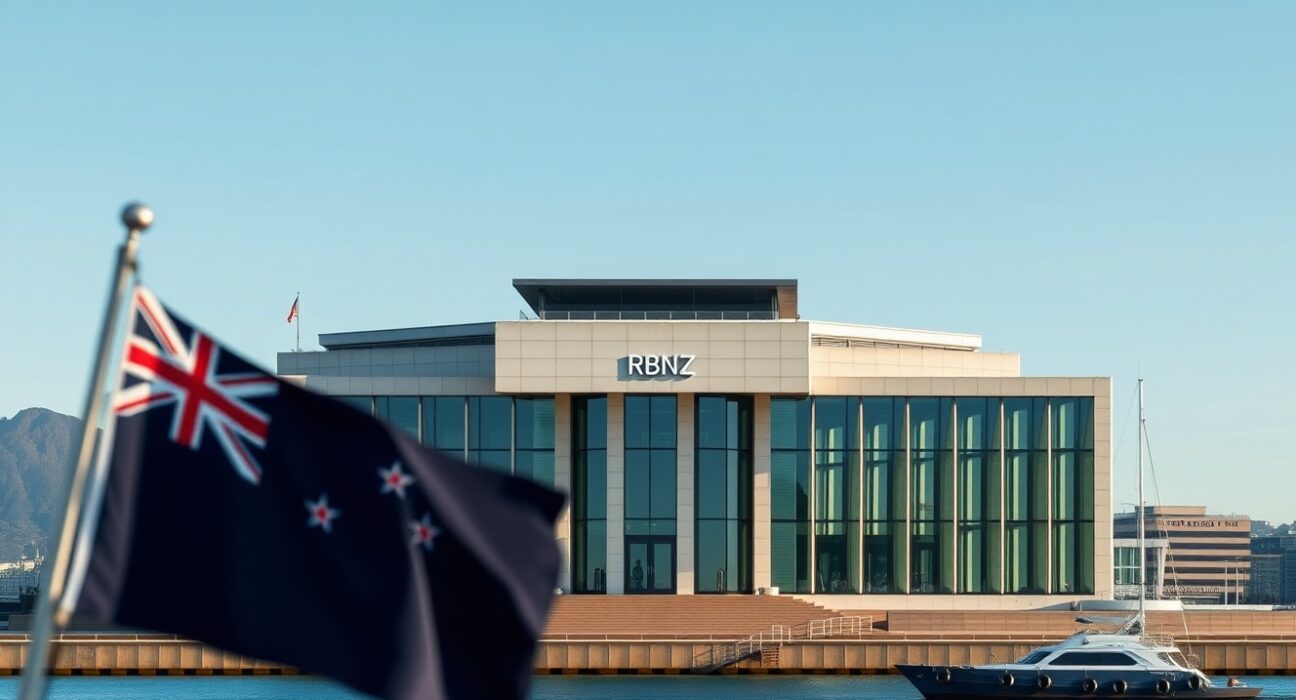
WELLINGTON, New Zealand – The Reserve Bank of New Zealand announced its official cash rate decision today, maintaining the current setting as geopolitical tensions in the Middle East create significant uncertainty for global inflation trends. This monetary policy stance reflects the central bank’s careful balancing act between domestic economic stability and international commodity price pressures that threaten to reignite inflationary forces worldwide.
RBNZ Interest Rate Decision Analysis
The Monetary Policy Committee kept the Official Cash Rate unchanged at 5.50%, marking the seventh consecutive meeting without adjustment. This decision follows a prolonged period of aggressive tightening that began in late 2021. Consequently, the current rate represents the highest level since December 2008. The committee’s statement emphasized ongoing concerns about persistent domestic inflation while acknowledging emerging external risks.
Governor Adrian Orr highlighted several key factors during the press conference. First, domestic inflation remains above the 1-3% target band. Second, employment indicators show continued strength. Third, global energy markets face unprecedented volatility. The committee therefore decided that maintaining restrictive policy settings remains appropriate for now. However, members noted they are monitoring developments closely.
Iran Conflict and Global Inflation Dynamics
The escalating conflict involving Iran represents a substantial risk to global price stability. Specifically, the Strait of Hormuz handles approximately 20% of global oil consumption. Any disruption to shipping through this critical chokepoint could trigger immediate price spikes. Furthermore, Iran produces around 3 million barrels of oil daily. Production disruptions would therefore create significant supply shortages.
Global energy markets have already shown sensitivity to Middle Eastern tensions. Brent crude prices increased 15% over the past month. Natural gas futures similarly rose 12% during the same period. These developments concern central banks worldwide because energy prices directly influence transportation, manufacturing, and heating costs. Consequently, secondary inflationary effects typically follow primary commodity shocks.
Historical Precedents and Economic Impact
Previous Middle Eastern conflicts provide relevant historical context. The 1973 oil crisis triggered global stagflation. The 1990 Gulf War caused temporary price spikes. The 2019 attacks on Saudi facilities demonstrated modern market vulnerabilities. Each event produced distinct economic consequences. However, all shared common characteristics including supply disruptions and speculative trading activity.
New Zealand’s particular vulnerability stems from its energy import dependency. The country imports approximately 99% of its crude oil requirements. Domestic production meets only minimal needs. Therefore, global price movements directly affect local fuel costs. These costs then propagate through the entire economy via transportation and production networks.
Monetary Policy Framework and Response Mechanisms
The RBNZ operates under a flexible inflation targeting regime established in 1989. This framework requires the bank to maintain price stability while supporting maximum sustainable employment. The Policy Targets Agreement specifically mandates keeping inflation between 1-3% on average over the medium term. The current situation tests this framework’s resilience against external shocks.
The bank employs several tools to manage economic stability:
- Official Cash Rate: The primary monetary policy instrument
- Forward Guidance: Communication about future policy intentions
- Macroprudential Policy: Financial stability measures
- Currency Operations: Limited foreign exchange intervention
Recent economic data presents a mixed picture for policymakers. The Consumer Price Index showed 4.0% annual inflation last quarter. Unemployment remained at 4.3%. Gross Domestic Product grew 0.2% quarterly. Business confidence surveys indicated cautious optimism. These indicators collectively suggest an economy at a potential turning point.
Comparative Central Bank Approaches
Global central banks face similar dilemmas regarding geopolitical risks. The Federal Reserve recently paused its tightening cycle. The European Central Bank maintains a hawkish stance. The Bank of Japan continues ultra-loose policy. This divergence reflects different economic conditions and risk assessments. However, all institutions monitor energy markets carefully.
| Central Bank | Current Rate | Recent Change | Inflation Focus |
|---|---|---|---|
| Reserve Bank of New Zealand | 5.50% | Hold | Domestic persistence |
| Federal Reserve | 5.25-5.50% | Hold | Core services |
| European Central Bank | 4.50% | Hold | Wage growth |
| Bank of England | 5.25% | Hold | Services inflation |
| Reserve Bank of Australia | 4.35% | Hold | Demand pressures |
Expert Analysis and Economic Projections
Financial market participants widely anticipated today’s RBNZ interest rate decision. Swap markets priced a 95% probability of no change. Economists surveyed unanimously predicted stability. However, opinions diverge regarding future moves. Some analysts anticipate rate cuts beginning mid-2025. Others project extended stability through next year.
Independent economists emphasize several critical factors. First, domestic wage growth remains elevated. Second, migration-driven demand continues strong. Third, construction sector activity shows resilience. Fourth, export commodity prices provide support. These elements collectively suggest persistent inflationary pressures. Therefore, premature easing could prove counterproductive.
Energy Market Fundamentals and Transmission Channels
Global oil markets demonstrate particular sensitivity to Middle Eastern developments. The region supplies approximately 30% of world crude. Major production facilities cluster around the Persian Gulf. Shipping routes concentrate through narrow straits. These geographical realities create inherent vulnerability. Consequently, insurance premiums for regional shipping have already increased 50%.
New Zealand experiences energy price transmission through several mechanisms:
- Imported Fuel Costs: Direct impact on pump prices
- Freight Expenses: Higher shipping costs for imports
- Production Inputs: Increased manufacturing expenses
- Electricity Generation: Alternative energy substitution effects
The country’s energy security framework includes strategic petroleum reserves. These reserves cover approximately 90 days of net imports. The International Energy Agency mandates this minimum level. However, reserves provide only temporary缓冲 against sustained price increases. Long-term solutions require diversified supply sources and alternative energy development.
Conclusion
The RBNZ interest rate decision reflects prudent monetary policy management amid considerable uncertainty. Maintaining the current OCR setting acknowledges both domestic inflation persistence and emerging global risks. The Iran conflict represents a substantial threat to price stability worldwide. Consequently, central banks must remain vigilant against secondary inflationary effects. New Zealand’s economy demonstrates resilience but faces significant external headwinds. Future policy decisions will therefore depend on both local data and international developments. The RBNZ maintains its commitment to price stability while supporting sustainable employment growth.
FAQs
Q1: Why did the RBNZ keep interest rates unchanged?
The Monetary Policy Committee decided maintaining restrictive settings remains appropriate given persistent domestic inflation and emerging global risks from Middle Eastern conflicts affecting energy markets.
Q2: How does the Iran conflict affect New Zealand’s economy?
The conflict threatens global oil supplies, potentially increasing fuel import costs that propagate through transportation, manufacturing, and consumer prices, creating secondary inflationary pressures.
Q3: What is the current Official Cash Rate in New Zealand?
The OCR remains at 5.50%, unchanged since May 2023, representing the highest level since December 2008 after a prolonged tightening cycle.
Q4: How does New Zealand’s inflation compare to other developed economies?
New Zealand’s 4.0% annual inflation exceeds many peers but shows gradual moderation from peak levels, with services inflation particularly persistent compared to goods prices.
Q5: When might the RBNZ consider cutting interest rates?
Most economists project potential rate cuts beginning mid-2025, contingent on sustained inflation decline toward the 1-3% target band and reduced global energy market volatility.
Disclaimer: The information provided is not trading advice, Bitcoinworld.co.in holds no liability for any investments made based on the information provided on this page. We strongly recommend independent research and/or consultation with a qualified professional before making any investment decisions.
