

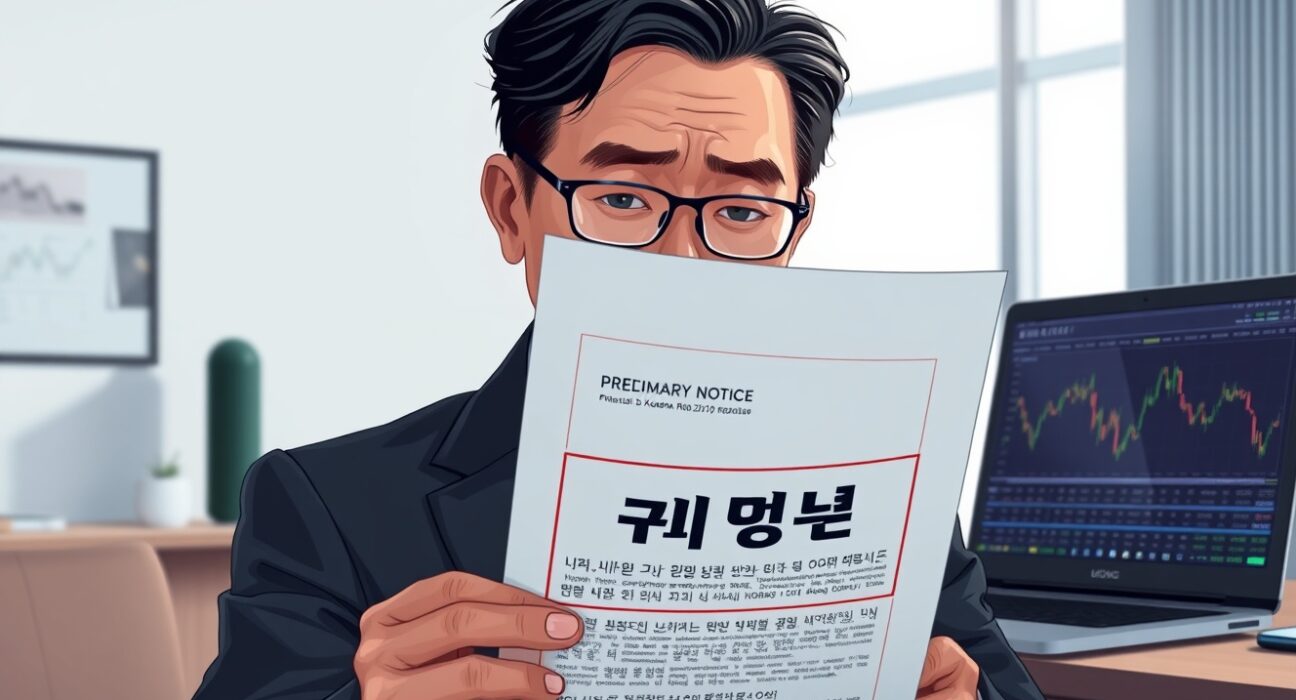
SEOUL, South Korea – April 2025 – Financial authorities have delivered a preliminary notice to cryptocurrency exchange Coinone, signaling a potential three-month partial suspension of business operations for anti-money laundering violations. This development represents one of the most significant regulatory actions against a major South Korean exchange since the implementation of enhanced compliance frameworks. The Sanctions Review Committee will determine the final penalty level on April 13, with industry sources predicting substantial financial repercussions.
Coinone AML Suspension Details and Regulatory Context
South Korea’s Financial Intelligence Unit (FIU) issued the preliminary notice following a comprehensive investigation into Coinone’s compliance systems. The exchange allegedly failed to implement adequate customer due diligence procedures and transaction monitoring mechanisms required under the Financial Transactions Report Act. Consequently, authorities identified multiple instances where suspicious transactions proceeded without proper reporting to regulatory bodies.
This regulatory action occurs within South Korea’s broader cryptocurrency framework, which has progressively tightened since 2021. The country implemented the Travel Rule in March 2022, mandating exchanges to collect and share sender and recipient information for transactions exceeding 1 million won ($730). Furthermore, the Specific Financial Information Act requires all virtual asset service providers to register with the FIU and maintain robust AML programs.
Historical Precedents and Industry Comparisons
Coinone’s situation follows a pattern of increasing regulatory enforcement across South Korea’s cryptocurrency sector. In 2023, the Financial Services Commission imposed a 1.9 billion won ($1.4 million) fine on Bithumb for similar compliance failures. Additionally, authorities suspended part of Upbit’s operations temporarily in 2021 after identifying inadequate internal control systems.
The table below illustrates recent major regulatory actions against South Korean exchanges:
| Exchange | Year | Violation | Penalty |
|---|---|---|---|
| Bithumb | 2023 | AML procedure deficiencies | 1.9 billion won fine |
| Upbit | 2021 | Internal control failures | Partial suspension |
| Korbit | 2022 | Customer verification gaps | Warning and corrective order |
Industry analysts note that Coinone’s potential penalty range of 8-13 billion won ($5.8-9.4 million) represents a significant escalation in enforcement severity. This increase reflects regulators’ growing intolerance for compliance shortcomings as cryptocurrency adoption expands throughout South Korea.
Operational Impact and Market Consequences
A three-month partial suspension would substantially disrupt Coinone’s business operations during the penalty period. The exchange might need to temporarily halt specific services, including:
- New customer registrations and onboarding
- Fiat currency deposit and withdrawal services
- Certain trading pairs or margin services
- Corporate account operations
Market analysts predict several immediate consequences for South Korea’s cryptocurrency ecosystem. First, trading volumes could shift temporarily to competing exchanges like Upbit and Bithumb. Second, investor confidence in the regulated exchange sector might experience temporary erosion. Third, regulatory scrutiny will likely intensify across all virtual asset service providers operating within South Korea.
Expert Analysis of Regulatory Trajectory
Financial compliance specialists emphasize that this enforcement action aligns with global regulatory trends. The Financial Action Task Force (FATF), an international watchdog, has consistently pressured member countries to strengthen cryptocurrency oversight. South Korea, as an FATF member, faces ongoing evaluation of its anti-money laundering framework effectiveness.
Professor Kim Jae-hyun of Seoul National University’s Blockchain Research Center explains, “Regulators are implementing a graduated enforcement approach. Initial warnings progressed to financial penalties, and now we observe operational suspensions. This escalation signals that authorities expect immediate and comprehensive compliance from all market participants.”
The professor further notes that exchanges failing to meet regulatory standards risk permanent license revocation under South Korea’s evolving regulatory framework. Consequently, market participants anticipate increased compliance investments throughout the industry, potentially raising operational costs that might transfer to consumers through adjusted fee structures.
Technological and Compliance Requirements
South Korean exchanges must implement sophisticated monitoring systems to satisfy regulatory expectations. These systems typically include:
- Real-time transaction analysis algorithms
- Automated suspicious activity reporting mechanisms
- Blockchain analytics integration for fund tracing
- Multi-factor customer identification protocols
- Regular independent compliance audits
The Financial Services Commission has clarified that exchanges must maintain these systems continuously, not merely during initial registration. Regular reporting requirements include quarterly compliance certifications and immediate notification of any system failures or security breaches. Additionally, exchanges must demonstrate ongoing employee training programs covering anti-money laundering procedures and emerging financial crime methodologies.
International Regulatory Parallels
South Korea’s regulatory approach mirrors developments in other major cryptocurrency markets. The United States Financial Crimes Enforcement Network (FinCEN) has similarly emphasized cryptocurrency exchange compliance, resulting in substantial penalties for violations. Meanwhile, the European Union’s Markets in Crypto-Assets (MiCA) regulation establishes comprehensive oversight frameworks scheduled for full implementation in 2025.
These international developments create a converging regulatory landscape where exchanges operating across multiple jurisdictions face complex compliance requirements. Industry observers note that exchanges demonstrating robust compliance systems gain competitive advantages through enhanced institutional and retail customer trust. Conversely, exchanges with compliance deficiencies face increasing regulatory pressure and potential market exclusion.
Investor Protection Considerations
Regulatory actions against exchanges ultimately aim to strengthen investor protection mechanisms. South Korea’s approach emphasizes several key consumer safeguards:
- Segregated customer asset management requirements
- Mandatory reserve ratio maintenance
- Transparent fee structure disclosures
- Clear dispute resolution procedures
- Regular financial health reporting
The potential suspension of Coinone’s operations highlights regulators’ willingness to enforce these protections aggressively. Market participants should note that exchanges facing regulatory sanctions typically implement enhanced compliance measures post-penalty, potentially improving long-term security for user assets and data.
Conclusion
The preliminary notice against Coinone represents a pivotal moment in South Korea’s cryptocurrency regulatory evolution. This enforcement action demonstrates authorities’ commitment to establishing a secure, transparent digital asset ecosystem through rigorous AML compliance enforcement. The final determination by the Sanctions Review Committee on April 13 will establish important precedents for regulatory expectations and penalty structures. Market participants should monitor this development closely, as its outcomes will influence compliance approaches across South Korea’s cryptocurrency industry and potentially inform regulatory strategies in other jurisdictions grappling with similar oversight challenges.
FAQs
Q1: What specific AML violations did Coinone allegedly commit?
Authorities identified deficiencies in customer due diligence procedures, inadequate transaction monitoring systems, and failures to report suspicious transactions as required under South Korea’s Financial Transactions Report Act.
Q2: How will the partial suspension affect existing Coinone users?
Existing users will likely maintain access to their accounts and assets, but certain services may become temporarily unavailable during the suspension period, potentially including new registrations, fiat deposits/withdrawals, or specific trading functions.
Q3: What is the timeline for final penalty determination?
The Sanctions Review Committee will convene on April 13, 2025, to review the preliminary notice and determine the final penalty, which could include adjustments to the suspension duration or financial penalty amount.
Q4: How does this action compare to previous South Korean exchange penalties?
The potential 8-13 billion won fine represents a significant escalation from previous penalties, reflecting regulators’ increasing enforcement severity as the cryptocurrency market matures and compliance expectations heighten.
Q5: What should other exchanges learn from Coinone’s situation?
All virtual asset service providers should ensure robust, continuously maintained compliance systems, including real-time transaction monitoring, comprehensive customer verification, regular staff training, and immediate reporting of suspicious activities to avoid similar regulatory actions.
Disclaimer: The information provided is not trading advice, Bitcoinworld.co.in holds no liability for any investments made based on the information provided on this page. We strongly recommend independent research and/or consultation with a qualified professional before making any investment decisions.
