

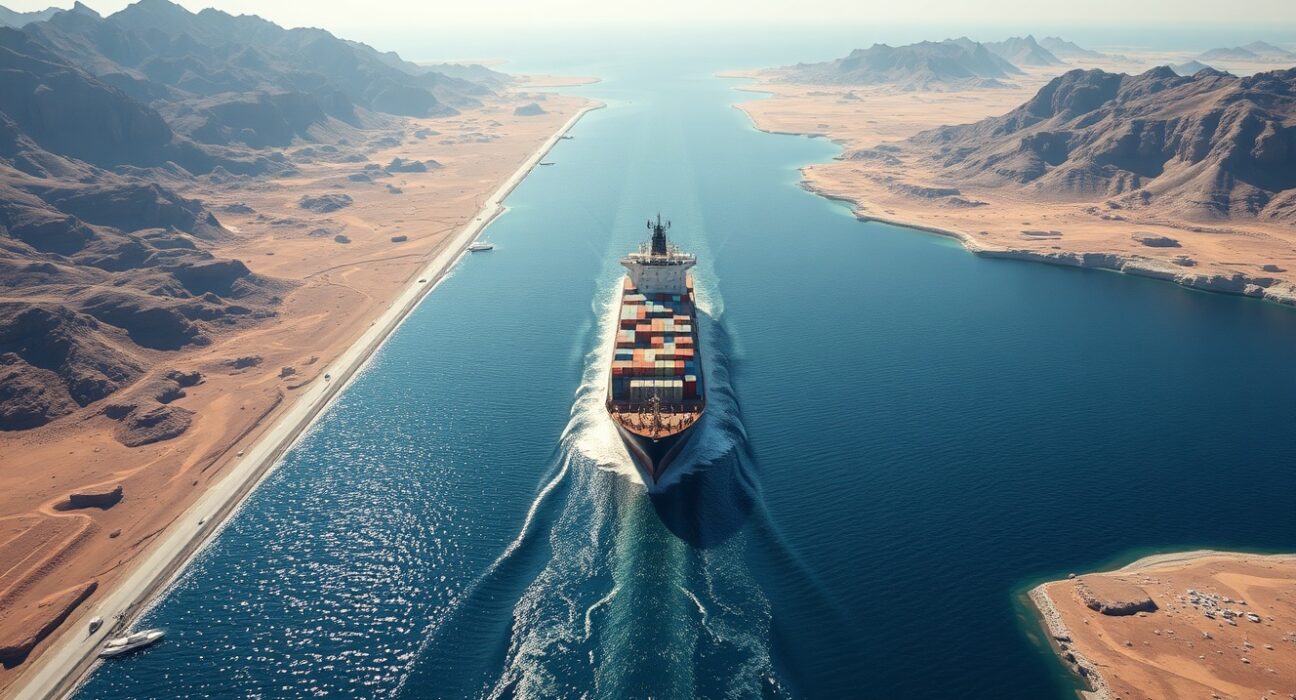
WASHINGTON, D.C., April 9, 2025 — In a significant diplomatic overture, former U.S. President Donald Trump has proposed a potential joint venture with Iran aimed at securing the vital Strait of Hormuz. This suggestion follows a fragile two-week truce and could dramatically reshape security and economic dynamics in the Persian Gulf. The strategic waterway, a global energy chokepoint, sees nearly one-third of the world’s seaborne oil transit annually.
Analyzing the Trump Iran Joint Venture Proposal
During an interview with ABC News on April 8, President Trump outlined his vision for shared responsibility over the strait. He specifically addressed the contentious issue of Iran potentially charging tolls on maritime traffic. “We are considering a joint venture,” Trump stated, framing the concept as a mechanism for direct protection. He argued this approach would prevent numerous other nations from escalating military involvement in the region.
This proposal represents a notable shift from traditional U.S. policy, which has historically relied on unilateral or coalition-based naval presences to ensure freedom of navigation. The concept of a formal operational partnership with Tehran on a specific security matter is unprecedented in recent decades. Consequently, it introduces a complex new variable into the already volatile geopolitics of the Middle East.
The Unwavering Stance on Uranium Enrichment
Despite the cooperative suggestion on maritime security, President Trump immediately reaffirmed a core, non-negotiable U.S. demand. He explicitly declared that Iran “would not be permitted to have uranium enrichment capabilities.” This position directly contradicts Iran’s long-held and repeatedly asserted national policy. Iranian officials consistently maintain that abandoning its right to enrich uranium under the Nuclear Non-Proliferation Treaty is unacceptable.
This creates a fundamental tension at the heart of any potential negotiation. The juxtaposition of a cooperative security proposal with an uncompromising demand on nuclear capabilities defines the challenging path forward. Experts note that bridging this gap would require diplomatic creativity of the highest order, as both issues are deeply symbolic of national sovereignty for each country.
Historical Context and Expert Analysis
The Strait of Hormuz has been a flashpoint for international conflict for over half a century. Its closure or significant disruption would trigger immediate global economic shock. Dr. Anisa Karimi, a Senior Fellow at the Center for Strategic Gulf Studies, provides critical context. “The strait is only 21 nautical miles wide at its narrowest point,” she explains. “The shipping lanes are even narrower, creating a natural bottleneck. Any joint mechanism would require intricate coordination on rules of engagement, surveillance, and incident response.”
Furthermore, the region’s history is marked by incidents of tanker seizures, mine attacks, and naval confrontations. A timeline of key events underscores the persistent volatility:
- 1980s: “Tanker War” during the Iran-Iraq conflict.
- 2019: Attacks on commercial vessels attributed to Iranian proxies.
- 2021-2023: Repeated seizures of tankers by Iranian forces.
This history makes the proposal for a U.S.-Iranian joint venture exceptionally ambitious. It would necessitate building trust in an environment where it has been systematically eroded.
Continued U.S. Military Presence and Enforcement
President Trump coupled his joint venture idea with a clear statement on enduring American military power in the region. He indicated that U.S. troops would not withdraw from the Middle East. Instead, they would remain to “enforce any future agreement.” This suggests a model where cooperation exists alongside a robust deterrent capability.
This dual-track approach aims to balance incentive with consequence. The joint venture offers Iran a role in regional security governance. Simultaneously, the sustained U.S. military presence acts as a guarantee against non-compliance. However, regional allies, particularly Saudi Arabia and Israel, may view any formal U.S.-Iran partnership with profound skepticism. They could perceive it as legitimizing Iranian influence in the Gulf.
The Accelerated Timeline for Peace Negotiations
Adding to the proposal’s immediacy, President Trump predicted a swift diplomatic timeline. He stated that peace negotiations would commence on April 10 and “progress quickly.” Such an accelerated schedule is highly unusual for complex international diplomacy, especially given the deep-seated issues involved.
This rapid pace may be a tactical move to capitalize on the current truce and create momentum. However, it also raises the risk of overlooking critical details or failing to secure broad regional and international buy-in. Successful implementation would require addressing several core issues:
- Command Structure: How would operational control of the joint venture be shared?
- Funding: Who would bear the financial costs of patrols and infrastructure?
- Legal Framework: Under what international legal authority would the venture operate?
- Regional Inclusion: What role would Gulf Cooperation Council (GCC) states play?
Conclusion
President Trump’s proposal for a Trump Iran joint venture to protect the Strait of Hormuz is a bold and unconventional diplomatic gambit. It attempts to separate the issue of maritime security from the intractable nuclear dispute, offering a potential pathway for limited cooperation. However, its success hinges on navigating a minefield of historical animosity, conflicting sovereign claims, and regional power rivalries. The coming days will test whether this concept can transition from a headline-grabbing suggestion into a viable framework for reducing tensions around the world’s most critical oil transit route. The proposal’s impact on global energy markets and regional stability will be closely monitored by governments and analysts worldwide.
FAQs
Q1: What exactly is the proposed Trump Iran joint venture?
The proposal suggests the United States and Iran would form a cooperative security arrangement to jointly patrol and protect the Strait of Hormuz, ensuring safe passage for commercial shipping without other nations’ military escalation.
Q2: Why is the Strait of Hormuz so important?
The strait is a geographic chokepoint connecting the Persian Gulf to the open ocean. An estimated 20-30% of the world’s seaborne crude oil and liquefied natural gas passes through it, making its security vital to the global economy.
Q3: How does this proposal relate to Iran’s nuclear program?
President Trump explicitly decoupled the issues. While proposing security cooperation, he reiterated that Iran would not be allowed uranium enrichment capabilities, maintaining a core U.S. demand that Iran consistently rejects.
Q4: What has been the international reaction to this idea?
Formal reactions are still emerging. Regional allies like Saudi Arabia and Israel are likely concerned, while European and Asian nations dependent on Gulf oil will cautiously assess any plan that promises greater stability.
Q5: What are the biggest obstacles to implementing this joint venture?
Major obstacles include decades of mutual hostility, a complete lack of military-to-military trust, Iran’s insistence on its nuclear rights, and the concerns of other Gulf states about increased Iranian influence.
Disclaimer: The information provided is not trading advice, Bitcoinworld.co.in holds no liability for any investments made based on the information provided on this page. We strongly recommend independent research and/or consultation with a qualified professional before making any investment decisions.
