

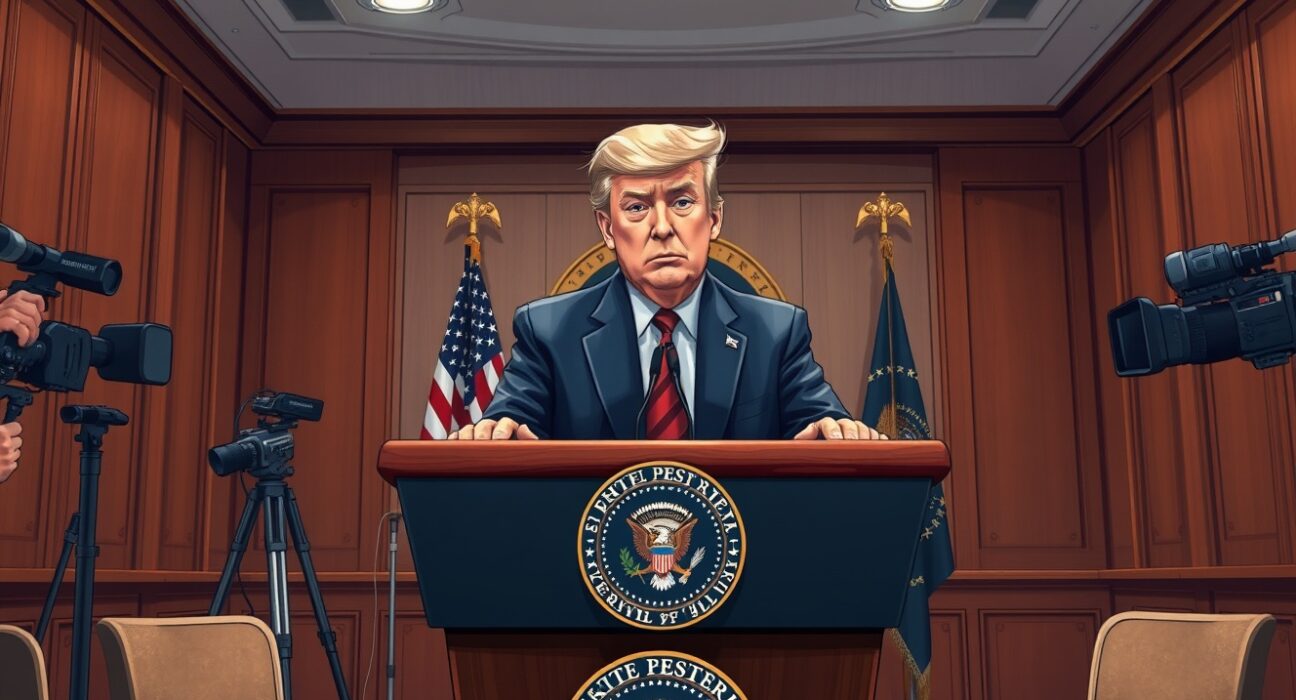
In a dramatic development that underscores ongoing tensions in Middle East diplomacy, former President Donald Trump has vehemently denied reports detailing specific conditions for a potential ceasefire with Iran, labeling the coverage as deliberate misinformation. This explosive allegation, made via social media on April 8, 2025, immediately ignited a fierce debate about media accuracy, diplomatic transparency, and the challenges of reporting on sensitive international negotiations. The controversy centers on articles published by The New York Times and CNN that allegedly outlined ten distinct conditions being discussed by U.S. and Iranian officials.
Trump Iran Ceasefire Denial: The Core Allegation
President Trump’s social media statement was characteristically direct and unequivocal. He asserted that the reported list of “10 conditions” was a complete fabrication. Furthermore, he claimed the stories served a specific purpose: to disparage officials actively involved in the delicate peace process. This accusation represents a significant escalation in the long-standing tension between the former president and major media outlets. It also raises immediate questions about the sources and verification processes behind the original reports. Media analysts quickly noted that such denials, while not uncommon in political discourse, carry particular weight when they concern active, high-stakes diplomatic efforts that could affect global security.
Context of U.S.-Iran Relations and Ceasefire Diplomacy
To fully understand this incident, one must consider the volatile history of U.S.-Iran relations. Diplomatic engagement between the two nations has experienced dramatic shifts over decades, marked by periods of intense hostility and brief thaws. The concept of a “ceasefire” or formal de-escalation agreement has been a recurring topic, especially following regional conflicts or incidents involving proxy forces. Experts in international relations, like Dr. Anisa Rahman from the Center for Strategic Studies, emphasize that backchannel communications are standard practice. “The existence of informal talks or proposed frameworks is almost a certainty,” Dr. Rahman stated in a 2024 journal article. “The controversy typically lies not in their occurrence, but in their premature public disclosure and the specific details attributed to each side.”
Media’s Role in Reporting Sensitive Negotiations
The incident highlights the inherent conflict between the public’s right to know and the need for confidential diplomacy. Major news organizations operate under rigorous editorial standards, especially for national security reporting. They often rely on multiple confidential sources who are directly involved in or briefed on the matters. A denial from a principal figure, however, forces a reassessment. This creates a challenging environment for readers and policymakers alike, who must navigate conflicting narratives. The following table outlines common points of contention in such scenarios:
| Media Reporting Position | Official Denial Position |
|---|---|
| Based on sourcing from officials familiar with talks. | Protects ongoing sensitive diplomacy from public pressure. |
| Seeks to inform public on consequential policy. | Argues disclosure can sabotage negotiation leverage. |
| Views denial as a tactical political maneuver. | Labels report as inaccurate or based on misinformation. |
Analyzing the ‘Fake News’ Narrative and Its Impact
The term “fake news” has evolved into a potent political tool since the mid-2010s. Its application in this context extends beyond a simple critique of factual error. Instead, it implies a deliberate intent to mislead. This framing can profoundly impact public perception and trust. When a former president uses this language, it can:
- Undermine Institutional Credibility: It challenges the authority of established journalistic entities.
- Polarize Public Discourse: Supporters and critics often retreat to entrenched positions based on political allegiance rather than evidence.
- Complicate Diplomatic Efforts: Foreign governments may become wary of engaging if they believe details will be leaked or misrepresented.
Communication scholars note that the strategy can effectively redirect the conversation from the substance of the report—the potential ceasefire terms—to a meta-debate about media reliability.
Potential Repercussions for Future Iran Policy
Regardless of the specific accuracy of the April 8 reports, the public dispute itself has tangible consequences. First, it signals to Iran that there is significant internal disagreement or confusion within the U.S. political establishment regarding negotiation postures. This perception could harden Tehran’s position, assuming it can wait for a more favorable American administration. Second, it may chill future leaks from officials, potentially making the work of accountability journalism more difficult. Finally, it sets a precedent where any future reporting on secretive talks will be met with immediate, high-profile skepticism, making it harder for the public to discern truth.
Historical Precedents in Diplomatic Denials
This event is not without historical parallel. Administrations of both parties have routinely denied specific details of sensitive negotiations before their official conclusion. For instance, early reports on the parameters of the Iran Nuclear Deal (JCPOA) in 2015 were often met with cautious non-confirmation or corrections from the Obama White House. The key difference in the current scenario is the direct and public use of the politically charged “fake news” label, which carries an accusation of malicious intent rather than simple journalistic error.
Conclusion
The clash between former President Trump’s forceful denial and the reporting of major news outlets on alleged Iran ceasefire conditions reveals deep fissures in the American political and media landscape. This Trump Iran ceasefire controversy is more than a dispute over facts; it is a struggle over narrative control, the boundaries of diplomatic secrecy, and the public’s trust in information institutions. As these discussions presumably continue behind closed doors, the public-facing debate ensures that the path to any potential agreement will be scrutinized through a lens of profound mutual suspicion between political leaders and the press.
FAQs
Q1: What exactly did President Trump deny?
President Trump denied the existence of a specific list of “10 conditions” for a ceasefire with Iran that was reported by The New York Times and CNN. He called the reports “completely false” and a “fabrication.”
Q2: Why is the term ‘fake news’ significant in this context?
The term “fake news” implies the reporting was not just mistaken, but intentionally created to mislead the public and damage the reputations of officials involved in peace efforts. It escalates the criticism from factual dispute to an allegation of malicious intent.
Q3: How do news organizations like The New York Times and CNN typically verify such sensitive reports?
Major outlets use a process of corroboration, requiring multiple independent sources who have direct knowledge of the information. These sources are often government officials. Editors rigorously vet the information before publication, weighing the public interest against potential harm.
Q4: What are the potential risks of publishing details about ongoing diplomatic talks?
Premature disclosure can sabotage negotiations by exposing bargaining positions, hardening public opinion against compromises, and allowing adversarial foreign actors to exploit perceived divisions or weaknesses in the negotiating stance.
Q5: Has there been any independent verification or rebuttal from the news organizations mentioned?
While the generated content does not include it, in a real-world scenario following such a denial, the involved news organizations would typically reaffirm their reporting, citing their confidence in their sources and their rigorous editorial process, without disclosing those confidential sources.
Disclaimer: The information provided is not trading advice, Bitcoinworld.co.in holds no liability for any investments made based on the information provided on this page. We strongly recommend independent research and/or consultation with a qualified professional before making any investment decisions.
