

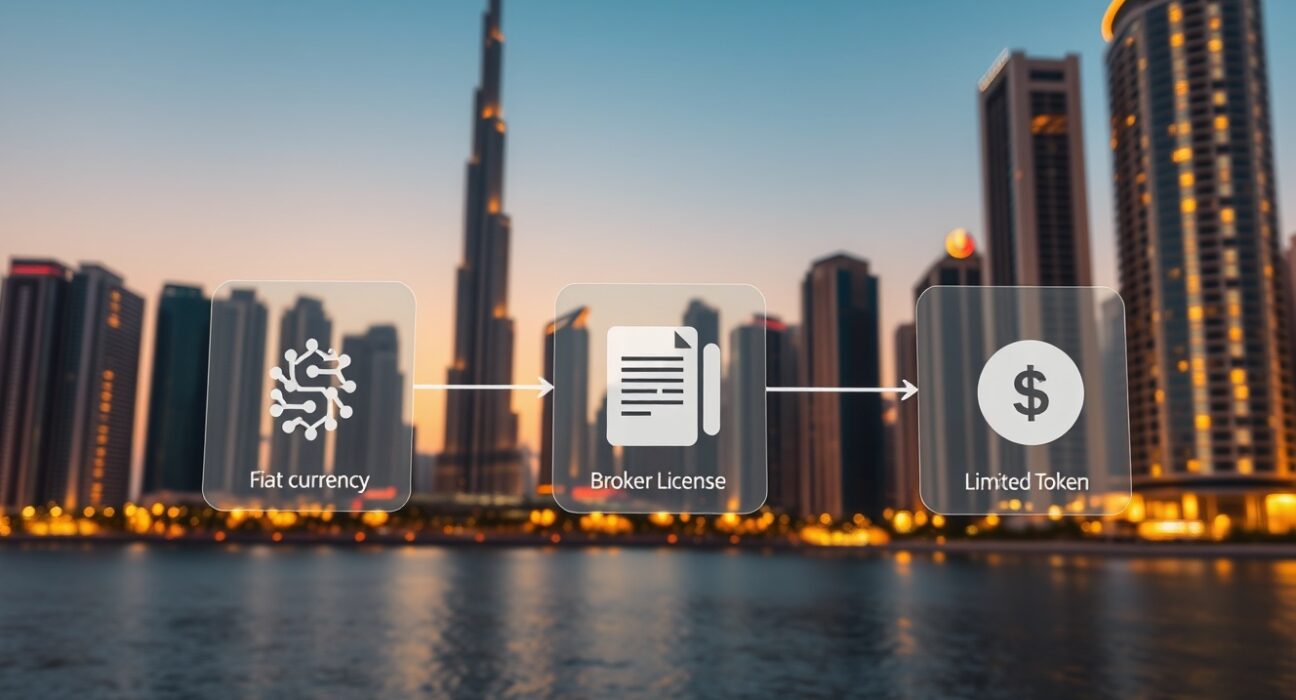
DUBAI, UAE – March 2025: Dubai’s Virtual Assets Regulatory Authority (VARA) has issued crucial new guidelines that clarify the regulatory framework for issuing stablecoins and real-world asset (RWA) tokens, marking a significant step toward market maturity and investor protection in the rapidly evolving digital assets sector. This move represents a strategic enhancement of existing regulations rather than an overhaul, focusing specifically on strengthening disclosure requirements and governance standards through a novel three-category classification system.
VARA’s Three-Tier Token Classification System
VARA’s announcement introduces a structured approach to token regulation by categorizing them into three distinct groups. This classification directly addresses previous ambiguities in the market. The first category comprises cryptocurrencies pegged to fiat currency, primarily stablecoins like USDT or USDC equivalents. These tokens must maintain transparent, verifiable reserves and undergo regular audits.
Secondly, the authority identifies tokens that require distribution through VARA-licensed brokers. This category likely includes many security-like tokens and certain RWAs where investor protection concerns are highest. Consequently, only authorized intermediaries can facilitate their sale to retail participants. Finally, exempt cryptocurrencies with limited functionality form the third group, covering utility tokens with specific, non-financial use cases within closed ecosystems.
Context and Background of Dubai’s Regulatory Evolution
Dubai has consistently positioned itself as a global hub for virtual asset innovation while implementing progressive regulatory frameworks. VARA, established in 2022, operates as the dedicated regulator for the Emirate of Dubai (excluding the Dubai International Financial Centre). Its mandate covers licensing, supervision, and enforcement for virtual asset service providers. Previously, the regulator issued comprehensive rulebooks for exchange, custody, and advisory services.
This latest clarification follows months of consultation with industry stakeholders and international regulatory bodies. The timing coincides with global efforts, particularly by the Financial Action Task Force (FATF) and International Organization of Securities Commissions (IOSCO), to establish consistent standards for digital assets. Dubai’s approach balances innovation facilitation with robust consumer protection mechanisms.
Expert Analysis on the Regulatory Impact
Industry analysts highlight several immediate impacts of these clarified rules. First, the classification system provides much-needed legal certainty for projects developing RWA tokens, which represent ownership of physical assets like real estate, commodities, or artwork on blockchain networks. Second, the enhanced disclosure standards for stablecoin issuers address systemic risk concerns highlighted by recent market events. Third, the exemption category creates a safe harbor for genuine utility tokens, preventing regulatory overreach.
Market observers note that these guidelines could serve as a model for other jurisdictions developing their virtual asset frameworks. The phased, principles-based approach allows for regulatory adaptability as technology evolves. Furthermore, the focus on licensed distribution channels for certain tokens establishes clear gatekeeping responsibilities, potentially reducing fraudulent activities.
Comparative Analysis with Global Regulatory Approaches
Dubai’s framework demonstrates both alignment and differentiation from other major jurisdictions. Like the European Union’s Markets in Crypto-Assets (MiCA) regulation, VARA emphasizes reserve transparency for stablecoins. However, Dubai’s three-category system offers more granularity than the EU’s broader classifications. Compared to the United States’ evolving state-by-state and agency-specific approach, Dubai provides a unified regulatory window through VARA.
The following table illustrates key comparisons:
| Jurisdiction | Regulatory Body | Stablecoin Focus | RWA Treatment |
|---|---|---|---|
| Dubai | VARA | Fiat-pegged category with audit requirements | Licensed distribution requirement |
| European Union | Multiple (under MiCA) | Asset-referenced & e-money token rules | Often falls under existing financial instruments rules |
| United States | SEC, CFTC, State Regulators | Securities or commodities determination ongoing | Case-by-case analysis, often security classification |
Practical Implications for Businesses and Investors
For businesses operating in or entering the Dubai market, these guidelines necessitate specific actions. Stablecoin issuers must now prepare for enhanced reserve reporting and potential governance requirements. RWA token projects need to evaluate whether their offering requires distribution through licensed brokers, impacting their go-to-market strategy and partnership models. All entities should conduct a thorough classification analysis of their tokens against VARA’s definitions.
Investors gain increased transparency and protection through several mechanisms. The licensed broker requirement for certain tokens ensures that intermediaries meet VARA’s competency and operational standards. Clearer categorization helps investors understand the regulatory status and associated risks of different token types. Enhanced disclosure standards provide better information for investment decision-making.
Future Trajectory and Market Expectations
VARA’s announcement represents a phase in an ongoing regulatory development process. The authority has indicated that these guidelines will be supplemented by detailed rulebooks and technical standards in the coming months. Market participants anticipate further clarifications on:
- Specific reserve audit standards for fiat-pegged tokens
- Licensing requirements for brokers distributing category-two tokens
- Precise criteria defining “limited functionality” for exempt tokens
- Cross-border applicability and recognition arrangements
The successful implementation of this framework could accelerate Dubai’s growth as a preferred jurisdiction for legitimate virtual asset businesses, attracting projects seeking regulatory clarity without stifling innovation. Monitoring adoption and market response will be crucial for future refinements.
Conclusion
Dubai’s VARA has taken a decisive step in clarifying the regulatory landscape for stablecoin and RWA token issuance through its newly articulated three-category classification system. By enhancing existing regulations rather than creating entirely new laws, the authority provides market stability while addressing key areas of disclosure and governance. This balanced approach strengthens Dubai’s position in the global virtual assets ecosystem, offering a model that other jurisdictions may examine closely. The ultimate success of these Dubai VARA stablecoin rules will depend on effective implementation, ongoing industry dialogue, and adaptability to technological advancements in the tokenization space.
FAQs
Q1: What are the three token categories established by VARA?
VARA’s guidelines classify tokens into: 1) Cryptocurrencies pegged to fiat currency (stablecoins), 2) Tokens that must be distributed through VARA-licensed brokers (likely including many RWAs), and 3) Exempt cryptocurrencies with limited, non-financial functionality.
Q2: How do these new guidelines affect existing stablecoin issuers in Dubai?
Existing issuers of fiat-pegged stablecoins must align with enhanced disclosure and governance standards, particularly regarding reserve transparency and regular audits. They should review their operations against the new classification requirements.
Q3: What constitutes a “real-world asset” (RWA) token under this framework?
While specific definitions may be detailed further, RWA tokens typically represent digital ownership or rights to physical assets like real estate, commodities, or artwork on a blockchain. Their treatment under VARA’s rules depends on their specific characteristics and may require distribution through licensed brokers.
Q4: Are these completely new laws or modifications to existing regulations?
VARA emphasizes that these guidelines represent a clarification and enhancement of existing regulations rather than the creation of entirely new laws. The focus is on strengthening current frameworks around disclosure and governance.
Q5: How does Dubai’s approach compare to regulations in the EU or US?
Dubai’s framework through VARA offers a unified regulatory window, contrasting with the US’s multi-agency approach. It shares similarities with the EU’s MiCA in focusing on stablecoin reserves but introduces a more granular three-category system that specifically addresses RWA tokens and utility token exemptions.
Disclaimer: The information provided is not trading advice, Bitcoinworld.co.in holds no liability for any investments made based on the information provided on this page. We strongly recommend independent research and/or consultation with a qualified professional before making any investment decisions.
