

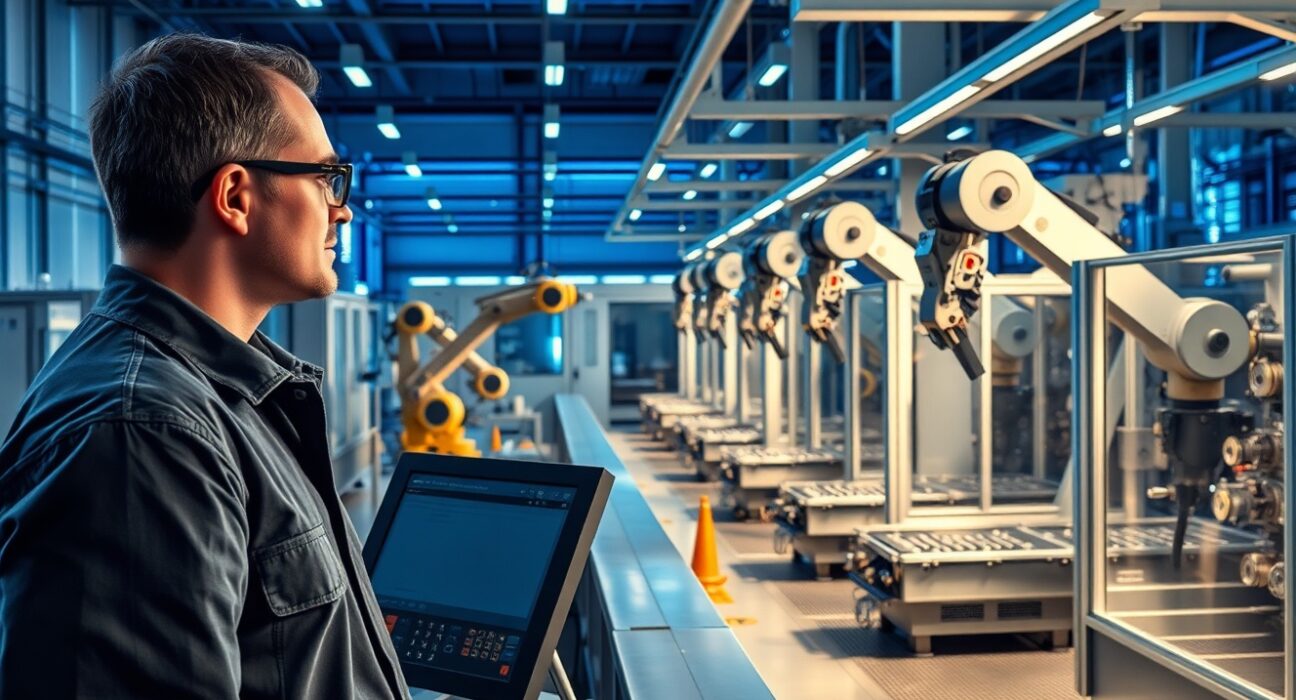
BERLIN, Germany – The industrial outlook for Germany remains persistently weak according to recent analysis from Commerzbank, Europe’s second-largest listed bank. This assessment comes amid ongoing challenges facing Germany’s crucial manufacturing sector, which continues to struggle with multiple headwinds despite some recent stabilization efforts. The bank’s economists point to structural issues that require attention from policymakers and industry leaders alike.
Germany Industrial Outlook Faces Persistent Headwinds
Commerzbank’s latest economic assessment reveals concerning trends for German industry. Manufacturing output has shown limited recovery momentum throughout early 2025. Industrial production figures remain below pre-pandemic levels in several key sectors. The automotive industry, traditionally Germany’s economic powerhouse, faces particular challenges. Transition costs to electric vehicle production continue to pressure margins significantly.
Furthermore, chemical and pharmaceutical sectors report ongoing difficulties. Energy-intensive industries struggle with elevated power costs compared to global competitors. Export-oriented manufacturers face weakening demand from key international markets. Asian competition intensifies across multiple product categories simultaneously. European Union trade policies create additional complexity for cross-border operations.
Commerzbank Analysis Reveals Structural Concerns
Commerzbank economists identify several structural factors contributing to Germany’s industrial weakness. Demographic changes affect labor market dynamics profoundly. An aging workforce creates skill shortages in technical professions. Digital transformation proceeds more slowly than in some competitor nations. Bureaucratic hurdles delay investment decisions and project implementations.
Energy transition costs impact industrial competitiveness directly. Renewable energy infrastructure requires substantial capital investment currently. Grid expansion delays hinder reliable power supply for manufacturing facilities. Carbon pricing mechanisms increase production costs for energy-intensive processes. These factors combine to create a challenging environment for industrial operations.
Comparative Industrial Performance Data
| Indicator | Germany | EU Average | United States |
|---|---|---|---|
| Industrial Production Growth | -0.8% | +0.3% | +1.2% |
| Manufacturing PMI | 47.2 | 48.5 | 50.1 |
| Export Volume Change | -2.1% | -1.3% | +0.8% |
| Industrial Capacity Utilization | 78.4% | 79.8% | 82.1% |
The data reveals Germany underperforming relative to both European and American benchmarks. Capacity utilization rates suggest significant slack in industrial systems. Order books show concerning patterns across multiple sectors. Investment intentions remain cautious among manufacturing executives. These indicators support Commerzbank’s assessment of continued weakness.
Global Economic Context Affects German Industry
International economic conditions contribute substantially to Germany’s industrial challenges. Global trade tensions create uncertainty for export-dependent manufacturers. Supply chain reconfiguration continues to affect production planning. Geopolitical factors influence energy markets and raw material availability. Currency fluctuations impact price competitiveness in international markets.
European Central Bank monetary policy affects financing conditions for industrial investments. Interest rate levels influence capital expenditure decisions significantly. Credit availability shows regional variations across German states. Banking sector stability supports continued lending to industrial clients. However, risk assessment remains cautious given current economic conditions.
Key Challenges Identified by Economic Analysts
- Energy Costs: Industrial electricity prices remain elevated compared to international competitors
- Regulatory Burden: Compliance requirements create administrative costs and delays
- Digital Infrastructure: Broadband and 5G deployment shows regional disparities
- Workforce Development: Technical education systems require modernization efforts
- Innovation Investment: Research and development spending shows concerning trends
These challenges require coordinated policy responses according to industry representatives. Sector-specific strategies may prove necessary for different manufacturing segments. Small and medium enterprises face particular difficulties accessing necessary resources. Regional support programs show varying effectiveness across different German states.
Policy Responses and Industrial Adaptation
German policymakers have implemented several measures to address industrial challenges. Energy price caps provide temporary relief for certain sectors. Investment incentives encourage modernization of production facilities. Research grants support development of new industrial technologies. Export credit guarantees help maintain international market presence.
Industry associations advocate for additional supportive measures. Simplified regulatory procedures could accelerate investment decisions. Tax incentives for research activities might stimulate innovation. Workforce training programs require expansion and modernization. Infrastructure investments need acceleration according to business leaders.
German companies continue adapting to challenging conditions. Process optimization improves production efficiency significantly. Digital technologies enhance manufacturing flexibility. Sustainability initiatives reduce resource consumption and costs. Collaborative research addresses technological challenges collectively.
Conclusion
Germany’s industrial outlook remains weak according to Commerzbank’s comprehensive analysis. Structural challenges require sustained attention from both policymakers and industry leaders. The manufacturing sector faces multiple headwinds simultaneously. However, Germany’s industrial base retains significant strengths and capabilities. Strategic investments and policy adjustments could support gradual recovery. Monitoring economic indicators will provide crucial insights into future developments. The Germany industrial outlook requires careful observation as global economic conditions evolve.
FAQs
Q1: What specific sectors show the weakest performance in Germany’s industrial outlook?
Automotive, chemicals, and mechanical engineering sectors show particular weakness according to recent data. These export-oriented industries face global competition and transition costs simultaneously.
Q2: How does Commerzbank’s assessment compare to other financial institutions?
Commerzbank’s analysis aligns generally with assessments from Deutsche Bundesbank and major economic research institutes. However, some private banks show slightly more optimistic near-term projections.
Q3: What time period does Commerzbank’s industrial outlook analysis cover?
The analysis examines recent quarterly data with projections extending through 2025-2026. Historical comparisons reference pre-pandemic performance levels from 2019.
Q4: Are there regional variations within Germany’s industrial performance?
Yes, southern states like Bavaria and Baden-Württemberg show relative strength in high-tech manufacturing. Eastern regions face greater challenges with some traditional industries.
Q5: What indicators suggest potential improvement in Germany’s industrial outlook?
Order intake stabilization, inventory reduction, and improving business sentiment surveys could signal gradual recovery. Export demand recovery in key markets would provide important support.
Disclaimer: The information provided is not trading advice, Bitcoinworld.co.in holds no liability for any investments made based on the information provided on this page. We strongly recommend independent research and/or consultation with a qualified professional before making any investment decisions.
