

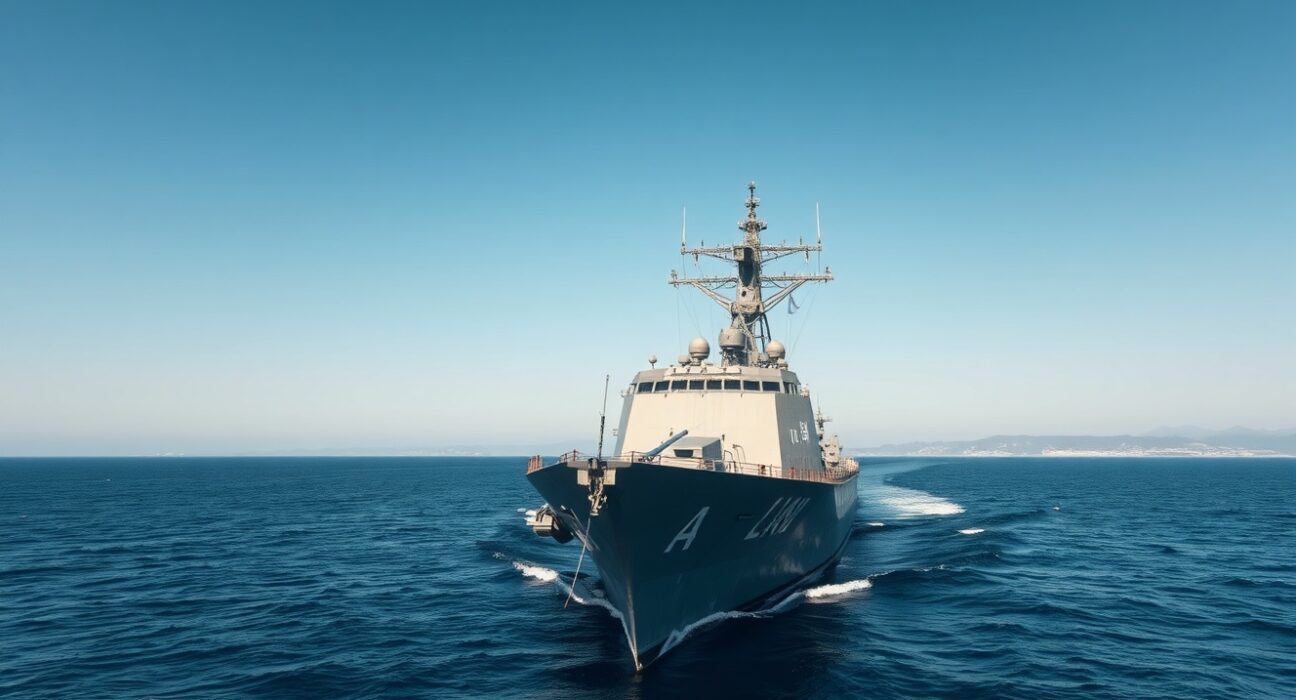
WASHINGTON, D.C. – March 24, 2025 – The United States Central Command (CENTCOM) has issued a definitive announcement that its naval forces will initiate a comprehensive blockade of major Iranian ports, effective Monday at 10:00 AM Eastern Time. This unprecedented military action represents a significant escalation in regional tensions and directly targets Iran’s maritime economic lifelines. Consequently, global energy markets are bracing for immediate disruption as the strategic Strait of Hormuz becomes a focal point of international scrutiny.
US CENTCOM Details the Iranian Port Blockade Order
The official notification from CENTCOM headquarters in Tampa, Florida, specifies a full maritime interdiction operation. This operation will enforce a blockade on all commercial and military vessel traffic entering or exiting Iran’s primary ports in the Persian Gulf. Key facilities under blockade include Bandar Abbas, the nation’s largest port, Asaluyeh, a critical hub for energy exports, and Chabahar on the Gulf of Oman. Furthermore, CENTCOM has clarified that the blockade aims to prevent the shipment of materials it alleges support Iran’s military programs and regional proxy activities. The command has established a 50-nautical-mile exclusion zone around designated ports. Any vessel attempting to breach this zone will face interception and potential diversion by US and allied naval assets.
Historical Context and Legal Justifications for the Blockade
Naval blockades are extreme measures under international law, typically reserved for periods of declared war. However, the United States government is invoking Article 51 of the United Nations Charter, citing the right to collective self-defense. Officials reference multiple attacks on international shipping and US partner forces in the region over the preceding 18 months. A recent report from the International Maritime Bureau documented 14 confirmed attacks on commercial vessels in the Gulf of Oman attributed to Iranian-backed groups since January 2024. The US State Department has consistently labeled the Islamic Revolutionary Guard Corps Navy (IRGCN) as a primary instigator of maritime insecurity. This legal framing is crucial, as it attempts to position the action as a defensive, rather than offensive, maneuver under the laws of armed conflict.
Expert Analysis on Geopolitical Ramifications
Dr. Anya Petrova, a senior fellow at the Center for Naval Analyses and former strategic advisor to the US Navy, provides critical context. “A blockade is not a sanctions regime; it is an act of war,” Petrova states. “The historical precedent is stark. While the US conducted a ‘quarantine’ during the Cuban Missile Crisis, a full blockade of a nation’s ports in peacetime is without modern parallel. The immediate risk is a miscalculation leading to direct kinetic engagement between US and Iranian naval forces.” She further notes that Iran’s asymmetric capabilities, including swarms of fast-attack craft and extensive coastal defense missile batteries, make enforcement perilous. This analysis underscores the high-stakes nature of the operation.
Immediate Global Impact on Energy Markets and Trade
The global economic impact is projected to be severe and instantaneous. Approximately 20% of the world’s seaborne oil trade, representing nearly 21 million barrels per day, transits the Strait of Hormuz. The blockade will effectively sever a significant portion of Iran’s 1.5 million barrel-per-day crude oil exports. Consequently, Brent crude futures surged over 15% in after-hours trading following the CENTCOM announcement. Major shipping lines, including Maersk and MSC, have already issued notices suspending all bookings for Persian Gulf destinations and are rerouting vessels around the Cape of Good Hope. This diversion adds 10-14 days to Asia-Europe transit times, dramatically increasing freight costs and disrupting global supply chains for electronics, automotive parts, and consumer goods.
Projected Economic Impacts:
- Oil Price Spike: Immediate increase of $15-$25 per barrel.
- Shipping Delays: 15-30% increase in global shipping times for affected routes.
- Insurance Premiums: War risk insurance for the Persian Gulf region expected to skyrocket by 500%.
- Regional Air Travel: Potential rerouting of commercial flights away from Iranian airspace.
Military Assets and Operational Execution
US CENTCOM will deploy a substantial carrier strike group to enforce the blockade, led by the USS Dwight D. Eisenhower (CVN-69). This group includes multiple guided-missile destroyers and cruisers, a squadron of maritime patrol aircraft, and at least one nuclear-powered attack submarine. Significantly, allied participation remains unclear, though the United Kingdom has stated it is “monitoring the situation closely.” The blockade’s enforcement will rely on a layered defense strategy. Outer patrols by P-8 Poseidon aircraft will identify and track approaching vessels. Meanwhile, destroyers like the USS Laboon (DDG-58) will establish inner picket lines to conduct hailings, boardings, and, if necessary, disabling strikes against non-compliant ships. This multi-tiered approach is designed to manage escalation while demonstrating resolve.
Potential Iranian Response Scenarios
Security analysts outline several probable Iranian counter-moves. The most likely response involves harassing US naval vessels with swarms of IRGCN fast-attack craft, a tactic long practiced in Persian Gulf exercises. A more escalatory option would be the launch of anti-ship cruise missiles from coastal batteries or drones from Iranian territory. Additionally, Iran could attempt to leverage its regional proxies, potentially ordering Houthi forces in Yemen to increase attacks on shipping in the Red Sea as a diversion. The most severe, though less probable, response would be an attempt to mine the Strait of Hormuz’s narrow shipping channels, an act that would trigger a global economic crisis. Each scenario requires a distinct and calibrated US military response, increasing the risk of rapid, uncontrolled escalation.
International Diplomatic Reactions and UN Response
The international reaction has been swift and divided. Key US allies in Europe, including Germany and France, have expressed “profound concern” and called for an emergency session of the United Nations Security Council (UNSC). Conversely, regional partners like Saudi Arabia and the United Arab Emirates have remained conspicuously silent, reflecting their complex security relationships with both Washington and Tehran. At the UN, Russia and China have condemned the blockade as an “illegal and provocative act of aggression” and are expected to veto any resolution supporting the US action. This diplomatic schism paralyzes the primary international body designed to manage such crises, leaving military commanders as the primary arbiters of events on the water.
Conclusion
The US CENTCOM blockade of Iranian ports, commencing Monday at 10 AM ET, marks a perilous new chapter in Middle Eastern geopolitics and global security. This decisive military action carries profound risks of triggering a broader regional conflict while simultaneously threatening the stability of worldwide energy supplies and maritime trade. The success or failure of the operation will hinge on precise execution, measured escalation control, and the unpredictable nature of Iran’s response. Ultimately, the blockade’s long-term consequences will redefine US-Iran relations and the balance of power in the Persian Gulf for years to come.
FAQs
Q1: What exactly is a naval blockade?
A naval blockade is a belligerent act to prevent vessels from entering or leaving a nation’s ports or coastline. It is a tool of warfare used to exert economic and military pressure, distinct from sanctions which are legal and financial tools.
Q2: Which Iranian ports are specifically targeted?
The primary ports under the US CENTCOM blockade order are Bandar Abbas (the largest commercial and naval port), Asaluyeh (the main oil and gas export terminal), Bushehr, and Chabahar. The blockade zone encompasses the maritime approaches to these facilities.
Q3: Can other countries’ ships still pass through the Strait of Hormuz?
Yes, the blockade is specifically on traffic to and from Iranian ports. International shipping lanes through the Strait of Hormuz remain open for vessels not calling at Iran. However, the heightened military presence and risk of incidental engagement may deter some commercial traffic.
Q4: What legal authority does the US have to impose this blockade?
The US government cites Article 51 of the UN Charter, pertaining to self-defense. It argues that the blockade is a necessary and proportional response to an ongoing series of armed attacks by Iranian-backed forces on international shipping and US partners, constituting an “armed attack” under international law.
Q5: How long is the blockade expected to last?
No official end date has been provided by US CENTCOM. The duration will likely be contingent on achieving undefined political objectives from Iran, such as ceasing support for regional proxy groups. Historically, blockades can last from weeks to years, depending on strategic goals and diplomatic resolution.
Disclaimer: The information provided is not trading advice, Bitcoinworld.co.in holds no liability for any investments made based on the information provided on this page. We strongly recommend independent research and/or consultation with a qualified professional before making any investment decisions.
