

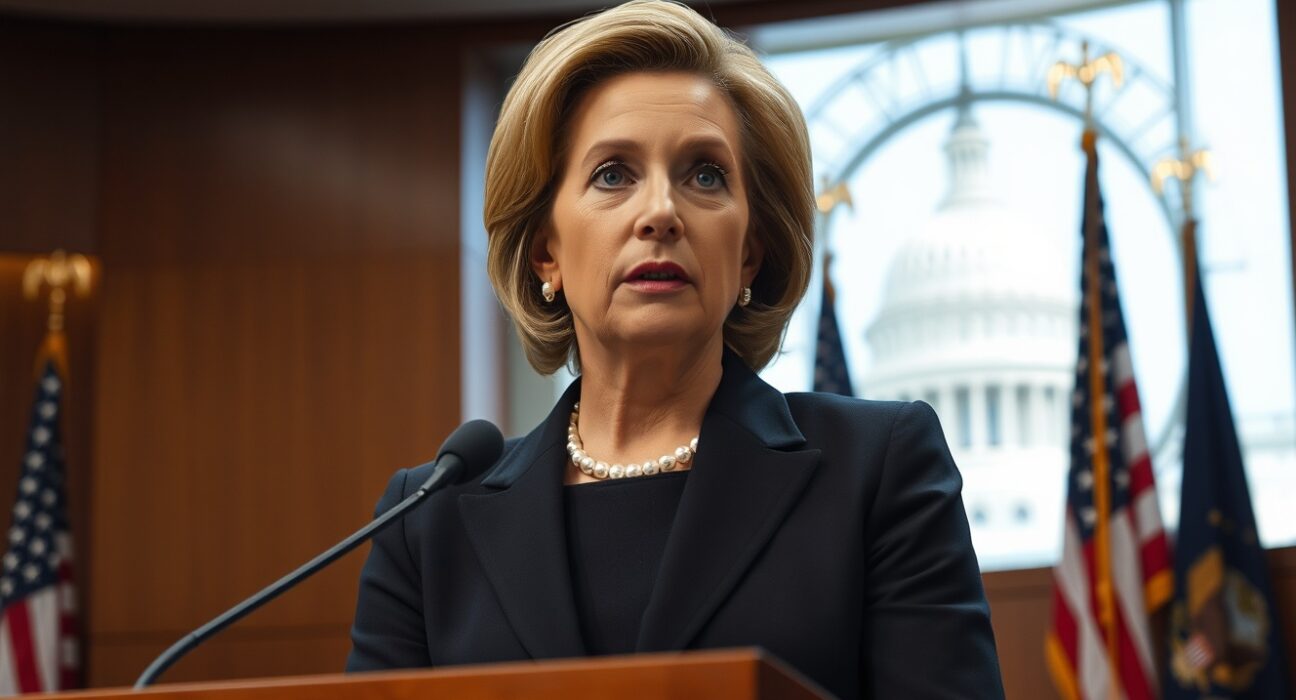
WASHINGTON, D.C. – March 2025 – In a significant push for legislative action, U.S. Senator Cynthia Lummis has forcefully reiterated her call for Congress to pass a comprehensive crypto market structure bill. Consequently, she argues that establishing a definitive regulatory framework is now critical for the nation’s economic future. Furthermore, her advocacy centers on the Crypto-Asset Market Structure Act, commonly known as the CLARITY Act. This proposed legislation aims to resolve long-standing regulatory ambiguities that have, according to the Senator, driven innovation and investment offshore during the previous administration.
The Core Argument for the Crypto Market Structure Bill
Senator Cynthia Lummis, a Republican from Wyoming, has consistently championed the digital asset industry. Recently, she framed the regulatory debate as a matter of national economic competitiveness. Specifically, she stated that the Biden administration’s approach effectively “excluded” the burgeoning sector. Therefore, she contends that the United States now faces a pivotal moment. The passage of the CLARITY Act, she asserts, would provide the legal certainty necessary to attract blockchain businesses and capital back to American soil. This legislative effort seeks to delineate clear jurisdictional lines between the Securities and Exchange Commission (SEC) and the Commodity Futures Trading Commission (CFTC).
Moreover, the bill proposes a functional taxonomy for digital assets. For instance, it distinguishes between those that are securities and those that are commodities. This classification is fundamental for determining which regulatory body holds primary oversight. The legislation also addresses critical issues like consumer protection, stablecoin regulation, and operational standards for trading platforms. Industry analysts note that such clarity could unlock significant institutional investment, which has remained cautious due to the current regulatory fog.
Historical Context and Legislative Journey
The push for a crypto market structure bill is not a new development. In fact, Senator Lummis and Senator Kirsten Gillibrand first introduced a version of this legislation in 2022. The political landscape, however, has evolved considerably since then. A series of high-profile enforcement actions by financial regulators created an atmosphere of uncertainty. Simultaneously, other global jurisdictions, including the European Union with its MiCA framework and the United Kingdom, moved forward with their own comprehensive rules. This international race for regulatory leadership adds urgency to the current debate in Washington.
Expert Analysis on Regulatory Impacts
Financial policy experts highlight the tangible consequences of regulatory delay. Dr. Sarah Jenkins, a fellow at the Brookings Institution specializing in fintech policy, explains the direct impact. “Regulatory ambiguity acts as a tax on innovation,” she states. “Firms allocate substantial resources to legal compliance and risk mitigation instead of product development. A clear market structure bill reduces this friction cost.” Data from the Blockchain Association shows that over 30 blockchain-focused firms relocated key operations or headquarters from the U.S. to more defined regulatory environments between 2021 and 2024. This capital and talent flight underscores the stakes of the current legislative effort.
The table below outlines key provisions of the proposed CLARITY Act:
| Provision | Description | Responsible Agency |
|---|---|---|
| Asset Classification | Defines criteria for a digital asset to be classified as a commodity or a security. | SEC & CFTC (Joint Rulemaking) |
| Exchange Registration | Creates a new registration pathway for digital asset trading platforms. | CFTC (for commodity platforms) |
| Stablecoin Issuance | Establishes federal requirements for payment stablecoin issuers. | Federal & State Banking Regulators |
| Consumer Protection | Mandates disclosure, custody, and conflict-of-interest rules. | CFTC & SEC (according to asset type) |
Political Dynamics and Path Forward
The political pathway for the crypto market structure bill remains complex. Support exists on both sides of the aisle, but consensus on specific details is challenging. Key Democratic lawmakers emphasize robust investor protection measures. Conversely, many Republicans prioritize fostering innovation and maintaining U.S. technological leadership. Senator Lummis’s latest comments aim to build bipartisan momentum by framing the issue in economic terms. She argues that clear rules will protect consumers more effectively than the current enforcement-heavy approach. Additionally, she points to the potential for creating high-skilled jobs in software development, cybersecurity, and financial services.
Several factors increase the likelihood of legislative action in 2025:
- Industry Maturation: The sector has developed more sophisticated lobbying and policy engagement capabilities.
- Constituent Pressure: Polls indicate growing voter interest, especially among younger demographics.
- National Security Concerns: Policymakers increasingly discuss the importance of onshoring blockchain infrastructure.
- Tax Revenue Potential: A regulated, domestic industry presents a significant new source of tax revenue.
Opposition, however, persists. Some consumer advocacy groups warn against moving too quickly. They cite the volatility of crypto markets and past frauds as reasons for extreme caution. Meanwhile, certain segments of the traditional financial industry express concerns about disruption and competition. Navigating these competing interests will be the primary task for bill sponsors like Senator Lummis.
Conclusion
Senator Cynthia Lummis’s renewed advocacy for the crypto market structure bill signals a critical phase in the long-running debate over digital asset regulation. The CLARITY Act represents a comprehensive attempt to replace uncertainty with a functional framework. Its passage would mark a watershed moment for the cryptocurrency industry in the United States. Ultimately, the coming months will determine whether Congress can bridge political divides to establish rules that foster innovation, protect consumers, and reclaim American leadership in the blockchain economy. The call for a definitive crypto market structure bill is now louder and more urgent than ever.
FAQs
Q1: What is the CLARITY Act?
The Crypto-Asset Market Structure Act (CLARITY) is proposed U.S. legislation designed to create a comprehensive regulatory framework for digital assets. It clarifies whether a cryptocurrency is a security or a commodity and assigns oversight accordingly.
Q2: Why does Senator Lummis say the previous administration excluded the crypto industry?
Senator Lummis argues that the Biden administration’s regulatory approach, which relied heavily on enforcement actions by the SEC without clear new rules, created a hostile environment that pushed businesses and investment to other countries.
Q3: Which government agencies would oversee crypto under this bill?
The bill primarily delineates roles between the Securities and Exchange Commission (SEC) for digital assets deemed securities and the Commodity Futures Trading Commission (CFTC) for those deemed commodities. Banking regulators would oversee stablecoins.
Q4: How would this bill affect ordinary cryptocurrency investors?
The legislation aims to enhance consumer protection through mandatory disclosures, stricter custody requirements for exchanges, and clearer rules of operation. This could reduce fraud and increase market stability, potentially making crypto investing safer.
Q5: What are the chances this bill becomes law in 2025?
While bipartisan interest exists, the bill faces a complex legislative process. Its prospects depend on building consensus around specific provisions related to consumer protection, banking integration, and the scope of regulatory authority. Senator Lummis’s advocacy is part of an effort to build that necessary momentum.
Disclaimer: The information provided is not trading advice, Bitcoinworld.co.in holds no liability for any investments made based on the information provided on this page. We strongly recommend independent research and/or consultation with a qualified professional before making any investment decisions.
