

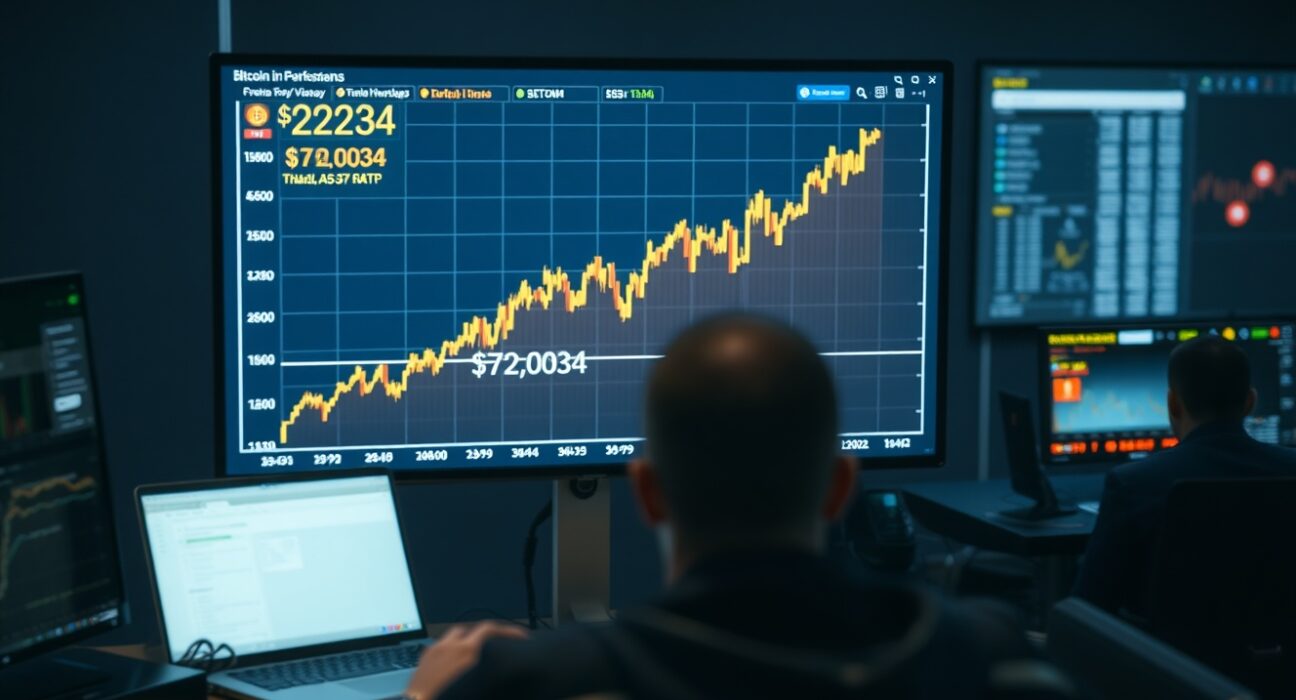
Global cryptocurrency markets are bracing for significant volatility as Bitcoin approaches a critical price level that could trigger over $159 million in automatic liquidations. According to data from the derivatives analytics platform CoinGlass, a decisive break above $72,034 would force the closure of massive leveraged short positions. This potential event highlights the fragile mechanics of modern crypto markets where automated systems play a pivotal role. The data, current as of early 2025, underscores the delicate balance between bullish and bearish sentiment in the digital asset space.
Understanding the Bitcoin Liquidation Threshold
CoinGlass data reveals a precise and substantial liquidity pool sitting just above current Bitcoin price action. Specifically, short positions worth $159.87 million face liquidation if BTC breaks decisively above $72,034. Conversely, the market maintains a similar level of vulnerability on the downside. A drop below the $70,000 support level would trigger the automatic closure of $160.25 million in leveraged long positions. This creates a classic volatility sandwich, pinning the price between two massive liquidation clusters. Market analysts closely monitor these levels as they often act as accelerants for price movement. The sheer scale of these positions indicates heightened trader leverage and conviction.
Liquidations occur automatically on centralized exchanges when a trader’s leveraged position suffers excessive losses. Exchanges close these positions to prevent the trader’s balance from falling below zero. This process can create cascading sell or buy orders in the underlying spot market. Consequently, a large cluster of liquidations at a specific price often acts as a magnet or a barrier for the asset’s price. The current setup suggests that breaching either threshold could lead to a rapid, self-reinforcing price move. Historical precedent shows such events often result in increased volume and short-term price dislocation.
The Mechanics of Crypto Derivatives and Market Impact
The $159 million figure represents not isolated bets but the aggregate risk across major platforms like Binance, Bybit, and OKX. These exchanges facilitate perpetual swap contracts, allowing traders to use high leverage—sometimes exceeding 20x or 50x. While this amplifies potential gains, it also drastically increases risk. The liquidation prices for these positions are publicly visible on platforms like CoinGlass, creating a transparent yet tense market dynamic. Savvy traders often attempt to “hunt” these liquidity pools, pushing the price toward these levels to trigger the automated orders for their own profit.
The potential impact extends beyond the derivatives market. A short squeeze—where rising prices force short sellers to buy back Bitcoin to cover their positions—can create a powerful upward feedback loop. This buying pressure can propel the price further, potentially triggering additional liquidations at higher price points. The opposite scenario, a long squeeze, involves forced selling that exacerbates a downturn. The symmetrical nature of the current liquidation data, with roughly equal risk on both sides, suggests a market at a moment of equilibrium. However, this equilibrium is notoriously unstable when tested.
Historical Context and Expert Analysis
Similar liquidation events have marked key turning points in Bitcoin’s history. For instance, the bull run of late 2020 and early 2021 featured multiple large-scale short squeezes that added fuel to the rally. Market structure analysts note that the concentration of liquidations has increased alongside the professionalization of crypto trading. The growth of institutional participation and sophisticated algorithmic strategies has made these liquidity cliffs more pronounced. Experts from firms like Genesis Trading and Arcane Research frequently publish reports analyzing these derivatives metrics, citing them as crucial indicators of market sentiment and potential flashpoints.
The current data must be viewed within the broader macroeconomic and regulatory landscape of 2025. Factors such as evolving central bank policies, the integration of spot Bitcoin ETFs into traditional portfolios, and clearer regulatory frameworks all influence trader leverage and positioning. The $72,034 level itself may hold technical significance beyond liquidation clusters, potentially aligning with previous resistance or Fibonacci retracement levels. This confluence of factors makes the current threshold a focal point for both retail and institutional market participants.
Risk Management and Trader Psychology
For active traders, these liquidation zones represent both danger and opportunity. Risk management protocols become paramount when price approaches such levels. Common strategies include:
- Reducing Leverage: Traders may voluntarily deleverage positions to avoid being caught in a liquidation cascade.
- Setting Precise Stop-Losses: Placing stops outside the predicted volatility zone of a liquidation event.
- Monitoring Funding Rates: In perpetual swap markets, funding rates can turn highly positive or negative near liquidation clusters, signaling market stress.
The psychological aspect is equally critical. The knowledge that a large number of positions will be liquidated at a specific price can lead to preemptive action. Some traders may front-run the expected move, while others may become overly cautious, reducing market depth. This behavior can make price action near these levels particularly erratic and unpredictable. Market educators consistently warn against over-leveraging precisely because of the sudden and unforgiving nature of liquidation events.
Conclusion
The $159 million Bitcoin short liquidation threshold at $72,034 is a stark reminder of the high-stakes, automated nature of modern cryptocurrency trading. This data point serves as a critical market structure signal, highlighting where forced buying or selling could erupt. While the potential for a short squeeze exists, the symmetrical long risk below $70,000 cautions against one-sided optimism. As Bitcoin navigates this technical and psychological zone, market participants are advised to prioritize robust risk management. The outcome at this Bitcoin liquidation cliff will likely provide important insights into the prevailing strength of both bullish and bearish forces in the 2025 digital asset landscape.
FAQs
Q1: What does “liquidation” mean in cryptocurrency trading?
Liquidation is the forced closure of a leveraged trading position by an exchange. It happens when a trader’s losses deplete their collateral (margin) below the required maintenance level. The exchange sells or buys the asset automatically to prevent further loss.
Q2: Why is the $72,034 price level so significant for Bitcoin?
According to derivatives data, this price level represents the aggregate point where $159.87 million worth of leveraged short positions would be automatically liquidated across major exchanges. Breaching it could trigger a cascade of buy orders, potentially fueling a rapid price increase.
Q3: What is a “short squeeze”?
A short squeeze occurs when the price of an asset rises, forcing traders who bet on a price decline (short sellers) to buy back the asset to close their positions and limit losses. This collective buying can drive the price even higher, creating a feedback loop.
Q4: How does liquidation data affect the average Bitcoin investor?
While direct holders of spot Bitcoin are not at risk of liquidation, these events can cause extreme short-term volatility. This volatility can impact portfolio values and market sentiment, making it a relevant factor for all market participants.
Q5: Where can traders find real-time liquidation data?
Analytics platforms like CoinGlass, Bybt, and Coingape provide real-time and historical data on liquidation volumes and price levels across multiple cryptocurrency exchanges, helping traders gauge market heat and potential risk zones.
Disclaimer: The information provided is not trading advice, Bitcoinworld.co.in holds no liability for any investments made based on the information provided on this page. We strongly recommend independent research and/or consultation with a qualified professional before making any investment decisions.
