

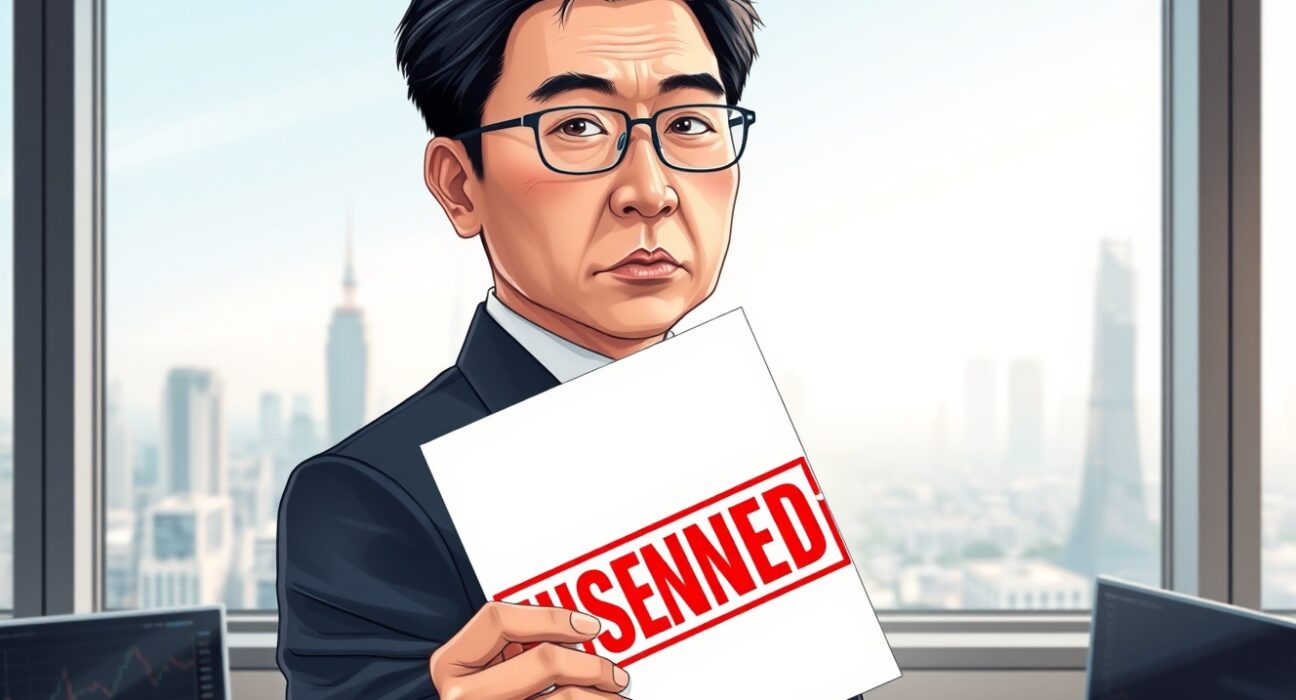
SEOUL, South Korea – March 2025: In a decisive enforcement action, South Korea’s Financial Intelligence Unit (FIU) has levied a substantial 5.2 billion won ($3.8 million) fine against the domestic cryptocurrency exchange Coinone. Consequently, the regulator also imposed a three-month partial business suspension and issued a formal reprimand to the exchange’s CEO. This significant penalty underscores the nation’s intensifying regulatory scrutiny over digital asset platforms.
Coinone Fine and Suspension Details
The FIU’s sanctions specifically restrict Coinone from allowing new customers to make external cryptocurrency transfers for a three-month period. This targeted suspension aims to curb potential illicit fund flows while allowing existing users to continue trading on the platform. The action follows a comprehensive on-site anti-money laundering (AML) inspection conducted between April 21 and May 16 of last year.
During the inspection, investigators identified approximately 90,000 individual violations. The FIU determined that Coinone failed to meet its legal obligations under the country’s Special Financial Transaction Act. Primarily, the exchange neglected to prohibit transactions with unregistered virtual asset service providers (VASPs). Furthermore, Coinone did not adequately perform required customer due diligence (CDD).
South Korea’s Evolving Crypto Regulatory Landscape
This enforcement is not an isolated incident. Instead, it represents a consistent pattern within South Korea’s rigorous regulatory framework for digital assets. The government has progressively tightened rules since implementing the Special Financial Transaction Act in March 2021. This law mandates strict AML and know-your-customer (KYC) protocols for all VASPs.
Other major exchanges, including Bithumb and Korbit, have previously undergone similar inspections. However, the scale of the Coinone penalty marks one of the most substantial financial penalties issued to a mid-tier exchange. The regulatory focus clearly prioritizes preventing money laundering and protecting investors from fraud.
Expert Analysis on Compliance Failures
Compliance experts point to systemic issues that often lead to such violations. Firstly, the global and pseudonymous nature of cryptocurrency transactions creates inherent challenges for monitoring. Secondly, the rapid evolution of decentralized finance (DeFi) protocols and cross-chain bridges complicates the task of identifying unregistered counterparties. Exchanges must constantly update their surveillance systems to track these developments.
The following table outlines the core violations identified by the FIU at Coinone:
| Violation Category | Specific Failure | Regulatory Reference |
|---|---|---|
| Counterparty Vetting | Transactions with unregistered VASPs | Special Financial Transaction Act, Article 6 |
| Customer Due Diligence | Insufficient identity verification and risk profiling | Enforcement Decree, Article 12 |
| Transaction Monitoring | Failure to report suspicious activities | AML Guidelines, Section 4.2 |
Immediate and Long-Term Impacts on the Market
The immediate impact of the suspension restricts Coinone’s ability to onboard new active traders. This limitation could temporarily affect its market share, potentially benefiting competitors like Upbit. Nevertheless, the broader market impact appears contained, as the penalty targets compliance procedures rather than questioning the solvency of the exchange.
In the long term, this action sends a powerful signal to the entire industry. All South Korean exchanges will likely conduct internal audits and reinforce their compliance departments. Investors may perceive the regulated market as safer, potentially increasing institutional participation. However, stricter rules could also push some trading volume toward less-regulated, overseas platforms.
Key implications for the sector include:
- Increased Compliance Costs: Exchanges will invest more in monitoring software and staff.
- Market Consolidation: Smaller exchanges may struggle to afford new compliance demands.
- Enhanced Investor Confidence: Clear enforcement actions demonstrate regulatory oversight.
- Innovation Challenge: Balancing robust compliance with support for legitimate crypto innovation.
Global Context of Crypto Enforcement
South Korea’s action aligns with a global trend of increasing regulatory enforcement in the cryptocurrency sector. For instance, the U.S. Securities and Exchange Commission (SEC) and Commodity Futures Trading Commission (CFTC) have filed numerous enforcement actions against crypto firms. Similarly, the European Union’s Markets in Crypto-Assets (MiCA) regulation is setting a comprehensive regional standard.
South Korea distinguishes itself with a particularly stringent approach to AML. The country’s unique financial environment, including historical concerns about capital flight and tax evasion, drives this rigor. The FIU’s precise and public penalty against Coinone demonstrates a commitment to transparent and rules-based oversight.
Conclusion
The ₩5.2 billion fine and partial suspension of Coinone by South Korea’s FIU marks a pivotal moment in the nation’s crypto regulatory enforcement. This action highlights the non-negotiable requirement for exchanges to adhere to AML and KYC regulations under the Special Financial Transaction Act. As the global digital asset market matures, such enforcement actions are becoming standard, pushing the industry toward greater accountability and transparency. The Coinone fine serves as a stark reminder that regulatory compliance is a fundamental cost of operation in South Korea’s financial ecosystem.
FAQs
Q1: What specific activities did Coinone’s suspension prohibit?
The three-month partial suspension specifically prohibits Coinone from allowing new customers to withdraw cryptocurrency to external wallets. Existing customers and all deposit functions remain operational.
Q2: How does South Korea’s Special Financial Transaction Act regulate crypto exchanges?
The Act requires all Virtual Asset Service Providers (VASPs) to register with financial authorities, implement strict AML/KYC systems, report suspicious transactions, and only transact with other registered entities.
Q3: Can Coinone appeal the FIU’s decision?
Yes. Coinone can request a reconsideration from the FIU or file an administrative lawsuit. However, such appeals rarely result in the complete revocation of penalties, though they may negotiate the terms.
Q4: How does this penalty compare to previous enforcement actions in South Korea?
The ₩5.2 billion fine is among the largest monetary penalties imposed on a crypto exchange in South Korea, though larger exchanges have faced longer business suspensions in the past for different violations.
Q5: What should cryptocurrency investors in South Korea take away from this event?
Investors should ensure they use registered and compliant exchanges. This enforcement action ultimately aims to create a safer trading environment by holding platforms accountable for lapses in customer protection and financial integrity.
Disclaimer: The information provided is not trading advice, Bitcoinworld.co.in holds no liability for any investments made based on the information provided on this page. We strongly recommend independent research and/or consultation with a qualified professional before making any investment decisions.
