

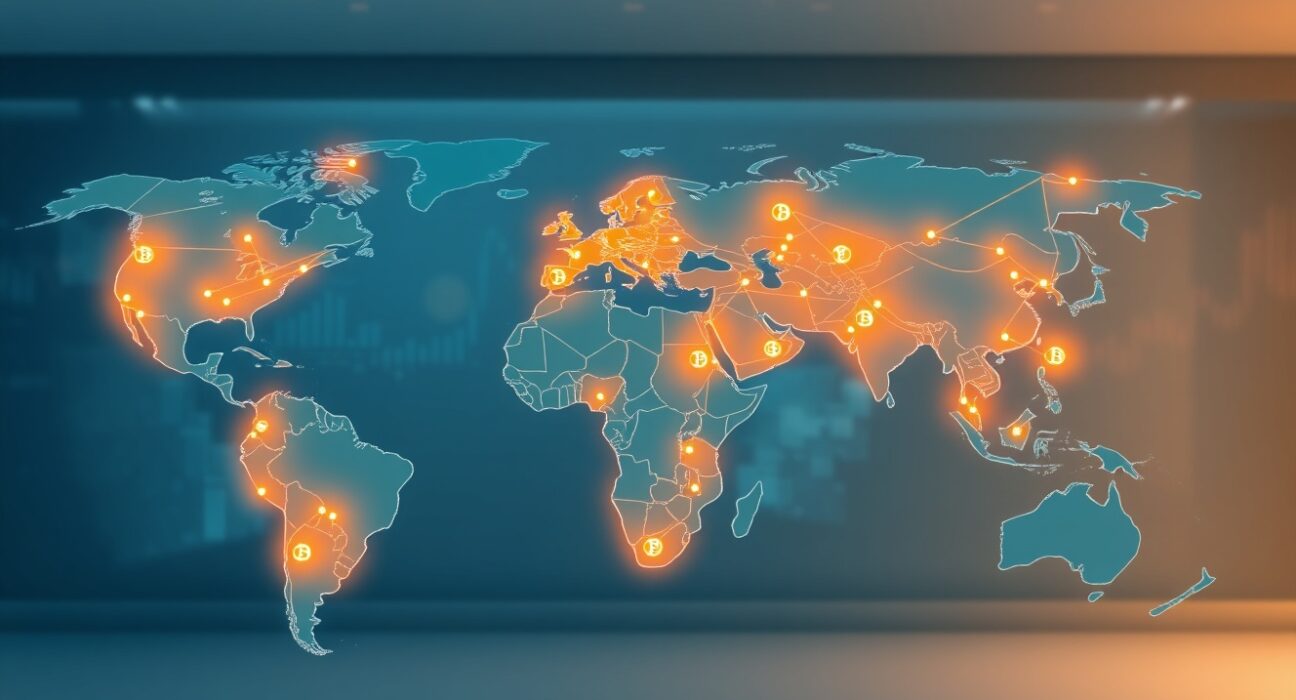
Global Bitcoin accessibility has undergone a remarkable transformation since 2020, with significant improvements documented in at least 50 countries according to a comprehensive new analysis. A recent report from Bitcoin financial platform River Financial, published in late 2024, provides compelling evidence of this accelerating trend. Conversely, the study identifies only four nations where regulatory conditions have demonstrably worsened for the pioneering cryptocurrency. This data presents a clear narrative of growing institutional and governmental acceptance, fundamentally reshaping the digital asset landscape.
Bitcoin Accessibility Metrics Show Clear Global Progress
River Financial’s methodology for assessing Bitcoin accessibility extends beyond simple exchange availability. Researchers analyzed multiple vectors, including regulatory clarity, banking integration, local exchange density, and the presence of formal investment vehicles. Consequently, the report offers a nuanced view of the practical ease with which individuals and institutions can acquire, hold, and transact with Bitcoin. The finding of improvement in over 50 jurisdictions represents a substantial majority of the global economy. Furthermore, this progress is not confined to a single region but spans continents, indicating a broad-based shift in perception and policy.
Key drivers behind this improved accessibility include several interconnected factors. Firstly, advancements in financial technology have lowered barriers to entry globally. Secondly, increased competition among service providers has enhanced user experience and reduced costs. Thirdly, a growing body of case law and regulatory guidance in many countries has reduced operational uncertainty for businesses. These elements combine to create a more robust and user-friendly ecosystem for Bitcoin participation.
The ETF Phenomenon as a Major Accessibility Driver
One of the most significant indicators highlighted in the River Financial analysis is the proliferation of Bitcoin exchange-traded funds (ETFs). The report notes the availability of these regulated investment vehicles in 34 countries, a figure that has grown substantially since the first Canadian ETF approvals in 2021. ETFs represent a critical bridge between traditional finance and digital assets. They provide a familiar, regulated, and often tax-advantaged structure for institutional and retail investors who may be hesitant to custody Bitcoin directly.
The impact of ETF availability is multifaceted. For instance, it enables exposure through existing brokerage and retirement accounts, bypassing the need for specialized crypto exchanges. Additionally, it brings rigorous custodial standards, daily liquidity, and price transparency that meet the requirements of large asset managers and pension funds. This institutional pathway has directly contributed to the improved accessibility score in numerous developed markets, including the United States following its landmark ETF approvals in early 2024.
Expert Analysis on Regulatory Trends
Financial analysts and regulatory experts point to a clear pattern of maturation. “The data reflects a move from outright skepticism to structured engagement,” notes Dr. Anya Sharma, a fintech policy researcher at the Global Digital Finance Institute. “Governments are increasingly recognizing that comprehensive bans are ineffective and that a regulated framework better serves consumer protection and financial innovation goals.” This perspective is supported by the report’s finding of only four countries with deteriorating regulatory scores, suggesting that outright hostility is becoming a marginal stance.
The regulatory evolution often follows a recognizable timeline. Initially, many countries issued warnings or imposed restrictions. Subsequently, several have moved to establish licensing regimes for exchanges and custodians. Finally, a growing number are integrating cryptocurrency reporting into existing anti-money laundering and tax frameworks. This progression creates a more predictable environment, which directly enhances accessibility for compliant businesses and their customers.
Emerging Economies Lead with Legalization Efforts
Beyond ETFs, the River Financial report identifies a powerful trend among governments in emerging economies: the formal legalization of Bitcoin for specific use cases. Several nations have passed laws recognizing Bitcoin as legal tender for certain transactions or as a valid store of value. This legislative action provides the highest level of clarity and safety for users and businesses operating within those jurisdictions.
Motivations for this approach vary. For some countries, it is a strategy for financial inclusion, leveraging Bitcoin’s borderless nature to facilitate remittances and banking for unserved populations. For others, it is an economic diversification play, aiming to attract technology investment and talent. The report suggests that this trend is likely to continue, as early adopters provide case studies for others to evaluate. The legal recognition fundamentally changes the accessibility equation, removing the fear of sudden regulatory crackdowns that previously stifled adoption.
Common characteristics of countries showing the most improvement include:
- Clear, published regulatory guidelines for virtual asset service providers (VASPs)
- Established pathways for banking relationships for licensed crypto businesses
- Integration of crypto asset reporting into national tax systems
- Public statements from central banks or finance ministries acknowledging the asset class
Contrasting the Four Jurisdictions with Worsening Conditions
While the global trend is overwhelmingly positive, the report’s identification of four countries where accessibility has worsened provides important context. Analysis suggests that regressive steps are typically linked to specific macroeconomic pressures, such as currency controls or political instability, rather than a fundamental rejection of cryptocurrency technology. In these cases, restrictions often target on-ramps and off-ramps—the channels for converting local currency to Bitcoin—rather than the ownership of Bitcoin itself.
This distinction is crucial. It implies that even in restrictive environments, the underlying peer-to-peer network remains accessible. The challenges are primarily at the interface with traditional finance. Experts observe that such restrictions frequently lead to the growth of decentralized peer-to-peer markets, demonstrating the resilience of the network. However, these conditions undoubtedly raise costs and complexity for average users, hence the negative scoring in the River Financial assessment.
The Impact on Global Finance and Inclusion
The cumulative effect of improved Bitcoin accessibility in over 50 countries is profound. It facilitates faster and cheaper cross-border settlement for businesses and migrants. It provides an alternative savings vehicle in nations experiencing high inflation or currency devaluation. Moreover, it creates a new asset class for portfolio diversification. The growth of regulated products like ETFs also pulls Bitcoin further into the mainstream financial audit and compliance world, increasing overall system transparency.
From a financial inclusion perspective, improved accessibility means that individuals without access to traditional banking can participate in the global digital economy using only a smartphone. This potential is a key reason why several developing nations have taken proactive regulatory stances. They are positioning themselves to harness the technology for economic development, rather than attempting to block its inevitable use by their citizens.
Conclusion
The River Financial report delivers a powerful, data-backed conclusion: global Bitcoin accessibility has expanded dramatically since 2020. The proliferation of ETFs in 34 countries and the legalization trend in emerging economies are two concrete pillars supporting this growth. While regulatory challenges persist in a handful of jurisdictions, the overarching narrative is one of integration and acceptance. This improved accessibility is not merely a technical metric; it represents a significant shift in how the world’s financial systems interact with digital bearer assets. As regulatory frameworks continue to mature and institutional products proliferate, this trend of expanding Bitcoin accessibility appears poised to continue, fundamentally reshaping global finance in the process.
FAQs
Q1: What does “Bitcoin accessibility” mean in this report?
A1: In the River Financial report, Bitcoin accessibility is a composite metric evaluating how easily individuals and institutions in a country can legally acquire, hold, and use Bitcoin. It considers factors like exchange availability, regulatory clarity, banking support, and the presence of investment vehicles like ETFs.
Q2: Which countries have legalized Bitcoin use?
A2: While the report discusses a growing trend, it highlights actions by several emerging economies. Some nations have passed laws recognizing Bitcoin as legal tender for specific purposes or as a valid digital asset, providing a clear regulatory framework for its use. The exact list evolves as new legislation is passed.
Q3: How do Bitcoin ETFs improve accessibility?
A3: Bitcoin ETFs improve accessibility by allowing investors to gain exposure to Bitcoin’s price movements through traditional stock brokerage accounts. This removes the need to use a cryptocurrency exchange, manage private keys, or understand self-custody, making it familiar and simpler for mainstream investors.
Q4: Why have conditions worsened in only four countries?
A4: According to analysts, regressive steps are often reactive measures tied to local economic crises, such as capital flight or currency instability, rather than a philosophical stance against cryptocurrency. These restrictions typically target the conversion between local currency and Bitcoin, not the network itself.
Q5: What is the significance of this trend for the average person?
A5: For the average person, improved Bitcoin accessibility means more options for saving, investing, and sending money internationally. It can offer a hedge against local inflation, provide a way to receive remittances with lower fees, and introduce a new asset class into personal finance strategies through familiar, regulated products.
Disclaimer: The information provided is not trading advice, Bitcoinworld.co.in holds no liability for any investments made based on the information provided on this page. We strongly recommend independent research and/or consultation with a qualified professional before making any investment decisions.
