

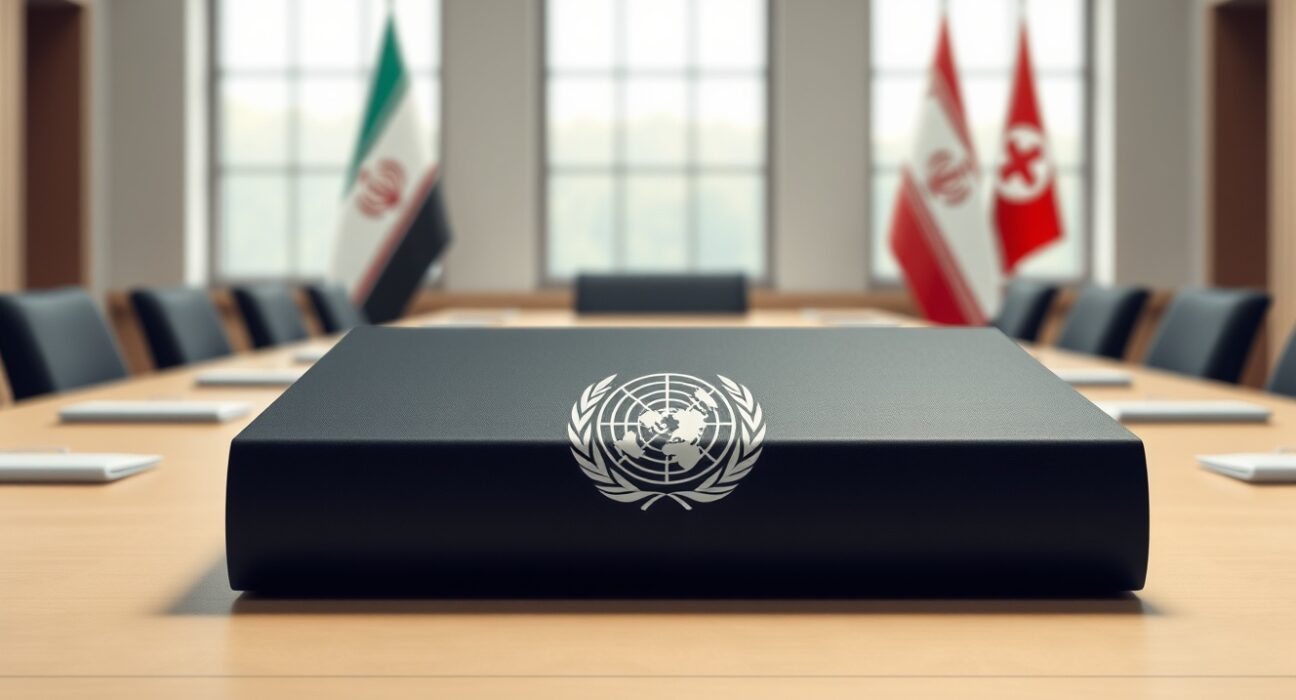
In a significant development reported by The New York Times, Tehran, Iran – February 2025 – Iranian officials have reportedly proposed a suspension of the nation’s nuclear activities for a period of up to five years. This potential diplomatic breakthrough could reshape years of stalled negotiations and alter the global non-proliferation landscape. The proposal, emerging from confidential diplomatic channels, represents one of the most concrete gestures from Iran in recent years aimed at de-escalating tensions with Western powers.
Analyzing the Iran Nuclear Deal Suspension Proposal
The core of the reported proposal involves a voluntary halt to specific nuclear enrichment and development activities. Consequently, this move could serve as a major confidence-building measure. Importantly, the suspension would not constitute a permanent abandonment of Iran’s nuclear program under the Treaty on the Non-Proliferation of Nuclear Weapons (NPT). Instead, it offers a multi-year window for broader diplomatic negotiations. Furthermore, such a pause would likely involve enhanced monitoring by the International Atomic Energy Agency (IAEA).
The 2015 Joint Comprehensive Plan of Action (JCPOA), commonly known as the Iran nuclear deal, imposed strict limits on Iran’s nuclear program in exchange for sanctions relief. However, the United States unilaterally withdrew from the agreement in 2018 under the Trump administration. Subsequently, Iran gradually resumed and expanded activities beyond the JCPOA’s limits. Therefore, this new proposal suggests a potential pathway back to compliance, albeit through a different mechanism.
Historical Context and Diplomatic Stalemate
Understanding this proposal requires examining the complex history of Iran’s nuclear program. The program began in the 1950s with support from the United States under the “Atoms for Peace” program. Decades later, international concerns about potential military dimensions emerged. Subsequently, a series of UN Security Council resolutions imposed sanctions. The JCPOA, finalized in Vienna in 2015, was hailed as a landmark diplomatic achievement. It successfully capped Iran’s stockpile of low-enriched uranium and reduced its number of centrifuges.
Following the U.S. withdrawal and re-imposition of crippling sanctions, the deal’s future became uncertain. Negotiations to revive the agreement, held in Vienna and elsewhere, repeatedly stalled over key issues. These issues included the scope of sanctions relief and guarantees against future U.S. withdrawal. The current proposal appears to be an attempt to break this persistent deadlock by creating a new interim framework.
Expert Analysis on Strategic Implications
Non-proliferation experts point to several critical factors behind this timing. First, regional dynamics have shifted significantly. Second, domestic economic pressures within Iran have intensified. Third, a changing global geopolitical landscape may have created a new opening for diplomacy. Dr. Elena Rodriguez, a senior fellow at the Center for Strategic and International Studies, notes, “A five-year suspension is a substantial commitment. It effectively resets the clock and provides a tangible period for all parties to negotiate a more durable solution without the immediate pressure of advancing nuclear capabilities.”
From a technical standpoint, a suspension would involve several verifiable steps. The IAEA would need to confirm the disabling or sealing of specific centrifuge cascades. Additionally, monitoring equipment would require recalibration. The agency would also need continuous access to declared nuclear sites. A suspension differs fundamentally from a rollback, as it is a reversible action contingent on the behavior of all parties.
Potential Global Impact and Regional Reactions
The international response to this proposal will be multifaceted and complex. Key global powers will assess its merits cautiously. For the United States and European Union, a suspension could alleviate immediate security concerns. It would also provide a diplomatic off-ramp from escalating tensions. For Iran, the primary expectation would be a corresponding suspension of key economic sanctions. This could provide vital relief to its struggling economy.
Regional actors, particularly Israel and Saudi Arabia, have historically viewed Iran’s nuclear program as an existential threat. A verifiable suspension might temporarily reduce immediate fears of a nuclear-armed Iran. However, it would unlikely fully assuage long-term security concerns. These nations will scrutinize the proposal’s verification mechanisms with extreme diligence. Their reactions will significantly influence the diplomatic trajectory.
The success of any such proposal hinges on several critical elements:
- Verification: Robust, intrusive, and uninterrupted monitoring by the IAEA.
- Reciprocity: Clear, simultaneous steps by Western powers regarding sanctions.
- Duration: The five-year timeframe must be seen as a bridge, not an endpoint.
- Regional Dialogue: Parallel efforts to address broader Middle East security concerns.
Conclusion
The reported Iran nuclear deal proposal for a five-year suspension marks a pivotal moment in international diplomacy. While significant hurdles remain regarding verification and reciprocal actions, the offer itself breaks a prolonged stalemate. Its potential adoption could temporarily freeze the most sensitive aspects of Iran’s nuclear program. Ultimately, it would create a crucial window for negotiating a more comprehensive and stable long-term agreement. The global community now watches closely to see if this proposal can transition from a confidential diplomatic signal into a verifiable and actionable framework for peace and security.
FAQs
Q1: What exactly would Iran suspend under this proposal?
Based on the reporting, Iran would suspend uranium enrichment above 3.67%, halt the installation of new advanced centrifuges, and freeze activities at key facilities like the Fordow enrichment plant, likely placing them under enhanced IAEA monitoring.
Q2: How does a ‘suspension’ differ from the original 2015 nuclear deal (JCPOA)?
The JCPOA was a permanent agreement limiting Iran’s program. A suspension is a temporary, reversible confidence-building measure intended to create space for new negotiations, not necessarily a return to the exact JCPOA terms.
Q3: What would Iran expect in return for this suspension?
Iran would almost certainly demand a corresponding suspension of key economic sanctions, particularly those affecting oil exports and access to the international financial system, providing relief to its economy.
Q4: How would the world verify Iran is complying with a suspension?
Verification would rely on the International Atomic Energy Agency (IAEA), which would need continuous, unimpeded access to nuclear sites, real-time data monitoring, and the ability to conduct snap inspections.
Q5: Why is a five-year timeframe significant?
A five-year period is long enough to allow for serious diplomatic negotiations on a follow-on agreement but short enough to maintain pressure on all parties to reach a resolution, preventing indefinite drift.
Disclaimer: The information provided is not trading advice, Bitcoinworld.co.in holds no liability for any investments made based on the information provided on this page. We strongly recommend independent research and/or consultation with a qualified professional before making any investment decisions.
