

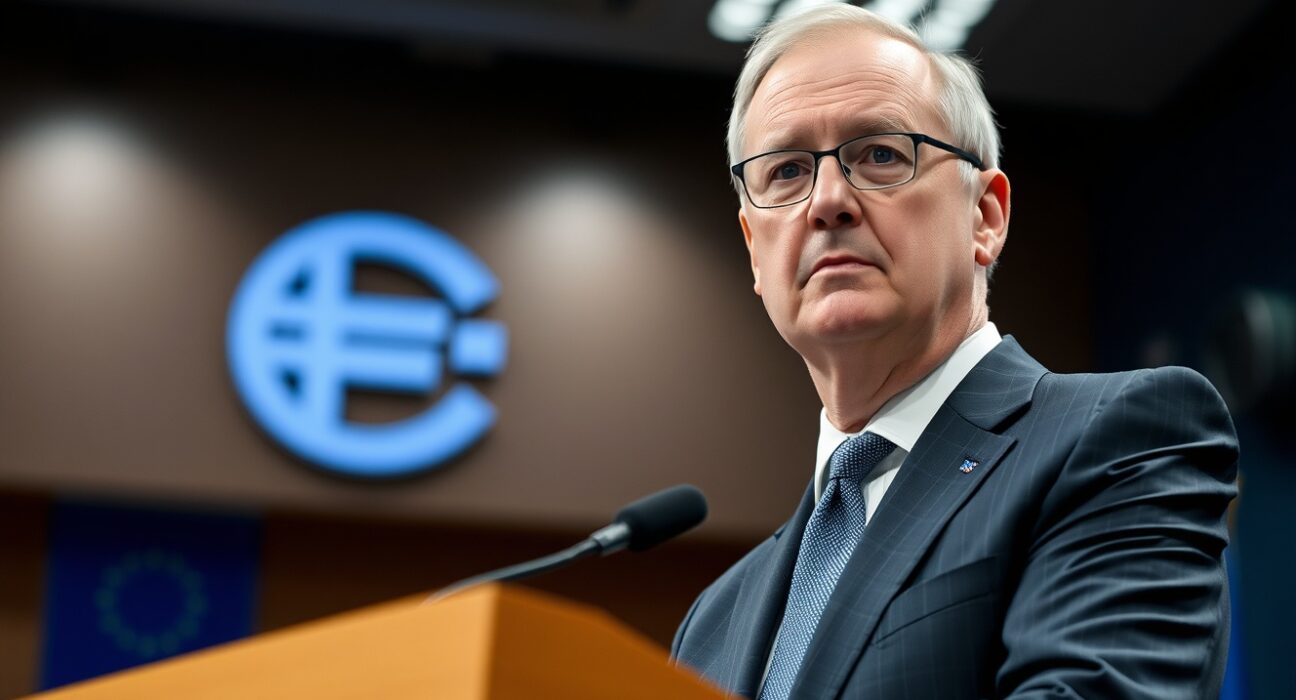
European Central Bank Governing Council member Olli Rehn delivered a critical warning from Helsinki on Monday, revealing that the ongoing Middle East conflict presents severe inflation risks to the European economy through potential long-term damage to energy production infrastructure.
ECB’s Rehn Issues Inflation Warning Over Middle East Conflict
Olli Rehn, who serves as Governor of the Bank of Finland and sits on the European Central Bank’s key decision-making body, expressed significant concern about inflationary pressures. The conflict’s impact on energy infrastructure could create lasting consequences for European consumers and businesses. Rehn emphasized this point during his latest public remarks, highlighting the vulnerability of global energy markets to geopolitical instability. Furthermore, he noted that even after active hostilities diminish, the damage to production facilities might persist for years. This situation presents a complex challenge for monetary policymakers across the Eurozone.
The European Central Bank currently faces delicate balancing acts between controlling inflation and supporting economic growth. Energy price shocks directly affect consumer price indices through multiple channels. Transportation costs increase immediately while manufacturing expenses rise subsequently. The ECB’s primary mandate remains price stability, making energy-driven inflation particularly difficult to manage. Historical data shows that previous Middle Eastern conflicts typically increased oil prices by 15-30% during their most intense phases. However, Rehn suggested current risks might extend beyond temporary price spikes.
Energy Infrastructure Damage Creates Long-Term Economic Uncertainty
Critical energy production facilities across the Middle East region face potential damage from ongoing military operations. These facilities include oil extraction sites, natural gas processing plants, and crucial transportation infrastructure. The region supplies approximately 30% of global oil exports and 20% of liquefied natural gas shipments. Europe depends heavily on these energy sources, particularly for industrial operations and winter heating. Infrastructure damage could therefore reduce available supplies while increasing global competition for remaining resources.
Expert Analysis of Infrastructure Vulnerability
Energy analysts identify several vulnerable infrastructure points in conflict zones. Pipeline networks often suffer damage first during military operations. Refining capacity typically requires years to rebuild after significant destruction. Storage facilities represent additional critical vulnerabilities. The International Energy Agency recently published data showing Middle Eastern countries maintain over 8 million barrels per day of spare production capacity. However, this capacity depends entirely on functional infrastructure. Damage to key facilities could eliminate this buffer against supply disruptions.
European energy markets already experienced significant volatility following Russia’s invasion of Ukraine. Many countries accelerated their transition to alternative suppliers, including Middle Eastern producers. This strategic shift increased Europe’s exposure to regional instability. Germany, for instance, now imports 25% of its natural gas from Qatar and other Gulf states. France sources 30% of its oil from Middle Eastern producers. Italy depends on regional suppliers for 35% of its energy imports. These percentages increased substantially over the past three years, creating new vulnerabilities.
Historical Context of Geopolitical Energy Shocks
Previous Middle Eastern conflicts provide important context for understanding current risks. The 1973 oil embargo caused European inflation to surge above 15% annually. The 1990 Gulf War triggered a 150% oil price increase within six months. The 2003 Iraq invasion created sustained price volatility lasting nearly two years. However, Rehn noted important differences in current circumstances. Global energy markets evolved significantly since earlier conflicts. Renewable energy sources now provide 25% of European electricity generation. Energy efficiency improved by 35% across EU industries since 2005. Strategic petroleum reserves contain 90 days of import coverage for most member states.
Despite these improvements, vulnerabilities remain substantial. The European Commission’s latest energy security assessment identifies several concerning factors:
- LNG terminal capacity limitations in Southern Europe
- Pipeline interconnection gaps between Eastern and Western Europe
- Storage facility geographical concentration in Northwestern Europe
- Renewable energy intermittency challenges during peak demand periods
These structural factors could amplify the impact of Middle Eastern supply disruptions. Energy economists calculate that a 10% reduction in Middle Eastern exports might increase European natural gas prices by 40-60%. Electricity prices could rise by 25-35% as a direct consequence. Such increases would significantly affect inflation measurements across the Eurozone.
Monetary Policy Implications for the European Central Bank
The ECB’s Governing Council must consider multiple factors when setting interest rates. Energy-driven inflation presents particular challenges because monetary policy cannot directly increase energy supplies. Rate increases might reduce overall demand but cannot address supply-side constraints. This limitation creates difficult trade-offs between controlling inflation and avoiding unnecessary economic damage. Rehn’s comments suggest the ECB recognizes these complexities while preparing for various scenarios.
Current ECB projections already incorporate some geopolitical risk factors. However, Rehn indicated that recent developments might exceed previous assumptions. The central bank’s standard response to energy price shocks involves looking through temporary increases while addressing secondary effects. This approach becomes problematic when price increases show persistence characteristics. Manufacturing companies typically pass higher energy costs to consumers within 3-6 months. Service providers adjust prices within 6-9 months. These delayed effects create inflationary momentum that monetary policy must eventually address.
Comparative Analysis of Central Bank Responses
Different central banks employ varying strategies for energy-driven inflation. The Federal Reserve typically responds more aggressively to headline inflation increases. The Bank of England focuses more on inflation expectations and wage dynamics. The ECB traditionally emphasizes medium-term inflation outlooks while monitoring financial stability risks. These differences reflect varying institutional mandates and economic structures. The Eurozone’s particular vulnerability stems from its heavy reliance on energy imports compared to other major economies.
The table below illustrates key differences in energy exposure:
| Economic Area | Energy Import Dependency | Strategic Reserve Coverage | Renewable Energy Share |
|---|---|---|---|
| Eurozone | 58% | 90 days | 25% |
| United States | 8% | 60 days | 22% |
| United Kingdom | 35% | 80 days | 45% |
| Japan | 88% | 150 days | 24% |
These structural factors help explain why Middle Eastern instability particularly concerns European policymakers. The Eurozone’s high import dependency creates immediate vulnerability to supply disruptions. Strategic reserves provide temporary buffers but cannot address sustained shortages. Renewable energy expansion offers long-term solutions but requires continued investment and infrastructure development.
Economic Impact Scenarios for European Consumers and Businesses
Potential energy price increases would affect different economic sectors unevenly. Energy-intensive industries face the most immediate impacts. Chemical production requires substantial natural gas inputs. Steel manufacturing depends heavily on electricity. Transportation sectors respond directly to fuel price changes. These industries might reduce production or increase prices to maintain profitability. Both responses would affect broader economic activity and employment levels.
European households already experienced significant energy cost increases during recent years. Further price rises could reduce disposable income for millions of consumers. Lower-income households typically spend higher percentages of their budgets on energy essentials. This disproportionate impact raises social policy concerns alongside economic considerations. Governments might need to implement targeted support measures alongside monetary policy responses. Such coordinated approaches present implementation challenges across multiple EU jurisdictions.
Business investment decisions could also change in response to energy uncertainty. Companies might delay expansion plans until price trajectories become clearer. Manufacturing location decisions could increasingly favor regions with stable energy supplies. Renewable energy investment might accelerate as businesses seek greater control over energy costs. These behavioral changes would gradually reshape European economic geography over coming years.
Conclusion
ECB Governing Council member Olli Rehn correctly identifies significant inflation risks from the Middle East conflict’s impact on energy infrastructure. The European economy faces potential long-term consequences from supply disruptions and price volatility. Monetary policymakers must carefully balance multiple objectives while preparing for various scenarios. Energy security considerations will likely remain central to European economic discussions throughout 2025 and beyond. The ECB’s inflation warning highlights the interconnected nature of global energy markets and regional stability.
FAQs
Q1: What specific inflation risks did Olli Rehn identify from the Middle East conflict?
Rehn identified risks primarily from potential damage to energy production infrastructure, which could create lasting supply constraints and price increases affecting European consumers and businesses long after active hostilities diminish.
Q2: How does energy price inflation differ from other types of inflation for central banks?
Energy-driven inflation presents particular challenges because monetary policy cannot directly increase energy supplies. Central banks must distinguish between temporary price spikes and persistent inflationary trends while considering secondary effects on other prices.
Q3: What percentage of Europe’s energy comes from the Middle East?
Europe imports approximately 20-35% of its oil and 15-25% of its natural gas from Middle Eastern suppliers, with significant variation between individual EU member states based on their energy diversification strategies.
Q4: How long might energy infrastructure damage affect markets after conflicts end?
Major energy infrastructure damage typically requires 2-5 years for complete reconstruction, depending on the facility type and extent of damage, creating potential for sustained market impacts beyond immediate conflict periods.
Q5: What tools does the ECB have to address energy-driven inflation?
The ECB primarily uses interest rate policy to manage inflation expectations and demand conditions, but cannot directly increase energy supplies. The bank typically looks through temporary energy price spikes while responding to secondary inflationary effects and anchoring medium-term expectations.
Disclaimer: The information provided is not trading advice, Bitcoinworld.co.in holds no liability for any investments made based on the information provided on this page. We strongly recommend independent research and/or consultation with a qualified professional before making any investment decisions.
