

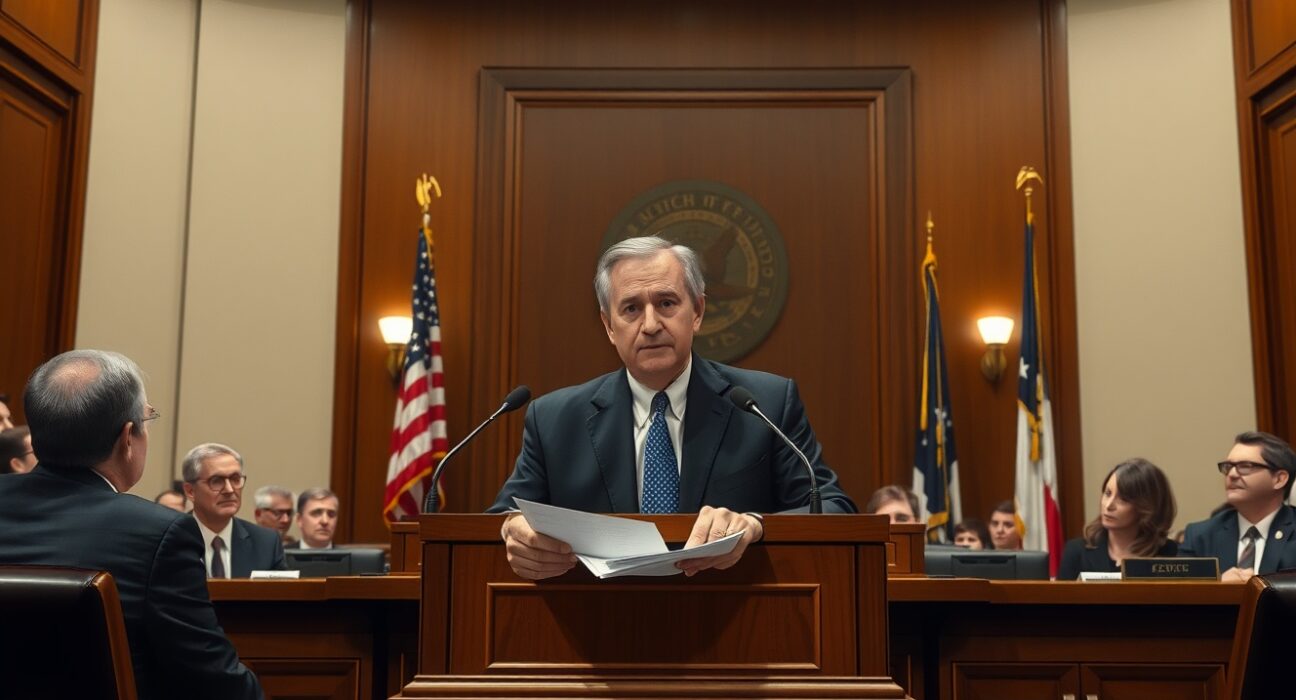
WASHINGTON, D.C. — In a significant regulatory development, U.S. Commodity Futures Trading Commission Chairman Mike Selig disclosed during a congressional hearing that his agency is conducting multiple investigations into prediction markets. This revelation comes amid growing concerns about the regulatory status of these platforms, which allow users to speculate on future events ranging from election outcomes to financial market movements. The CFTC chairman’s testimony provides crucial insight into the agency’s current enforcement priorities and operational strategies.
CFTC Chairman Details Ongoing Prediction Market Investigations
Chairman Mike Selig made his disclosure before the House Agriculture Committee on Wednesday. He confirmed the existence of numerous active investigations related to prediction markets. However, Selig deliberately avoided specifying the exact nature or targets of these probes. This strategic ambiguity maintains investigative integrity while signaling regulatory scrutiny. The CFTC oversees derivatives markets, including certain prediction market products that might qualify as event contracts or binary options.
Prediction markets have existed for decades but gained new prominence with blockchain technology. Platforms like Polymarket and PredictIt now operate with cryptocurrency integration. These markets create financial instruments tied to real-world outcomes. Participants buy and sell shares representing probabilities of specific events occurring. Regulatory uncertainty has persisted for years regarding whether these instruments constitute illegal gambling or legitimate financial products.
Regulatory Context and Historical Background
The CFTC’s jurisdiction over prediction markets has evolved through several key developments. In 2012, the agency granted no-action relief to the Iowa Electronic Markets for academic research purposes. This created a limited exception to typical regulatory requirements. However, commercial prediction markets have faced greater scrutiny. The CFTC previously approved certain event contracts from KalshiEX, establishing precedent for regulated prediction markets.
Several factors complicate prediction market regulation:
- Jurisdictional questions: Determining whether prediction markets fall under CFTC, SEC, or state gambling authority oversight
- Market structure concerns: Ensuring fair pricing, transparency, and market integrity
- Consumer protection issues: Preventing fraud, manipulation, and excessive risk-taking by retail participants
- Innovation considerations: Balancing regulatory oversight with technological advancement
Recent enforcement actions provide context for the current investigations. The CFTC settled with Polymarket in 2022 for operating an unregistered facility. That case established that event-based binary options contracts require proper registration. The agency also pursued action against PredictIt, though that case involved different regulatory questions.
Expert Analysis of Regulatory Implications
Financial regulation experts note several important implications from Selig’s disclosure. “The CFTC’s multiple investigations signal serious concerns about prediction market compliance,” explains Dr. Sarah Chen, a derivatives regulation professor at Georgetown University. “Chairman Selig’s careful wording suggests these investigations target significant violations rather than minor technical issues.”
Industry observers point to several potential investigation targets. These include unregistered trading platforms, market manipulation schemes, and inadequate customer protection measures. The timing coincides with increased prediction market activity around major events. Presidential elections, economic indicators, and geopolitical developments typically drive trading volume spikes.
Legal experts emphasize the importance of proper classification. “The fundamental question remains whether prediction markets offer legitimate hedging instruments or constitute gambling,” notes Michael Rodriguez, a financial services attorney. “The CFTC’s investigations will likely examine how platforms characterize their products to users and regulators.”
AI Integration Following Staff Reductions
Chairman Selig revealed another significant operational development during his testimony. The CFTC is improving efficiency through artificial intelligence implementation. This technological advancement follows recent staff reductions at the agency. Selig explained that AI tools help the commission process large datasets more effectively. These systems identify potential violations and streamline investigation workflows.
The CFTC’s AI adoption reflects broader government trends. Federal agencies increasingly leverage machine learning for regulatory oversight. These tools analyze trading patterns, detect anomalies, and prioritize enforcement resources. However, the technology raises important questions about transparency and due process. Regulatory experts emphasize the need for human oversight in AI-assisted investigations.
Several specific AI applications enhance CFTC operations:
- Pattern recognition: Identifying suspicious trading activities across multiple platforms
- Document analysis: Processing large volumes of regulatory filings and communications
- Risk assessment: Prioritizing investigations based on potential market impact
- Compliance monitoring: Tracking registered entities’ adherence to regulatory requirements
The agency’s technological modernization occurs amid budget constraints. Congressional appropriations have remained relatively flat despite market growth. AI implementation represents a strategic response to these resource limitations. However, some consumer advocates express concerns about reduced human oversight.
Market Impact and Industry Response
Prediction market operators responded cautiously to the regulatory disclosure. Major platforms emphasized their commitment to compliance and cooperation. Industry representatives noted ongoing dialogue with regulators about appropriate frameworks. Several companies highlighted their existing registration status or exemption applications.
The investigations announcement affected market activity temporarily. Trading volumes dipped slightly as participants assessed regulatory implications. However, prices quickly stabilized as operators clarified their compliance positions. This resilience suggests market participants anticipated increased regulatory attention.
International regulatory approaches vary significantly. Some jurisdictions embrace prediction markets with clear frameworks. Others prohibit them entirely or impose strict limitations. The United States occupies a middle position with case-by-case determinations. This creates uncertainty for operators seeking to expand across borders.
| Jurisdiction | Regulatory Status | Key Features |
|---|---|---|
| United Kingdom | Regulated Gambling | Financial spread betting framework with FCA oversight |
| European Union | Mixed Regulation | Varies by member state; some treat as financial instruments |
| Australia | Financial Markets | ASIC oversight for markets exceeding certain thresholds |
| Singapore | Prohibited | MAS bans prediction markets except for specific exemptions |
| United States | Case-by-Case | CFTC/SEC jurisdiction depends on specific product structure |
Technological Innovation and Regulatory Adaptation
Blockchain technology complicates traditional regulatory approaches. Decentralized prediction markets operate without central intermediaries. These platforms present unique challenges for enforcement actions. The CFTC must adapt traditional jurisdictional concepts to decentralized finance environments.
Smart contracts automatically execute trades based on predetermined conditions. This automation reduces counterparty risk but creates new compliance questions. Regulators must determine responsibility when code rather than people operates markets. These technological developments require updated regulatory frameworks.
Industry advocates propose innovative solutions. Some suggest regulatory sandboxes for testing new prediction market structures. Others recommend specialized licenses for blockchain-based platforms. These approaches balance innovation with consumer protection. However, they require legislative action beyond current agency authority.
Conclusion
CFTC Chairman Mike Selig’s congressional testimony reveals significant regulatory developments. Multiple ongoing investigations into prediction markets demonstrate increased enforcement attention. These probes will likely shape the future regulatory landscape for event-based trading platforms. Simultaneously, the CFTC’s AI adoption represents strategic adaptation to resource constraints. This technological integration enhances investigative capabilities while raising important oversight questions. The prediction market industry now faces a critical period of regulatory clarification. Market participants should monitor developments closely as investigations progress. Ultimately, these proceedings will determine whether prediction markets operate as regulated financial instruments or face increased restrictions.
FAQs
Q1: What exactly are prediction markets?
Prediction markets are platforms where participants trade contracts based on the outcome of future events. These financial instruments pay out based on whether specific events occur, allowing users to speculate on probabilities.
Q2: Why is the CFTC investigating prediction markets?
The CFTC investigates potential violations of commodities trading laws. These may include operating unregistered trading facilities, market manipulation, fraud, or offering illegal off-exchange derivatives to retail customers.
Q3: How is the CFTC using AI in its operations?
The CFTC employs artificial intelligence to analyze trading data, detect suspicious patterns, process regulatory filings, and prioritize enforcement resources following recent staff reductions.
Q4: Are all prediction markets illegal?
No, some prediction markets operate legally under specific exemptions or registrations. The regulatory status depends on the market structure, participant qualifications, and contract specifications.
Q5: What should prediction market users know about these investigations?
Users should ensure they understand the regulatory status of platforms they use. They should also recognize that investigations could lead to platform changes or closures, potentially affecting their positions.
Disclaimer: The information provided is not trading advice, Bitcoinworld.co.in holds no liability for any investments made based on the information provided on this page. We strongly recommend independent research and/or consultation with a qualified professional before making any investment decisions.
