

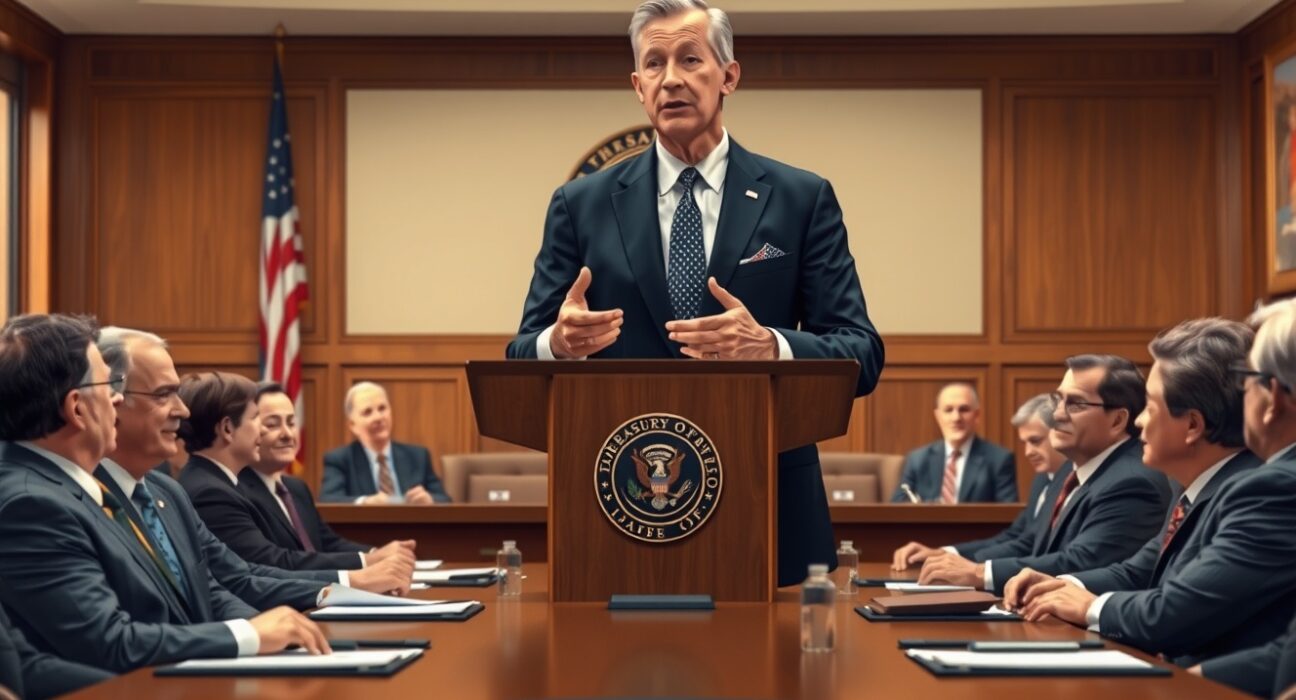
WASHINGTON D.C., March 2025 — US Treasury Secretary Scott Bessent convened with finance ministers and central bank governors from major economies this week, delivering a comprehensive reaffirmation of American economic policy during a critical period of global financial uncertainty. The meetings, held at the US Treasury Department headquarters, addressed pressing concerns about monetary coordination, trade frameworks, and financial stability mechanisms. Consequently, these discussions established a foundation for enhanced international cooperation. Secretary Bessent emphasized continuity in core US economic principles while acknowledging evolving global challenges. Furthermore, the gathering provided a platform for direct dialogue between key financial decision-makers.
Scott Bessent’s Strategic Agenda for Global Economic Stability
Secretary Bessent outlined three primary policy pillars during his opening remarks. First, he reinforced the United States’ commitment to maintaining dollar stability as the global reserve currency. Second, he detailed ongoing efforts to modernize international financial institutions. Third, he addressed collaborative approaches to emerging economic threats. The Treasury Department subsequently released a summary of key discussion points. These included debt sustainability frameworks for developing nations and coordinated responses to climate-related financial risks. Additionally, participants examined recent market volatility patterns. The meetings featured representatives from G7 nations, major emerging economies, and international financial organizations. Each delegation presented current economic assessments and policy priorities.
The discussions occurred against a backdrop of shifting global economic dynamics. Recent months have witnessed significant currency fluctuations and divergent inflation trajectories across regions. Secretary Bessent acknowledged these challenges while emphasizing the resilience of the US economy. He referenced recent employment data and productivity metrics as evidence of underlying strength. Moreover, he highlighted ongoing efforts to address supply chain vulnerabilities identified during previous global disruptions. The Treasury Secretary’s approach balanced firm policy principles with pragmatic flexibility. This strategy received measured support from several participating nations.
Historical Context of US Treasury Global Diplomacy
Secretary Bessent’s meetings continue a long tradition of US financial diplomacy. Previous Treasury Secretaries have frequently used such gatherings to shape international economic norms. For instance, the Plaza Accord of 1985 and subsequent agreements established precedents for coordinated currency management. Similarly, the 2008 financial crisis prompted unprecedented global coordination through G20 mechanisms. Today’s challenges differ significantly from those historical moments. Current issues include digital currency integration, cybersecurity threats to financial infrastructure, and sustainable finance transitions. The Treasury Department has consequently adapted its diplomatic toolkit. Modern meetings incorporate technical working groups alongside ministerial discussions.
The following table illustrates key differences between current and historical Treasury diplomatic priorities:
| Era | Primary Focus | Key Mechanisms | Major Challenges |
|---|---|---|---|
| 1980s-1990s | Currency stability & trade balances | Plaza/Louvre Accords, G7 meetings | Inflation control, exchange rate volatility |
| 2000s-2010s | Financial crisis response & regulation | G20 summits, Basel accords | Banking system stability, sovereign debt |
| 2020s-present | Digital transformation & climate finance | Technical working groups, bilateral agreements | CBDCs, sustainable investing, cyber risks |
Expert Analysis of Policy Continuity and Innovation
Financial policy experts observe important nuances in Secretary Bessent’s approach. Dr. Eleanor Vance, former IMF senior advisor, notes the Secretary’s careful balance between tradition and adaptation. “The reaffirmation of core principles provides necessary stability,” she explains. “Simultaneously, the openness to new frameworks addresses contemporary realities.” This dual approach appears strategically calculated. It maintains confidence in established systems while permitting evolutionary improvements. Additionally, the meetings served transparency objectives. By clearly communicating US positions, the Treasury reduces policy uncertainty for international partners. Market analysts particularly welcomed this clarity regarding digital asset regulations.
Several concrete outcomes emerged from the discussions. Participants agreed to establish a quarterly technical dialogue on cross-border payment systems. They also committed to sharing best practices regarding central bank digital currency development. Furthermore, working groups will examine climate risk disclosure standardization. These practical measures build upon the broader policy reaffirmation. They translate high-level principles into actionable cooperation mechanisms. The Treasury Department will host follow-up meetings in six months to assess progress. Meanwhile, bilateral discussions will continue through established diplomatic channels.
Global Economic Impacts and Market Reactions
Financial markets responded cautiously positively to the meetings’ outcomes. Major currency pairs showed reduced volatility following the policy clarity. Bond markets similarly exhibited stabilizing tendencies. Analysts attribute these reactions to diminished uncertainty about US policy direction. The reaffirmation of traditional approaches reassured some investors concerned about abrupt shifts. Concurrently, the openness to innovation addressed concerns about technological stagnation. This balanced messaging appears effective for current market conditions. However, long-term impacts will depend on implementation consistency.
The meetings addressed several specific economic concerns:
- Debt sustainability: Coordinated approaches to emerging market debt distress
- Digital finance: Common standards for cryptocurrency regulation and CBDC development
- Trade facilitation: Streamlined cross-border transaction mechanisms
- Climate finance: Alignment of sustainable investment frameworks
- Cybersecurity: Shared protocols for financial infrastructure protection
International partners expressed particular interest in US digital dollar developments. Secretary Bessent provided updates without committing to specific timelines. He emphasized thorough evaluation of implications before any implementation decisions. This prudent approach received broad support. European and Asian counterparts described similar cautious methodologies. The collective emphasis on careful development rather than rushed deployment represents significant consensus. This alignment may influence global digital currency trajectories substantially.
Conclusion
Secretary Scott Bessent’s meetings successfully reaffirmed US economic policy while fostering international cooperation. The discussions provided clarity on American positions regarding monetary policy, financial regulation, and emerging economic challenges. Furthermore, they established practical mechanisms for ongoing collaboration. The Treasury Secretary’s balanced approach—honoring traditional principles while embracing necessary innovation—appears strategically sound. Consequently, these meetings contribute to global economic stability during a period of significant transformation. The continued dialogue between US Treasury officials and their global counterparts remains essential for addressing complex, interconnected financial challenges. Ultimately, such diplomatic engagement strengthens the international economic architecture benefiting all participating nations.
FAQs
Q1: What were the main purposes of Secretary Bessent’s meetings with global counterparts?
The meetings served three primary purposes: reaffirming core US economic policy positions, addressing current global financial challenges, and establishing practical cooperation mechanisms for issues including digital currency development, climate finance, and debt sustainability.
Q2: Which countries and organizations participated in these discussions?
Participants included finance ministers and central bank governors from G7 nations, major emerging economies, and representatives from international financial organizations including the IMF, World Bank, and Bank for International Settlements.
Q3: How do these meetings differ from previous US Treasury diplomatic efforts?
While continuing traditional focus on currency stability and financial regulation, current discussions increasingly address digital transformation, cybersecurity, and climate-related financial risks, reflecting evolving global economic challenges.
Q4: What were the key outcomes or agreements from the meetings?
Key outcomes included establishing quarterly technical dialogues on payment systems, committing to share CBDC development best practices, and forming working groups on climate risk disclosure standardization and cybersecurity protocols.
Q5: How did financial markets react to the policy reaffirmation?
Markets responded with cautious positivity, showing reduced volatility in currency and bond markets as the clarity on US policy direction diminished uncertainty, though long-term impacts will depend on consistent implementation of discussed frameworks.
Disclaimer: The information provided is not trading advice, Bitcoinworld.co.in holds no liability for any investments made based on the information provided on this page. We strongly recommend independent research and/or consultation with a qualified professional before making any investment decisions.
