

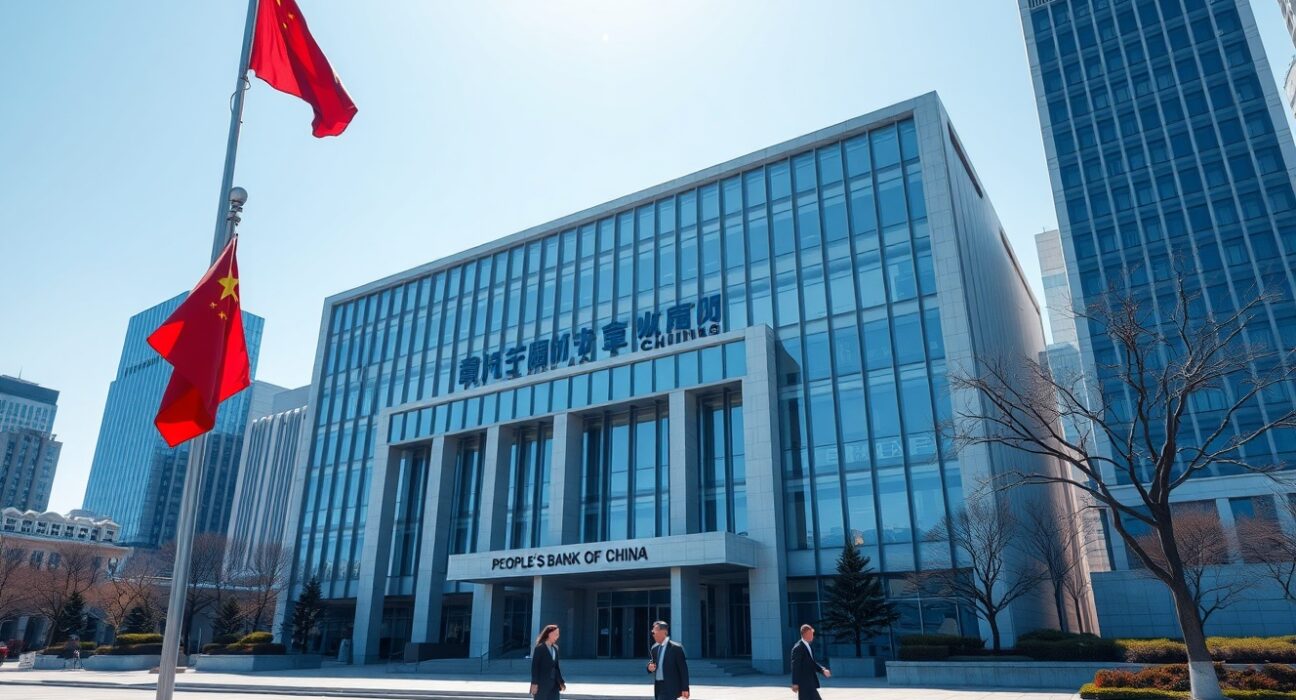
BEIJING, March 2025 – The People’s Bank of China continues refining its monetary policy approach, increasingly favoring targeted easing measures over broad interest rate reductions according to recent analysis from DBS Bank. This strategic pivot represents a significant evolution in China’s economic management toolkit as policymakers navigate complex domestic and global financial landscapes. Consequently, market observers now scrutinize every policy signal for clues about China’s 2025 economic trajectory.
PBoC Monetary Policy Evolution Toward Precision Tools
The People’s Bank of China has gradually transformed its monetary policy framework over the past decade. Initially, the central bank relied heavily on broad-based instruments like reserve requirement ratio adjustments and benchmark interest rate changes. However, economic complexity now demands more sophisticated approaches. Targeted easing specifically directs liquidity toward strategic sectors while avoiding economy-wide stimulus. This precision targeting helps address structural imbalances without fueling inflationary pressures or asset bubbles.
Recent policy implementations demonstrate this shift clearly. For instance, the PBoC introduced specialized lending facilities for small and medium enterprises in 2023. Additionally, the central bank launched green finance initiatives to support environmental projects. These targeted measures contrast with the broad rate cuts employed during previous economic cycles. DBS researchers note this represents “a maturation of China’s monetary policy toolkit” toward greater sophistication and sector-specific impact.
Targeted Easing Mechanisms and Implementation
Targeted easing encompasses several specific policy instruments designed for precision implementation. The Medium-term Lending Facility allows the PBoC to inject liquidity into specific banking institutions. Similarly, the Standing Lending Facility provides short-term funding with collateral requirements. Furthermore, relending and rediscounting programs direct funds toward priority sectors like agriculture and small businesses.
- Structural Monetary Tools: Instruments designed to address specific economic vulnerabilities
- Sector-Specific Lending: Directed credit toward manufacturing, technology, and green energy
- Collateral Framework Adjustments: Expanding acceptable collateral to improve credit transmission
- Macroprudential Policies: Integrating financial stability considerations with monetary measures
Implementation typically involves multiple government agencies coordinating their efforts. The PBoC collaborates with financial regulators and industrial policy departments. This interagency cooperation ensures that monetary measures align with broader economic objectives. Moreover, policy communication has become increasingly transparent through regular briefings and reports.
DBS Research Methodology and Findings
DBS Bank economists employed comprehensive analysis to reach their conclusions about China’s monetary policy direction. Their research incorporated quantitative modeling of policy transmission mechanisms. Additionally, they conducted interviews with financial institution executives. The team also analyzed historical policy responses to various economic scenarios.
The research identified several key factors driving the shift toward targeted easing. First, China’s economic structure has diversified significantly across regions and sectors. Second, financial market development created more transmission channels for policy effects. Third, international monetary policy divergence requires more nuanced domestic approaches. Finally, debt sustainability concerns limit the scope for broad stimulus measures.
| Policy Feature | Broad Rate Cuts | Targeted Easing |
|---|---|---|
| Transmission Speed | Rapid economy-wide impact | Gradual sector-specific effects |
| Precision | Limited differentiation | High sectoral targeting |
| Side Effects | Potential asset inflation | Minimal spillover effects |
| Coordination Needs | Primarily monetary | Multi-agency collaboration |
Economic Context and Global Implications
China’s monetary policy evolution occurs within a complex global economic environment. Major central banks worldwide continue grappling with post-pandemic adjustments. Meanwhile, geopolitical tensions create additional uncertainty for trade-dependent economies. Consequently, the PBoC must balance domestic priorities with international considerations.
The global implications of China’s policy shift are substantial. As the world’s second-largest economy, China’s monetary decisions influence international capital flows. Additionally, commodity markets respond to Chinese demand signals. Furthermore, emerging market currencies often correlate with yuan stability. Therefore, targeted easing affects global financial conditions through multiple channels.
Regional Asian economies particularly monitor PBoC policy developments. Many neighboring countries maintain strong trade and investment linkages with China. Moreover, regional supply chains depend on Chinese manufacturing activity. Thus, targeted easing supporting specific industrial sectors creates ripple effects throughout Asia.
Historical Policy Responses and Current Strategy
The PBoC’s current approach builds upon lessons from previous economic cycles. During the 2008 global financial crisis, China implemented massive broad stimulus. That response successfully cushioned the economic impact but created subsequent challenges. Later, during the 2015-2016 market adjustments, policymakers employed more measured approaches.
The COVID-19 pandemic presented another critical test for monetary policy. Initially, the PBoC provided substantial liquidity support. However, authorities gradually normalized policies as recovery progressed. This experience demonstrated the effectiveness of timely policy calibration. Currently, the central bank maintains flexibility to adjust its stance as conditions evolve.
Market Reactions and Financial Sector Adaptation
Financial markets have responded to the targeted easing approach with cautious optimism. Equity markets initially showed mixed reactions across different sectors. Meanwhile, bond markets reflected expectations for contained inflationary pressures. Currency markets demonstrated relative stability amid the policy adjustments.
Commercial banks face both challenges and opportunities under this new paradigm. Lending institutions must develop capabilities to identify qualifying sectors. Additionally, risk management frameworks require adaptation to new policy tools. However, targeted programs also create business opportunities in priority areas. Consequently, financial sector adaptation represents a crucial component of policy effectiveness.
Foreign investors monitor these developments closely for portfolio implications. Many international funds allocate substantial resources to Chinese assets. Therefore, understanding policy transmission mechanisms becomes essential for investment decisions. Moreover, the evolving framework affects cross-border capital flow management.
Conclusion
The PBoC’s increasing preference for targeted easing over broad cuts represents a sophisticated evolution in monetary policy. This approach allows precision support for strategic economic sectors while maintaining overall stability. DBS research highlights how this shift addresses China’s complex economic realities. Furthermore, the strategy demonstrates adaptive policymaking responsive to changing conditions. Ultimately, targeted easing reflects China’s maturing economic management capabilities within a challenging global environment.
FAQs
Q1: What exactly is targeted easing in monetary policy?
Targeted easing refers to central bank measures that direct liquidity or credit specifically toward certain economic sectors, regions, or institutions, rather than implementing broad-based stimulus that affects the entire economy simultaneously.
Q2: Why would the PBoC prefer targeted easing over interest rate cuts?
The PBoC prefers targeted easing to address specific economic vulnerabilities without generating economy-wide inflationary pressures, avoiding excessive debt accumulation, and supporting strategic sectors aligned with national development priorities.
Q3: How does targeted easing affect ordinary consumers and businesses?
Targeted easing primarily affects businesses in supported sectors through improved credit access, while consumers experience indirect effects through employment stability and potentially moderated inflation compared to broad stimulus scenarios.
Q4: What are the main tools used in targeted easing?
Key tools include specialized lending facilities, collateral framework adjustments, sector-specific relending programs, and differentiated reserve requirements for banks lending to priority sectors.
Q5: How does China’s approach compare to other major central banks?
While many central banks employ targeted measures during crises, China’s systematic integration of targeted easing into regular monetary operations represents a more comprehensive approach than typically seen in Western central banking frameworks.
Disclaimer: The information provided is not trading advice, Bitcoinworld.co.in holds no liability for any investments made based on the information provided on this page. We strongly recommend independent research and/or consultation with a qualified professional before making any investment decisions.
