

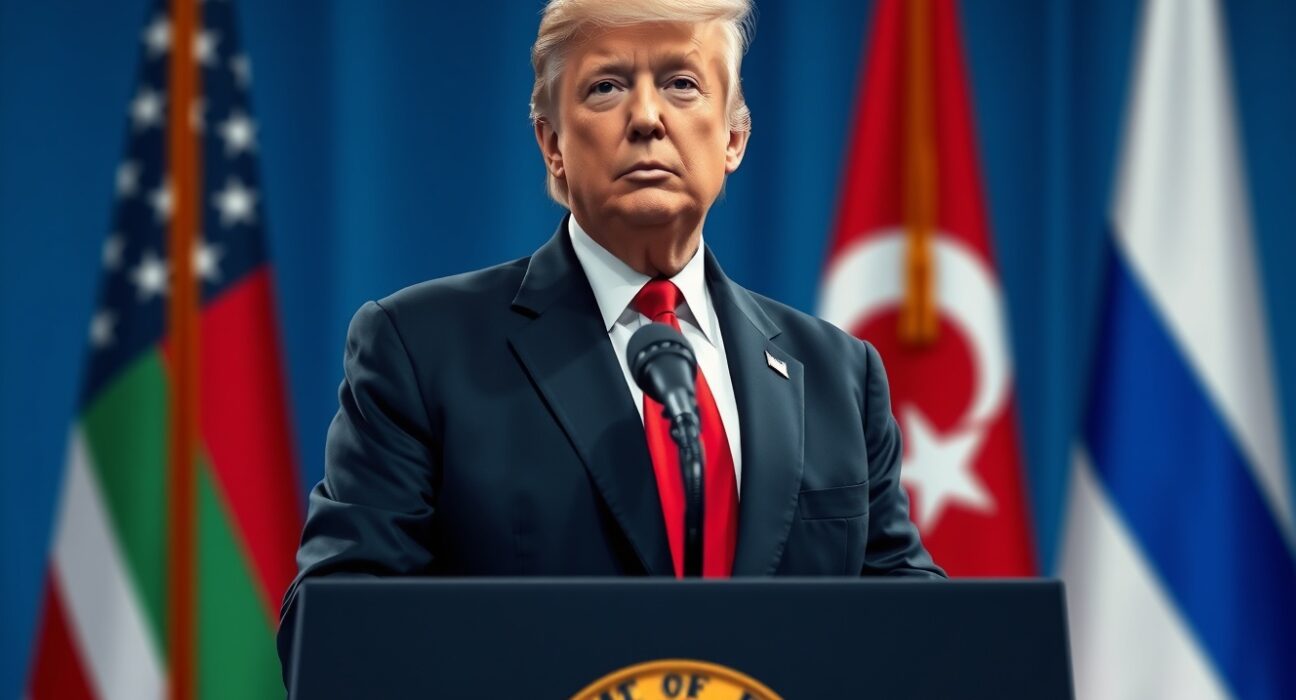
WASHINGTON, D.C. – Former President Donald Trump has made a dramatic assertion regarding Iran’s nuclear infrastructure, claiming in recent statements that Iranian nuclear sites have been “turned to dust.” This provocative declaration, made during a political rally in Florida on March 15, 2025, immediately sparked international scrutiny and raised urgent questions about Middle Eastern security dynamics. The statement represents the latest development in the long-standing geopolitical confrontation between the United States and Iran over nuclear proliferation concerns.
Analyzing Trump’s Iranian Nuclear Site Claims
Donald Trump’s specific wording about Iranian nuclear facilities being “turned to dust” requires careful examination against available evidence. International monitoring agencies, including the International Atomic Energy Agency (IAEA), continue to report regular access to declared Iranian nuclear sites. Furthermore, satellite imagery analysis from commercial providers shows no evidence of recent catastrophic destruction at major facilities like Natanz, Fordow, or Isfahan. However, experts note that Trump’s statement might reference previously reported incidents, including:
- The 2020 explosion at the Natanz enrichment facility
- The 2021 incident at the Karaj centrifuge production center
- Various cyberattacks targeting Iranian nuclear infrastructure
These events certainly caused significant damage and delays to Iran’s nuclear program. Nevertheless, they did not result in the complete destruction suggested by Trump’s dramatic phrasing. The Islamic Republic has consistently rebuilt and reinforced its nuclear sites following such attacks.
Historical Context of U.S.-Iran Nuclear Confrontation
The relationship between the United States and Iran regarding nuclear matters has followed a volatile trajectory for decades. During his presidency from 2017 to 2021, Donald Trump pursued an aggressive policy toward Iran’s nuclear ambitions. He withdrew the United States from the Joint Comprehensive Plan of Action (JCPOA) in 2018, reinstated harsh economic sanctions, and authorized the 2020 drone strike that killed Iranian General Qasem Soleimani. These actions significantly escalated tensions between the two nations.
Subsequent administrations have pursued different approaches, with varying degrees of diplomatic engagement and pressure. The current geopolitical landscape features several critical factors:
| Timeline | Key Event | Impact on Nuclear Program |
|---|---|---|
| 2015 | JCPOA signed | Significant restrictions on Iranian nuclear activities |
| 2018 | U.S. withdraws from JCPOA | Iran begins gradual violations of nuclear limits |
| 2020-2021 | Series of attacks on Iranian facilities | Temporary setbacks to enrichment capabilities |
| 2023-2024 | Diplomatic efforts resume | Partial restoration of monitoring, continued enrichment |
This historical context is essential for understanding the significance of Trump’s recent statement. His claim emerges amid ongoing negotiations about Iran’s nuclear program and regional security arrangements.
Expert Analysis of Current Iranian Nuclear Capabilities
Nuclear security experts from institutions like the Federation of American Scientists and the International Institute for Strategic Studies provide crucial perspective on Iran’s actual capabilities. According to their most recent assessments, Iran currently possesses sufficient enriched uranium for multiple nuclear weapons if further processed. However, there is no evidence that Iran has made the decision to weaponize this material. The country’s breakout time—the period required to produce enough weapons-grade uranium for one nuclear device—has shortened significantly since the U.S. withdrawal from the JCPOA.
Key facilities remain operational despite reported sabotage attempts:
- Natanz: Underground enrichment facility continues operations with advanced centrifuges
- Fordow: Buried deep under a mountain, this site enriches uranium to 60% purity
- Isfahan: Conversion facility that produces uranium hexafluoride gas
- Arak: Heavy water reactor complex with modified design to reduce plutonium production
These facilities represent significant investments in hardened infrastructure designed to withstand attacks. Their continued operation contradicts claims of complete destruction.
International Reactions and Diplomatic Implications
The international community has responded cautiously to Trump’s statement. European diplomats involved in nuclear negotiations have emphasized the importance of factual accuracy in such sensitive matters. Meanwhile, Iranian officials have dismissed the claim as “fantasy” and “political theater” aimed at domestic American audiences. Regional powers, including Israel and Saudi Arabia, have maintained their usual positions of deep concern about Iran’s nuclear activities without specifically endorsing or denying Trump’s assertion.
This incident highlights several ongoing challenges in nuclear diplomacy:
- The difficulty of verifying claims without comprehensive international inspections
- The political use of nuclear rhetoric in domestic contexts
- The risk of miscalculation in an already tense regional environment
- The importance of technical expertise in public discussions of nuclear matters
Diplomatic efforts continue through various channels, including indirect talks between U.S. and Iranian officials facilitated by European and Gulf state intermediaries.
Security Implications for the Middle East Region
The Middle East faces complex security dynamics that extend beyond nuclear considerations. Regional conflicts, proxy warfare, economic challenges, and great power competition all intersect with nuclear proliferation concerns. Trump’s statement about Iranian nuclear sites occurs against this multifaceted backdrop. Security analysts note that such rhetoric can influence several critical areas:
First, it affects the risk calculations of regional actors who must prepare for various scenarios. Second, it impacts international efforts to maintain stability and prevent escalation. Third, it shapes public perceptions in ways that can either support or undermine diplomatic solutions. The region’s security architecture remains fragile, with multiple flashpoints that could trigger broader conflict.
Conclusion
Donald Trump’s claim that Iranian nuclear sites have been “turned to dust” represents a significant moment in the ongoing discourse about Iran’s nuclear program. While the statement contains dramatic rhetoric that exceeds verifiable evidence, it highlights genuine concerns about nuclear proliferation in the Middle East. The actual status of Iran’s nuclear facilities involves complex technical realities, ongoing diplomatic efforts, and serious security considerations. As the international community continues to address these challenges, accurate information and careful analysis remain essential for informed policy decisions and public understanding of this critical issue.
FAQs
Q1: What evidence exists about the current status of Iranian nuclear sites?
The International Atomic Energy Agency continues to monitor declared nuclear sites in Iran. Their reports indicate that major facilities like Natanz and Fordow remain operational, though they have experienced disruptions from incidents like explosions and cyberattacks in recent years.
Q2: How has Iran’s nuclear capability changed since the U.S. withdrew from the JCPOA?
Iran has significantly advanced its nuclear program since 2018, increasing its stockpile of enriched uranium, installing more advanced centrifuges, and reducing cooperation with international inspectors. The country’s breakout time has decreased from over a year to potentially just weeks.
Q3: What is the international community doing about Iran’s nuclear program?
Multiple diplomatic initiatives continue, including European-led negotiations, indirect U.S.-Iran talks, and engagement through the United Nations. These efforts aim to restore limitations on Iran’s nuclear activities in exchange for sanctions relief.
Q4: How do regional countries view Iran’s nuclear activities?
Israel and Gulf Arab states view Iran’s nuclear program as a major security threat. They have supported maximum pressure campaigns while also developing their own capabilities and alliances to counter Iranian influence.
Q5: What would constitute credible evidence of destroyed nuclear facilities?
Credible evidence would require verification by international inspectors, consistent satellite imagery showing destruction, and confirmation from multiple independent sources including technical experts and intelligence agencies.
Disclaimer: The information provided is not trading advice, Bitcoinworld.co.in holds no liability for any investments made based on the information provided on this page. We strongly recommend independent research and/or consultation with a qualified professional before making any investment decisions.
