

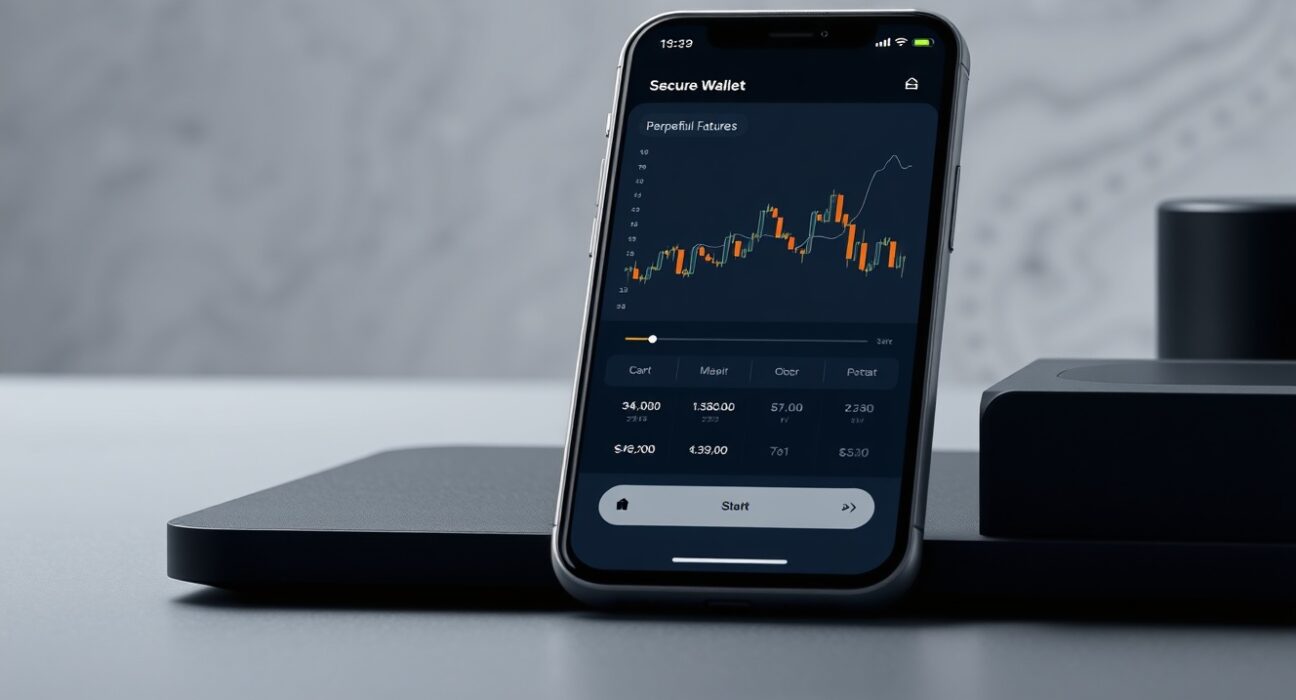
In a significant development for decentralized finance, Blockchain.com has integrated perpetual futures trading directly into its non-custodial wallet, fundamentally changing how traders access leveraged markets while maintaining full asset control. This strategic move, announced in early 2025, represents a major convergence between traditional exchange functionality and self-custody principles that have defined the cryptocurrency ethos since Bitcoin’s inception. The integration allows users to open leveraged positions using their self-custodied Bitcoin as collateral without transferring funds to centralized exchanges, addressing long-standing security concerns while expanding trading capabilities.
Blockchain.com’s Perpetual Futures Integration Explained
Blockchain.com’s implementation connects users directly to Hyperliquid (HYPE), a decentralized perpetual futures exchange known for its on-chain order book architecture. This partnership provides access to over 190 cryptocurrency markets with leverage options reaching up to 40x. The technical architecture maintains the non-custodial nature of Blockchain.com’s DeFi wallet throughout the trading process. Users retain control of their private keys while their Bitcoin collateral remains in their self-custodied wallet, secured through smart contract mechanisms rather than transferred to exchange-controlled addresses.
The integration represents a sophisticated technical achievement in decentralized finance infrastructure. Traditional perpetual futures trading requires users to deposit collateral onto exchange-controlled wallets, creating counterparty risk and potential vulnerabilities. Blockchain.com’s solution utilizes advanced smart contract technology to create collateralized positions while keeping assets under user control. This approach addresses one of the most persistent criticisms of leveraged trading in cryptocurrency markets.
Technical Architecture and Security Implications
The system employs a multi-signature smart contract framework that validates positions while maintaining user sovereignty over assets. When users open positions, their Bitcoin collateral remains in their non-custodial wallet but becomes temporarily locked in a smart contract. This contract automatically manages liquidation thresholds and position management without requiring third-party control of the underlying assets. The architecture represents a significant advancement in decentralized trading infrastructure, potentially setting new standards for security in leveraged cryptocurrency markets.
The Evolving Landscape of Non-Custodial Trading
The cryptocurrency industry has witnessed a steady migration toward non-custodial solutions following several high-profile exchange failures and security breaches. According to 2024 data from DeFiLlama, the total value locked in decentralized exchanges reached $98 billion, representing a 47% year-over-year increase. This growth reflects increasing user preference for self-custody solutions despite their historical limitations in trading functionality. Blockchain.com’s integration directly addresses this functionality gap by bringing sophisticated trading tools to non-custodial environments.
Industry analysts note this development represents a maturation phase for decentralized finance. Early DeFi protocols focused primarily on basic swapping and lending functionality. More recent developments have introduced increasingly complex financial instruments within non-custodial frameworks. The addition of perpetual futures trading to a mainstream non-custodial wallet like Blockchain.com’s represents a watershed moment for institutional and retail adoption of decentralized trading solutions.
Comparative Analysis with Traditional Exchange Models
| Feature | Traditional Exchange Futures | Blockchain.com Non-Custodial Futures |
|---|---|---|
| Asset Control | Exchange holds collateral | User retains control |
| Counterparty Risk | High (exchange failure risk) | Minimal (smart contract based) |
| Withdrawal Delays | Common during volatility | Instant (self-custodied assets) |
| Regulatory Exposure | Subject to exchange jurisdiction | Decentralized architecture |
| Trading Complexity | Established interfaces | New user experience challenges |
Market Impact and User Implications
The introduction of perpetual futures trading to non-custodial wallets creates several immediate implications for cryptocurrency markets and participants. Firstly, it potentially reduces systemic risk by decreasing the concentration of collateral on centralized exchanges. Historical data shows that during market volatility events, centralized exchanges often experience liquidity crunches and withdrawal suspensions. Non-custodial solutions inherently avoid these centralized failure points by distributing collateral across individual wallets.
Secondly, this development may accelerate the professionalization of retail cryptocurrency trading. Traditional non-custodial wallets have primarily served as storage and basic transaction tools. The addition of sophisticated trading instruments brings professional-grade tools to a broader user base. However, this accessibility also raises important considerations about risk management education, particularly given the 40x leverage options now available through relatively simple wallet interfaces.
Risk Management Considerations
While the technical implementation represents a security advancement, the availability of high-leverage trading through wallet interfaces introduces new risk dimensions. Perpetual futures trading inherently involves liquidation risks that can result in complete loss of collateral during volatile market conditions. The non-custodial nature means users bear full responsibility for position management without potential intervention from exchange risk teams. This reality necessitates enhanced educational resources and risk disclosure mechanisms within the wallet interface itself.
Regulatory and Compliance Context
The regulatory landscape for decentralized finance continues evolving as technological capabilities advance. Blockchain.com’s integration operates in a complex jurisdictional environment where perpetual futures trading faces varying regulatory treatment globally. The decentralized nature of the Hyperliquid integration creates jurisdictional ambiguities that differ significantly from traditional exchange-based futures trading. Regulatory bodies worldwide are actively developing frameworks for decentralized financial instruments, with the European Union’s Markets in Crypto-Assets (MiCA) regulation and United States legislative proposals establishing important precedents.
Industry observers note that non-custodial solutions generally face different regulatory scrutiny than centralized exchanges. Since users maintain control of their assets and the platform doesn’t function as a traditional financial intermediary, regulatory classifications become more complex. This regulatory positioning represents both an opportunity and challenge for widespread adoption, as clarity around compliance requirements continues developing alongside technological innovation.
Conclusion
Blockchain.com’s integration of perpetual futures trading into its non-custodial wallet represents a significant milestone in decentralized finance evolution. This development bridges the functionality gap between centralized exchange tools and self-custody principles that define cryptocurrency’s foundational philosophy. By enabling leveraged trading with self-custodied Bitcoin collateral, the platform addresses longstanding security concerns while expanding accessible financial instruments. As the cryptocurrency industry continues maturing, such integrations likely signal broader trends toward sophisticated decentralized financial infrastructure that maintains user sovereignty as a core principle. The Blockchain.com perpetual futures implementation demonstrates how technological innovation can advance both functionality and security in increasingly complex financial markets.
FAQs
Q1: How does perpetual futures trading work in a non-custodial wallet?
The system uses smart contracts to lock Bitcoin collateral in your self-custodied wallet while opening positions on Hyperliquid’s decentralized exchange. Your assets never leave your control, but become temporarily locked in a smart contract that manages the position and potential liquidations.
Q2: What are the main advantages over traditional exchange futures trading?
Primary advantages include maintaining control of your assets (reducing counterparty risk), avoiding exchange withdrawal restrictions, and operating within a decentralized architecture that may have different regulatory implications than centralized exchanges.
Q3: What risks should users consider with this new functionality?
Users face standard perpetual futures risks including liquidation during volatility, plus new considerations around managing their own positions without exchange intervention. The 40x leverage available significantly amplifies both potential gains and losses.
Q4: How does the integration with Hyperliquid work technically?
Blockchain.com’s wallet interfaces directly with Hyperliquid’s on-chain order book through smart contract interactions. When you open a position, your wallet creates and signs transactions that interact with Hyperliquid’s decentralized exchange protocol while keeping collateral in your controlled wallet.
Q5: Will this functionality be available in all jurisdictions?
Availability depends on local regulations governing cryptocurrency derivatives. Users should consult their local laws regarding perpetual futures trading, as regulatory treatment varies significantly across different countries and regions.
Disclaimer: The information provided is not trading advice, Bitcoinworld.co.in holds no liability for any investments made based on the information provided on this page. We strongly recommend independent research and/or consultation with a qualified professional before making any investment decisions.
