

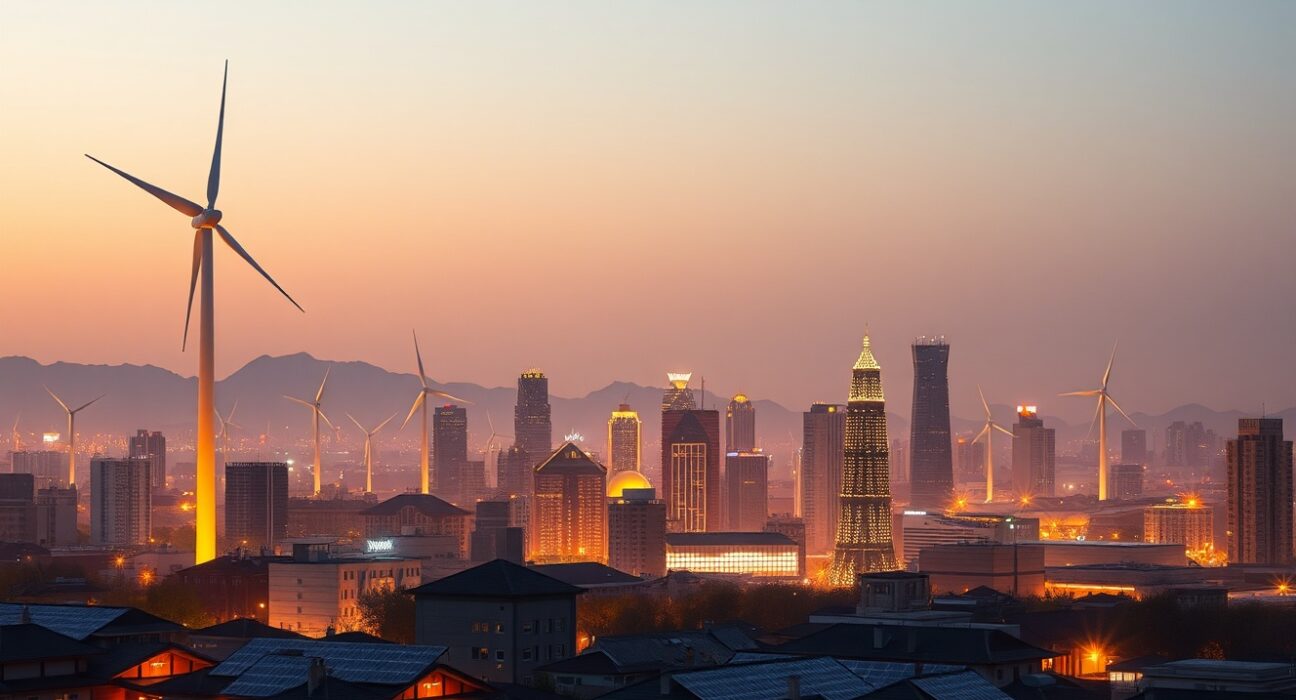
BEIJING, March 2025 – A new analysis from Standard Chartered underscores a critical transformation: China’s established policy frameworks are now providing concrete, structural support for a decisive shift away from fossil fuels. This transition, central to global climate efforts, is accelerating beyond expectations, according to the bank’s research. Consequently, the world’s largest energy consumer and carbon emitter is charting a new course with profound implications for international markets and environmental targets.
China’s Policy Framework Accelerates the Non-Fossil Shift
Standard Chartered’s examination focuses on the tangible outcomes of China’s 14th and 15th Five-Year Plans. These documents outline stringent targets for non-fossil fuel energy consumption. Specifically, the nation aims for non-fossil sources to constitute around 25% of total energy use by 2030. Furthermore, the overarching goal of achieving carbon neutrality before 2060 provides a long-term regulatory anchor. This policy certainty, therefore, drives unprecedented investment.
Moreover, the analysis highlights key supporting mechanisms. These include the national carbon trading market, which now covers the power sector. Additionally, green finance guidelines direct capital toward sustainable projects. Provincial governments also face strict performance evaluations on environmental metrics. As a result, these interconnected policies create a powerful engine for change. The data reflects this push. For instance, China installed more solar capacity in 2024 than the entire United States currently possesses.
Decoding the Energy Transition Data
The shift manifests in clear, quantifiable trends. Standard Chartered points to exponential growth in renewable capacity installations. Simultaneously, coal’s share in the power generation mix is peaking. The bank’s charts likely illustrate this crossing point. Investment patterns tell a similar story. Capital expenditure for solar, wind, and nuclear now consistently surpasses that for new coal-fired power plants.
This transition, however, is not without complexity. The bank’s report certainly addresses the role of grid modernization and energy storage. These technologies are essential for managing the intermittent nature of renewables. China is also leading in battery production and ultra-high-voltage transmission lines. Consequently, the non-fossil shift is a systemic upgrade, not merely a fuel substitution.
Expert Analysis on Economic and Geopolitical Impacts
Financial institutions like Standard Chartered assess this shift through dual lenses: risk and opportunity. On one hand, stranded asset risks loom for traditional fossil fuel investments. On the other hand, massive opportunities emerge in green technology supply chains. China dominates the production of solar panels, wind turbines, and critical minerals. Therefore, its domestic policy goals directly strengthen its position in the global clean-tech race.
Furthermore, this transition influences global commodity markets. Reduced long-term demand for thermal coal and altered patterns for liquefied natural gas (LNG) are anticipated. The analysis provides context by comparing China’s trajectory with other major economies. For instance, the scale and speed of its renewable rollout remain unmatched. This leadership, driven by policy, redefines the economics of clean energy worldwide.
The Road Ahead: Challenges and Implementation
While policy goals provide direction, implementation hurdles persist. Standard Chartered’s analysis would acknowledge the ongoing reliance on coal for base-load power and grid stability. Regional disparities also exist. Prosperous coastal provinces can transition faster than industrial heartlands. The report likely details the policy tools designed to address these gaps, such as targeted subsidies and regional compensation mechanisms.
The integration of a massive, distributed renewable network requires a smarter grid. Progress here is critical. Additionally, the growth of electric vehicles and green hydrogen production adds new layers of electricity demand. Policymakers must therefore plan for an integrated energy system. The table below summarizes the key pillars of China’s non-fossil strategy:
| Policy Pillar | Primary Mechanism | Current Status |
|---|---|---|
| Capacity Targets | Five-Year Plan mandates | Exceeding installation targets |
| Market Incentives | Carbon trading, green finance | Expanding scope and liquidity |
| Grid Modernization | Ultra-high-voltage transmission | National network under construction |
| Technology Leadership | R&D investment in storage & hydrogen | Leading global patent filings |
Ultimately, the consistent thread is the alignment of industrial policy with climate objectives. This alignment reduces investment risk and attracts capital. It also provides a predictable roadmap for domestic and international stakeholders.
Conclusion
Standard Chartered’s analysis confirms that China’s non-fossil energy shift is now a structural reality, underpinned by a comprehensive and enforceable policy architecture. The transition, moving from ambition to implementation, signals a profound change in the global energy landscape. While challenges in grid management and regional equity remain, the policy goals provide unwavering direction. As a result, China’s trajectory will significantly influence the pace of global decarbonization, commodity markets, and the economics of renewable technology. The data clearly shows that policy is not just supporting but actively powering this decisive shift.
FAQs
Q1: What are China’s main policy goals for non-fossil energy?
China’s primary goals include having non-fossil fuels meet around 25% of total energy consumption by 2030 and achieving carbon neutrality before 2060. These are mandated through national Five-Year Plans.
Q2: How does Standard Chartered assess the progress of this shift?
The bank analyzes hard data on renewable capacity installations, investment flows, coal generation trends, and the operational impact of policies like the carbon market to gauge real-world progress beyond stated targets.
Q3: What is the biggest challenge for China’s energy transition?
The largest challenge is integrating vast amounts of intermittent solar and wind power into the national grid while maintaining stability and reliability, which requires massive investment in grid modernization and energy storage.
Q4: How does this shift affect global markets?
It puts long-term downward pressure on global thermal coal demand, alters LNG trade patterns, and solidifies China’s dominance in the manufacturing of clean energy technologies like solar panels and batteries.
Q5: Why is policy certainty so important for this transition?
Policy certainty reduces investment risk for renewable projects and provides a clear, long-term signal for capital allocation, enabling large-scale infrastructure planning and technology development in the private sector.
Disclaimer: The information provided is not trading advice, Bitcoinworld.co.in holds no liability for any investments made based on the information provided on this page. We strongly recommend independent research and/or consultation with a qualified professional before making any investment decisions.
