

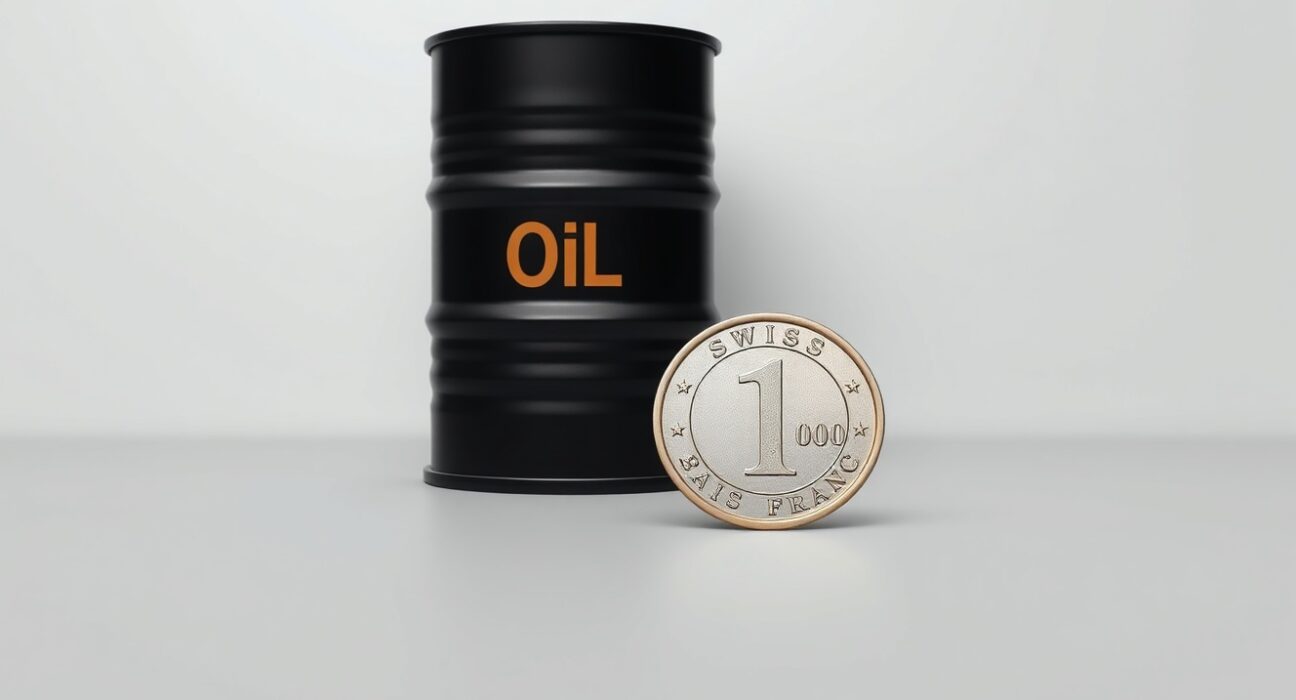
A new analysis from ING suggests that rising oil prices could significantly influence the EUR/CHF currency cross. This development offers a fresh perspective for traders and investors. The relationship between commodity markets and currency pairs often creates unique opportunities. Understanding this dynamic is crucial for informed decision-making.
EUR/CHF and Oil Prices: The ING Connection
ING analysts point to a clear link between higher oil costs and the EUR/CHF exchange rate. This connection stems from economic fundamentals. Higher oil prices typically impact inflation and trade balances. These factors then influence central bank policies. The Swiss franc often acts as a safe-haven currency. The euro, conversely, is more tied to energy imports. Therefore, a rise in oil can weaken the franc relative to the euro.
The analysis provides a specific timeframe for this effect. ING expects the impact to materialize over the coming months. This prediction aligns with current global energy market trends. Traders should monitor crude oil benchmarks closely. These include Brent and West Texas Intermediate (WTI) crude.
How Oil Prices Affect the Swiss Franc
Switzerland imports nearly all its oil. Higher prices increase the country’s import bill. This can lead to a wider trade deficit. A larger deficit often pressures the national currency. The Swiss National Bank (SNB) may also react. They might intervene to prevent excessive franc strength. Such actions directly impact the EUR/CHF cross.
In contrast, the eurozone is a large energy consumer. Higher oil costs can slow economic growth there. However, the European Central Bank (ECB) might raise rates to fight inflation. This rate differential can support the euro. The net effect, per ING, favors a higher EUR/CHF.
- Key Factor: Oil price increases
- Primary Impact: Widening trade deficit for Switzerland
- Secondary Impact: Potential SNB intervention
- Outcome: Higher EUR/CHF cross rate
Market Context and Expert Reasoning
The current market environment supports this view. Global oil supply remains constrained. Geopolitical tensions add further uncertainty. These factors keep prices elevated. ING’s analysis builds on this real-world context. They use historical data to support their forecast. Past episodes of oil price surges often correlated with EUR/CHF gains.
For example, in 2022, oil prices spiked after the Ukraine conflict. The EUR/CHF cross rose from near 1.00 to above 1.05. This pattern provides evidence for the current thesis. Traders can use this information for risk management. They can also identify potential entry points.
Timeline and Expected Effects
ING projects the impact over a three-to-six-month horizon. This timeline allows for market adjustments. The initial effect may be gradual. However, sustained high oil prices could accelerate the move. Key levels to watch include 1.10 and 1.12 for EUR/CHF. A break above these levels would confirm the trend.
Other analysts echo this sentiment. Many see the franc as overvalued. Oil-driven inflation could correct this imbalance. The SNB’s willingness to sell francs also supports this view. They have a history of weakening their currency.
| Factor | Impact on EUR/CHF |
|---|---|
| Rising Oil Prices | Positive (Lifts Cross) |
| SNB Intervention | Positive (Weakens Franc) |
| ECB Rate Hikes | Positive (Supports Euro) |
| Global Risk Aversion | Negative (Strengthens Franc) |
Implications for Traders and Investors
This analysis provides a clear trading signal. Investors should consider long positions on EUR/CHF. They should pair this with short positions on the Swiss franc. The key risk remains a sudden drop in oil prices. This could reverse the expected move. Stop-loss orders are essential for risk management.
Fundamental traders can use this as a core thesis. Technical analysis can help with entry timing. Look for pullbacks to support levels. These include the 50-day moving average. A buy-on-dips strategy may work well here.
Broader Economic Impacts
The EUR/CHF move reflects broader economic shifts. Higher oil prices impact global growth. They also affect corporate earnings. Companies in energy-intensive sectors may struggle. Conversely, energy producers benefit. This divergence creates sector-specific opportunities.
For Swiss exporters, a weaker franc is positive. It makes their goods cheaper abroad. This can boost the Swiss economy. For eurozone consumers, higher oil costs reduce spending power. This creates a mixed economic picture.
Conclusion
In summary, ING’s analysis highlights a compelling opportunity. Higher oil prices could lift the EUR/CHF cross significantly. This view is backed by historical data and current market conditions. Traders should monitor oil markets and central bank actions. The coming months may offer favorable conditions for this trade. Understanding this relationship adds value to any currency trading strategy.
FAQs
Q1: How does oil price affect EUR/CHF?
A: Higher oil prices increase Switzerland’s import costs, widening its trade deficit. This pressure weakens the Swiss franc, lifting the EUR/CHF cross.
Q2: What is ING’s main argument?
A: ING argues that sustained high oil prices will lead to a higher EUR/CHF rate. They base this on economic fundamentals and historical patterns.
Q3: What is the expected timeframe for this move?
A: ING expects the impact over the next three to six months. The move may be gradual initially but could accelerate with sustained high oil prices.
Q4: What are the key risks to this trade?
A: A sudden drop in oil prices is the main risk. Global risk aversion could also strengthen the franc, reversing the expected move.
Q5: How can traders act on this analysis?
A: Traders can consider long positions on EUR/CHF. They should use stop-loss orders and monitor oil prices and central bank actions closely.
Disclaimer: The information provided is not trading advice, Bitcoinworld.co.in holds no liability for any investments made based on the information provided on this page. We strongly recommend independent research and/or consultation with a qualified professional before making any investment decisions.
