

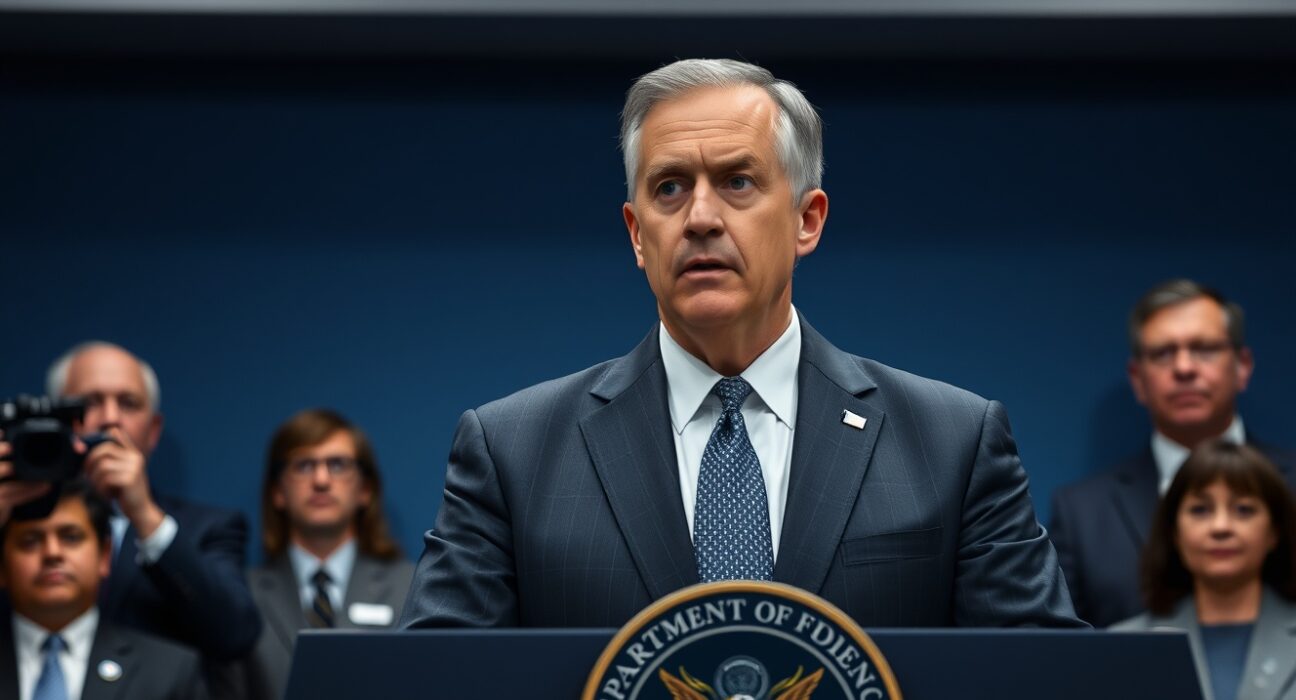
US Defense Secretary Pete Hegseth has issued a strong statement, declaring that any attempts to lay more mines constitute a direct violation of the existing ceasefire. This announcement comes amid rising tensions in the region, signaling a potential breakdown of diplomatic agreements.
Hegseth Condemns Ceasefire Violation Over Mine Laying
On March 15, 2025, in Washington, D.C., Secretary Hegseth addressed the media. He stated clearly that the act of laying additional mines breaks the terms of the ceasefire. This violation threatens the fragile peace. It also endangers civilian lives. The Secretary emphasized that the United States views this action with the utmost seriousness.
The ceasefire, brokered last year, included a clear prohibition on new minefields. Both sides agreed to halt all offensive operations. This agreement aimed to reduce civilian casualties. It also sought to create space for humanitarian aid. Now, reports indicate that one party has resumed laying mines. This directly undermines the agreement’s core principles.
International observers have confirmed the new mine-laying activity. Satellite imagery shows fresh emplacements along the front line. These actions create a direct threat to peacekeepers. They also endanger civilians attempting to return to their homes. The United Nations has called for an immediate halt to these activities.
Background of the Ceasefire Agreement
The ceasefire agreement, signed in November 2024, was a landmark achievement. It ended months of intense fighting. The agreement included several key provisions. Both parties agreed to a complete cessation of hostilities. They also agreed to a withdrawal of heavy weapons. A demilitarized zone was established along the contact line.
Most importantly, the agreement banned the laying of new landmines. This provision was critical for humanitarian reasons. Landmines cause long-term suffering. They kill and maim civilians long after conflicts end. They also prevent the return of displaced populations. The ban was seen as a major step toward lasting peace.
However, the implementation has been challenging. Both sides have accused each other of minor violations. These included small arms fire and troop movements. But the new mine-laying represents a major escalation. It is a direct challenge to the ceasefire’s foundation.
Key Provisions of the Ceasefire
- Complete cessation of hostilities – All offensive military operations must stop.
- Withdrawal of heavy weapons – Tanks, artillery, and rockets must be moved back from the front line.
- Demilitarized zone – A buffer area of 10 kilometers on each side of the contact line.
- Ban on new minefields – No new landmines or booby traps can be laid.
- Humanitarian access – All parties must allow aid convoys to reach civilians.
Impact on International Security
Secretary Hegseth’s statement carries significant weight. It signals that the United States will not tolerate this violation. The US has been a key guarantor of the ceasefire. It has provided monitoring support and intelligence. This violation tests the credibility of the entire peace process.
The international community has reacted swiftly. The United Nations Security Council has scheduled an emergency meeting. NATO allies have expressed concern. The European Union has called for an immediate investigation. These reactions show the global stakes involved.
Furthermore, this incident could have broader implications. It may embolden other parties to violate agreements. It could lead to a new cycle of violence. The region is already unstable. Any escalation could draw in neighboring countries. This makes the situation extremely dangerous.
Humanitarian Consequences of Mine Laying
The humanitarian impact of new minefields is severe. Landmines do not discriminate. They kill soldiers and civilians alike. Children are particularly vulnerable. They often mistake mines for toys. The long-term consequences are devastating.
According to the International Campaign to Ban Landmines, over 5,000 people were killed or injured by landmines in 2024. This number is likely to rise if new mines are laid. The presence of mines also prevents farmers from using their land. It blocks access to schools and hospitals. It traps communities in a cycle of fear and poverty.
Humanitarian organizations have already suspended some operations. They cannot safely operate in areas with new minefields. This means aid will not reach those who need it most. The ceasefire was supposed to improve the humanitarian situation. This violation reverses that progress.
Timeline of Key Events
| Date | Event |
|---|---|
| November 2024 | Ceasefire agreement signed |
| December 2024 | Initial withdrawal of heavy weapons |
| January 2025 | First reports of minor violations |
| March 10, 2025 | Satellite imagery confirms new mine laying |
| March 15, 2025 | Secretary Hegseth issues condemnation |
Expert Analysis and Reactions
Military analysts have weighed in on the situation. Dr. Sarah Jenkins, a security expert at the Institute for Strategic Studies, says this is a serious breach. She notes that mine laying is a deliberate act. It is not an accident or a misunderstanding. It requires planning and resources.
“This is a calculated move,” Dr. Jenkins explains. “The party laying the mines is sending a clear message. They are testing the limits of the ceasefire. They are also preparing for potential future offensives.” This analysis suggests the violation is not isolated. It may be part of a larger strategy.
Former US Ambassador to the region, John Miller, echoes this view. He says the violation undermines trust. “Trust is the foundation of any peace agreement. Once broken, it is very hard to rebuild. The international community must respond firmly. Otherwise, the entire ceasefire could collapse.”
US Response and Next Steps
Secretary Hegseth did not specify what actions the US might take. However, he left no doubt about the seriousness of the situation. He stated that the US is consulting with allies. It is also reviewing all available options. These could include diplomatic pressure, economic sanctions, or military responses.
The US has several tools at its disposal. It could impose new sanctions on the violating party. It could increase military aid to the other side. It could also push for a UN resolution condemning the action. Each option carries risks. The US must balance the need for a strong response with the risk of escalation.
Meanwhile, the violating party has denied the accusations. It claims the mines are old and were not newly laid. However, satellite imagery and ground reports contradict this claim. The international community is unlikely to accept this explanation. The burden of proof now rests on the accused party.
Conclusion
US Defense Secretary Hegseth has clearly stated that attempts to lay more mines constitute a ceasefire violation. This action threatens the fragile peace agreement. It endangers civilian lives. It also tests the resolve of the international community. The coming days will be critical. The response to this violation will determine the future of the ceasefire. The world is watching closely. The stakes could not be higher.
FAQs
Q1: What exactly did Secretary Hegseth say about the mine laying?
A1: He stated that any attempts to lay more mines are a direct violation of the ceasefire. He emphasized the seriousness of the action and its threat to the peace process.
Q2: Why is mine laying considered a violation of the ceasefire?
A2: The ceasefire agreement explicitly banned the laying of new landmines. This provision was included to protect civilians and allow for humanitarian access. New minefields directly break this agreement.
Q3: What are the potential consequences of this violation?
A3: Consequences could include diplomatic pressure, economic sanctions, or increased military support for the other side. The international community is currently reviewing its options.
Q4: How does this affect civilians in the region?
A4: New minefields endanger civilian lives. They prevent farmers from using their land and block access to schools and hospitals. Humanitarian aid operations have also been suspended in some areas.
Q5: What is the US role in enforcing the ceasefire?
A5: The US is a key guarantor of the ceasefire. It provides monitoring support, intelligence, and diplomatic backing. Secretary Hegseth’s statement signals that the US will not tolerate this violation.
Disclaimer: The information provided is not trading advice, Bitcoinworld.co.in holds no liability for any investments made based on the information provided on this page. We strongly recommend independent research and/or consultation with a qualified professional before making any investment decisions.
