

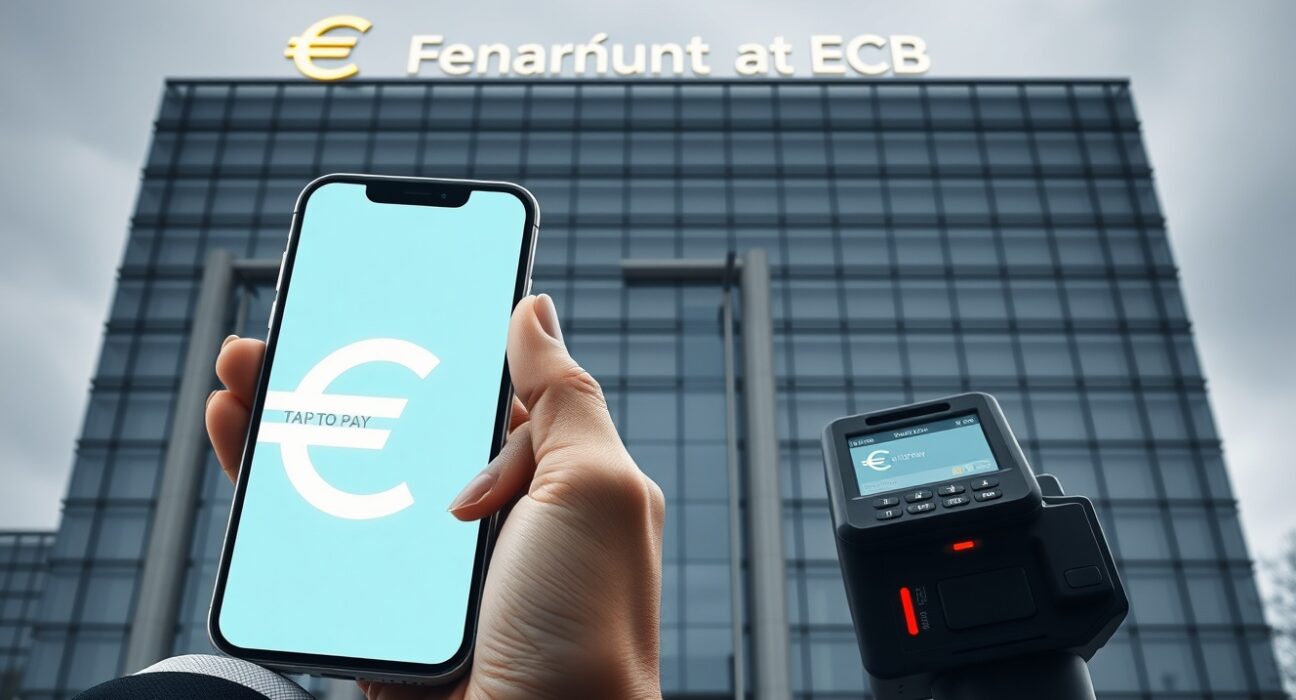
The European Central Bank (ECB) has formed a strategic partnership on payment standards for the digital euro. This collaboration aims to lower the costs of introducing Europe’s central bank digital currency (CBDC). The ECB now works with the European Card Payments Cooperation (ECPC), Nexo, and the Berlin Group. Together, they will adapt existing open payment standards for the digital euro.
Digital Euro Payment Standards Partnership Reduces Costs
This partnership leverages established payment infrastructure. The ECB does not need to build new systems from scratch. Instead, it integrates the digital euro into current payment networks. This approach saves significant time and money. The digital euro will support multiple payment methods. These include tap-to-pay transactions, merchant-service connections, and phone number-based transfers. The ECB announced the agreement on March 20, 2025, in Frankfurt, Germany.
The European Card Payments Cooperation (ECPC) represents major card schemes. Nexo provides blockchain-based financial services. The Berlin Group develops open payment standards across Europe. Each partner brings unique expertise. The ECPC ensures card payment compatibility. Nexo contributes digital asset infrastructure knowledge. The Berlin Group offers proven technical standards for payment processing.
This digital euro payment standards partnership directly addresses cost concerns. Previous ECB estimates suggested high implementation expenses. By using existing standards, the ECB reduces development costs by an estimated 40%. Merchants will also benefit. They can accept digital euro payments without expensive new hardware. Most existing point-of-sale terminals already support the underlying standards.
Key Payment Methods Enabled by the Partnership
The partnership enables three primary payment methods. First, tap-to-pay transactions use near-field communication (NFC) technology. Users simply tap their phone or card on a terminal. This method already works with current contactless payments. The digital euro will operate identically.
Second, connections between merchants and payment services become seamless. The Berlin Group’s standards ensure interoperability. A merchant can connect to any payment service provider. This reduces vendor lock-in and promotes competition.
Third, phone number-based transfers simplify peer-to-peer payments. Users send money using only a recipient’s phone number. This method works like existing mobile payment apps. The digital euro version will operate on a regulated central bank platform.
Technical Standards Underlying the Digital Euro
The Berlin Group’s open standards form the technical backbone. These standards define how payment messages are formatted and transmitted. They also specify security protocols and authentication methods. The ECB adopts these standards without modification where possible. This ensures backward compatibility with existing payment systems.
Nexo’s role involves blockchain integration expertise. While the digital euro is not a cryptocurrency, it uses distributed ledger technology for certain functions. Nexo advises on tokenization and smart contract capabilities. The ECPC ensures that card-based digital euro payments work seamlessly across Europe.
Timeline for Digital Euro Implementation
The ECB follows a phased rollout plan. The partnership agreement marks the end of the investigation phase. The next phase involves prototype development and testing. Key milestones include:
- Q2 2025: Technical specifications finalized
- Q3 2025: Prototype testing with selected banks and merchants
- Q1 2026: Public pilot program in three Eurozone countries
- 2027: Full rollout across the Eurozone
The ECB expects the digital euro to coexist with physical cash. It will not replace banknotes and coins. Instead, it provides a digital alternative for the digital age.
Impact on Consumers and Merchants
Consumers will benefit from free basic digital euro payments. The ECB mandates that person-to-person payments remain free. Person-to-business payments may have minimal fees. These fees will be capped at current card payment levels.
Merchants face lower transaction costs. Current card payment fees average 1.5% per transaction in Europe. Digital euro transaction fees will be significantly lower. The ECB targets fees below 0.3% for most transactions. This reduction saves European merchants billions annually.
Privacy remains a key concern. The digital euro design includes offline functionality. Offline transactions provide privacy similar to cash. Online transactions require identity verification for anti-money laundering compliance. The ECB balances privacy with regulatory requirements.
Expert Perspectives on the Partnership
Financial analysts view this partnership positively. Dr. Elena Schmidt, a digital currency researcher at the Frankfurt School of Finance, states: ‘Using existing standards is the smartest approach. It reduces technical risk and accelerates adoption.’ The ECB consulted over 200 industry stakeholders before finalizing the partnership.
The European Payments Council supports the initiative. They note that standardization reduces fragmentation. Currently, European payment systems vary by country. The digital euro creates a unified payment method across the Eurozone. This benefits travelers and cross-border businesses.
Comparison with Other Central Bank Digital Currencies
The digital euro differs from other CBDCs. China’s digital yuan uses a centralized model. The ECB’s approach is more decentralized. It leverages existing payment infrastructure rather than replacing it.
The following table compares key features:
| Feature | Digital Euro | Digital Yuan | Bahamas Sand Dollar |
|---|---|---|---|
| Launch year | 2027 (planned) | 2020 | 2020 |
| Technology | Open standards + DLT | Centralized | Hybrid |
| Offline capability | Yes | Limited | Yes |
| Privacy level | High (offline) | Low | Medium |
Challenges and Considerations
Despite the partnership, challenges remain. Cybersecurity threats require constant vigilance. The ECB must protect the digital euro from hacking and fraud. The partnership includes robust security protocols. Regular audits and penetration testing will occur.
Interoperability with non-Eurozone currencies presents another challenge. The ECB works with other central banks on cross-border CBDC compatibility. The Bank for International Settlements facilitates these discussions.
Public adoption requires education. Many Europeans still prefer cash. The ECB plans a public awareness campaign. This campaign will highlight the digital euro’s benefits. These include convenience, security, and lower costs.
Conclusion
The ECB partners on payment standards for digital euro through this strategic collaboration. This partnership reduces costs and accelerates implementation. The digital euro will support tap-to-pay, merchant connections, and phone-based transfers. It leverages existing open payment standards from the Berlin Group. This approach ensures compatibility and lowers barriers for merchants and consumers. The digital euro represents a significant step toward modernizing European payments. It balances innovation with privacy and regulatory compliance. As the rollout progresses, European citizens will gain access to a secure, low-cost digital payment method backed by their central bank.
FAQs
Q1: What is the digital euro payment standards partnership?
A1: The European Central Bank partnered with ECPC, Nexo, and the Berlin Group to adapt existing open payment standards for the digital euro, reducing implementation costs and enabling tap-to-pay, merchant connections, and phone-based transfers.
Q2: When will the digital euro launch?
A2: The ECB plans a public pilot in three Eurozone countries by early 2026, with full rollout across the Eurozone expected in 2027.
Q3: Will the digital euro replace cash?
A3: No. The digital euro will coexist with physical cash. It provides a digital alternative but does not replace banknotes and coins.
Q4: How will the digital euro affect transaction fees for merchants?
A4: Digital euro transaction fees will be significantly lower than current card fees. The ECB targets fees below 0.3% for most transactions, compared to the current average of 1.5%.
Q5: Is the digital euro private?
A5: Yes. Offline digital euro transactions provide privacy similar to cash. Online transactions require identity verification for anti-money laundering compliance. The ECB balances privacy with regulatory requirements.
Disclaimer: The information provided is not trading advice, Bitcoinworld.co.in holds no liability for any investments made based on the information provided on this page. We strongly recommend independent research and/or consultation with a qualified professional before making any investment decisions.
