

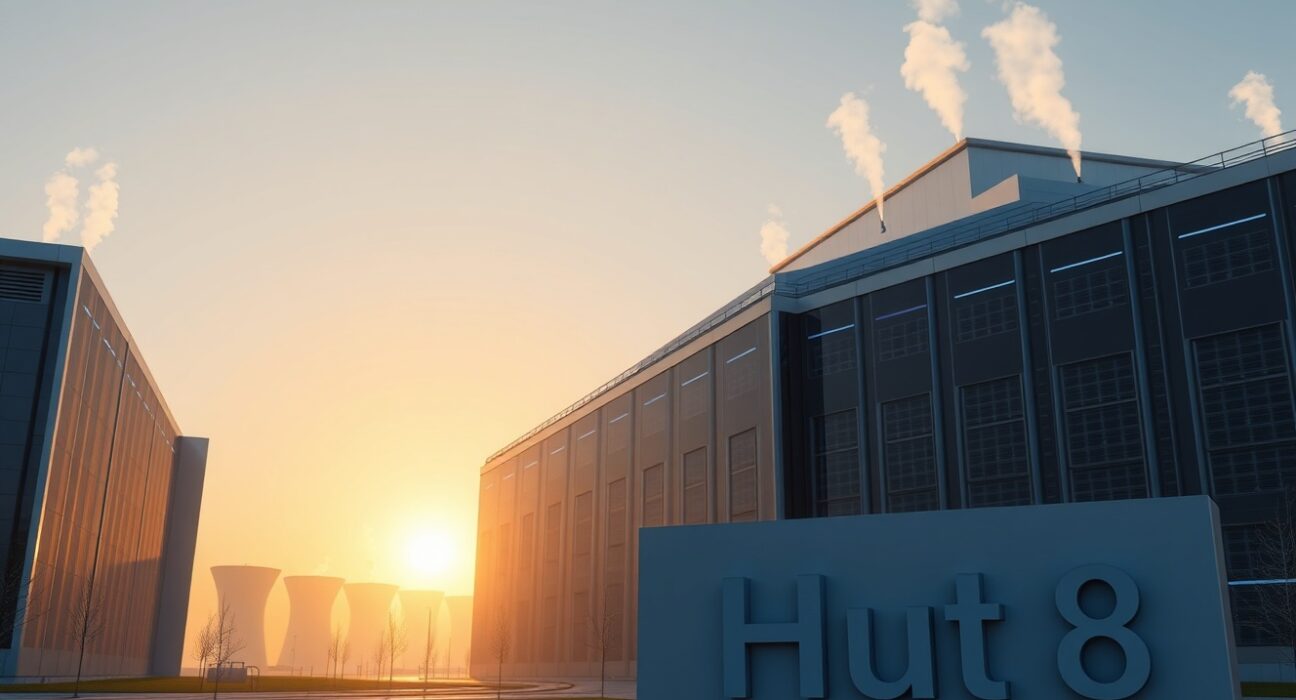
Nasdaq-listed Bitcoin miner Hut 8 (HUT) is pursuing a bond issuance to finance a new data center linked to Google that will support artificial intelligence, Bloomberg reported. The company is raising funds by issuing secured bonds maturing in 2042, with a target of at least $3 billion. This move marks a significant pivot from Bitcoin mining to energy and digital infrastructure.
Hut 8 Bond Sale Details and Key Players
The offering is being managed by investment banks including Goldman Sachs, JPMorgan, and Morgan Stanley. Google will reportedly support the project financially, including making rent payments for the data center under a lease agreement. The secured bonds are designed to attract institutional investors seeking long-term, stable returns tied to a major technology partner.
Hut 8’s decision to issue secured bonds maturing in 2042 reflects a strategic shift toward infrastructure assets with predictable cash flows. The company aims to leverage its existing energy assets and land holdings to build a facility optimized for AI workloads, which require high-density computing and reliable power.
From Bitcoin Mining to AI Infrastructure
This move comes as Hut 8 shifts its business focus from Bitcoin mining to energy and digital infrastructure. The company has been repositioning itself as a provider of data center services, capitalizing on the growing demand for AI computing power. By partnering with Google, Hut 8 gains a credible anchor tenant and access to a stable revenue stream.
Hut 8’s transition mirrors a broader trend among Bitcoin miners. Many are repurposing their facilities for AI and high-performance computing (HPC) due to the energy-intensive nature of both industries. This diversification reduces reliance on volatile cryptocurrency markets and positions miners for long-term growth.
Financial Structure and Investor Appeal
The secured bonds offer investors a claim on specific assets, reducing risk compared to unsecured debt. The involvement of top-tier investment banks signals confidence in the project’s viability. Google’s financial backing, including rent payments, provides additional security for bondholders.
Analysts note that the 2042 maturity date aligns with long-term infrastructure investments, offering predictable returns over two decades. This structure appeals to pension funds, insurance companies, and other institutional investors seeking stable, inflation-adjusted yields.
Google’s Role and AI Data Center Demand
Google’s involvement extends beyond a simple lease agreement. The tech giant is actively seeking to expand its AI infrastructure capacity, driven by the rapid adoption of generative AI and cloud services. Partnering with Hut 8 allows Google to secure dedicated computing resources without the capital expenditure of building its own facilities.
The data center will be designed to support AI workloads, including training large language models and running inference tasks. These operations require specialized hardware, such as GPUs and TPUs, and significant cooling infrastructure. Hut 8’s experience in managing energy-intensive Bitcoin mining operations provides a natural advantage.
Market Context and Competitive Landscape
Hut 8 is not alone in this pivot. Other Bitcoin miners, including Riot Platforms and Marathon Digital, have announced plans to diversify into AI and HPC. However, Hut 8’s partnership with Google sets it apart, providing a direct link to one of the world’s largest cloud providers.
The AI data center market is projected to grow at a compound annual growth rate (CAGR) of over 30% through 2030, according to industry reports. This growth is fueled by increasing enterprise adoption of AI, edge computing, and the expansion of 5G networks. Hut 8’s early move positions it to capture a share of this expanding market.
Timeline and Next Steps
The bond issuance is expected to close in the coming months, subject to market conditions and regulatory approvals. Proceeds will be used to fund construction, purchase equipment, and cover operational expenses. Hut 8 has not disclosed the exact location of the new data center, but it is expected to be in North America, leveraging the company’s existing power infrastructure.
Construction timelines for large-scale data centers typically range from 18 to 36 months. Hut 8 aims to begin operations by late 2026 or early 2027, aligning with Google’s projected AI capacity needs. The company will need to secure additional permits and grid connections, which could introduce delays.
Risks and Challenges
Despite the promising outlook, Hut 8 faces several risks. The bond market may be volatile, and interest rate changes could affect investor demand. Construction delays, supply chain disruptions, or regulatory hurdles could push back the timeline. Additionally, the AI industry is competitive, and technological shifts could render some infrastructure obsolete.
However, the partnership with Google mitigates some of these risks. Google’s financial strength and long-term commitment provide a stable foundation. Hut 8’s management has experience in navigating complex energy and infrastructure projects, which should help address challenges.
Conclusion
Hut 8’s bond sale for a Google-linked AI data center represents a strategic pivot from Bitcoin mining to digital infrastructure. The $3 billion secured bond offering, managed by top investment banks, signals confidence in the project’s viability. With Google’s financial backing and the growing demand for AI computing, Hut 8 is well-positioned to capitalize on this trend. Investors should monitor the bond issuance and construction progress for further developments.
FAQs
Q1: What is Hut 8’s bond sale for?
Hut 8 is issuing secured bonds to raise at least $3 billion to finance a new data center linked to Google that will support artificial intelligence workloads.
Q2: Why is Hut 8 shifting from Bitcoin mining to AI infrastructure?
Hut 8 is diversifying to reduce reliance on volatile cryptocurrency markets and capitalize on the growing demand for AI computing power, which offers stable, long-term revenue.
Q3: How is Google involved in this project?
Google will support the project financially, including making rent payments for the data center under a lease agreement, providing a stable revenue stream for Hut 8.
Q4: What are the risks associated with this bond sale?
Risks include market volatility, construction delays, supply chain disruptions, regulatory hurdles, and technological obsolescence in the fast-moving AI industry.
Q5: When will the new data center be operational?
Hut 8 aims to begin operations by late 2026 or early 2027, with construction expected to take 18 to 36 months.
Disclaimer: The information provided is not trading advice, Bitcoinworld.co.in holds no liability for any investments made based on the information provided on this page. We strongly recommend independent research and/or consultation with a qualified professional before making any investment decisions.
