

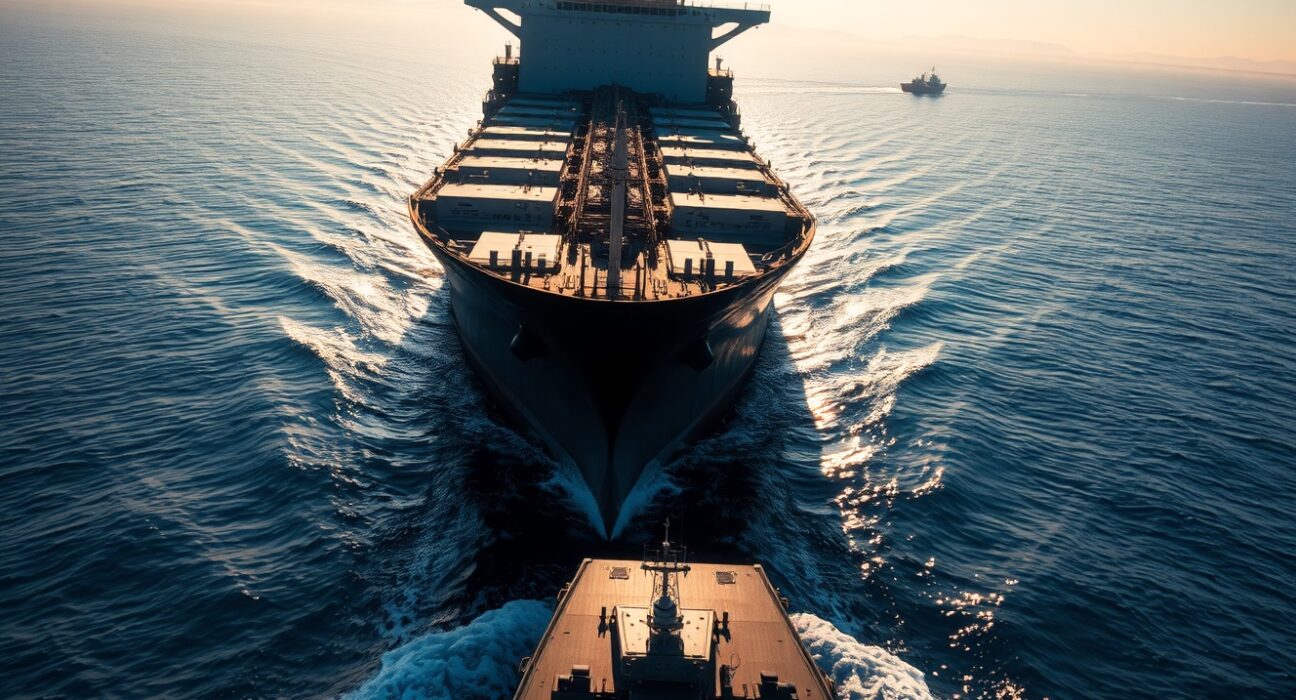
The global oil market faces an elevated risk of supply disruption as tensions around the Strait of Hormuz intensify. BNY, a leading financial institution, now warns that the oil price path is trending higher due to this geopolitical flashpoint. This analysis examines the underlying factors, market reactions, and potential outcomes for crude oil prices.
Strait of Hormuz: The World’s Most Critical Oil Chokepoint
The Strait of Hormuz connects the Persian Gulf with the Gulf of Oman and the Arabian Sea. Approximately 20% of the world’s total oil consumption passes through this narrow waterway. Any disruption here directly impacts global supply chains and the oil price path.
BNY’s recent report highlights that Iran’s strategic position near the strait creates a persistent risk. Military posturing, sanctions, and regional conflicts all contribute to the volatility. Traders now price in a higher risk premium for crude oil futures.
Historical Precedents of Hormuz Disruptions
Past incidents at the strait have caused sharp price spikes. In 2019, attacks on tankers near Fujairah sent Brent crude surging by 5% in a single day. The 2012 Iranian threat to close the strait added a $10–$15 per barrel risk premium to global prices. These events underscore the market’s sensitivity to Hormuz news.
BNY’s Analysis: Why the Oil Price Path Is Shifting Upward
BNY’s report cites three primary drivers for the higher oil price path. First, global oil inventories remain low relative to historical averages. Second, OPEC+ production cuts have tightened supply further. Third, the geopolitical risk from Hormuz is now structural, not temporary.
The report uses a scenario analysis model. In a base case, Brent crude averages $85–$95 per barrel through 2025. In a disruption scenario, prices could spike above $120 per barrel. BNY’s economists emphasize that the probability of a supply shock has increased significantly.
Key Data Points from BNY’s Report
- Global spare capacity: Concentrated in Saudi Arabia and the UAE, both near the strait.
- Insurance premiums: For tankers transiting Hormuz, they have risen by 300% since 2023.
- Strategic reserves: The U.S. Strategic Petroleum Reserve remains depleted after 2022 releases.
- Demand growth: Asian economies, particularly India and China, drive continued consumption.
Market Reactions and Price Forecasts
Futures markets have already adjusted. Brent crude now trades with a $5–$7 per barrel geopolitical risk premium, up from $2–$3 in early 2024. Options markets show elevated implied volatility for contracts expiring in Q2 and Q3 2025. The oil price path is clearly steepening.
Analysts at Goldman Sachs and Morgan Stanley have revised their forecasts upward. Both cite the Hormuz risk as a primary factor. The consensus now points to a sustained period of higher oil prices, with Brent averaging above $90 per barrel for the next 18 months.
Impact on Consumers and Economies
Higher oil prices translate directly to fuel costs. Gasoline prices in the U.S. could rise above $4 per gallon if the crisis escalates. European economies, already fragile, face increased inflationary pressure. Central banks may delay interest rate cuts, affecting growth projections.
Emerging markets suffer disproportionately. India imports over 80% of its oil, much of it through Hormuz. A sustained price spike would widen its trade deficit and weaken the rupee. The World Bank has flagged this as a key risk for developing economies.
Strategic Responses: Diversification and Alternatives
Governments and corporations are now exploring alternatives. The U.S. has accelerated permitting for domestic drilling. European nations are expanding renewable energy investments. Japan and South Korea are increasing strategic stockpiles. These actions aim to reduce long-term dependence on Hormuz transit.
However, these measures take time. In the short term, the oil price path remains tied to events in the Persian Gulf. Traders watch every diplomatic statement and military movement. The market is on edge.
Expert Perspectives on the Geopolitical Outlook
Dr. Sarah Williams, a geopolitical risk analyst at Chatham House, states: “The Strait of Hormuz is the most vulnerable point in the global energy system. Any miscalculation by Iran or its adversaries could trigger a supply crisis.”
BNY’s report echoes this sentiment. It recommends that investors hedge against oil price spikes using futures and options. Energy stocks, particularly integrated oil companies, may benefit from higher prices. However, the report warns that volatility will remain elevated.
Conclusion
The oil price path is clearly trending higher, driven by the persistent risk at the Strait of Hormuz. BNY’s analysis provides a data-driven framework for understanding this shift. Low inventories, OPEC+ discipline, and geopolitical tension combine to create a bullish outlook for crude oil. Market participants must prepare for a period of elevated prices and increased uncertainty. The world’s most critical oil chokepoint remains the key variable in energy markets for 2025.
FAQs
Q1: What is the Strait of Hormuz and why does it matter for oil prices?
The Strait of Hormuz is a narrow waterway between Iran and Oman. About 20% of the world’s oil passes through it. Any disruption here directly affects global supply and the oil price path.
Q2: What does BNY’s report say about oil prices?
BNY warns that the risk of a supply disruption at Hormuz has increased. The report forecasts a higher oil price path, with Brent crude averaging $85–$95 per barrel in the base case and potentially exceeding $120 in a crisis scenario.
Q3: How quickly could oil prices spike if the strait is disrupted?
Markets react instantly. In 2019, attacks near the strait caused a 5% single-day price surge. A full closure could push prices above $120 per barrel within days.
Q4: Are there alternatives to shipping oil through Hormuz?
Limited alternatives exist. Pipelines like the East-West Pipeline in Saudi Arabia offer some capacity, but they cannot replace the volume transiting the strait. Strategic reserves and diversification are the main short-term buffers.
Q5: How does this affect consumers?
Higher oil prices raise gasoline, heating, and transportation costs. This fuels inflation and can slow economic growth. Consumers in oil-importing countries feel the impact most directly.
Disclaimer: The information provided is not trading advice, Bitcoinworld.co.in holds no liability for any investments made based on the information provided on this page. We strongly recommend independent research and/or consultation with a qualified professional before making any investment decisions.
