

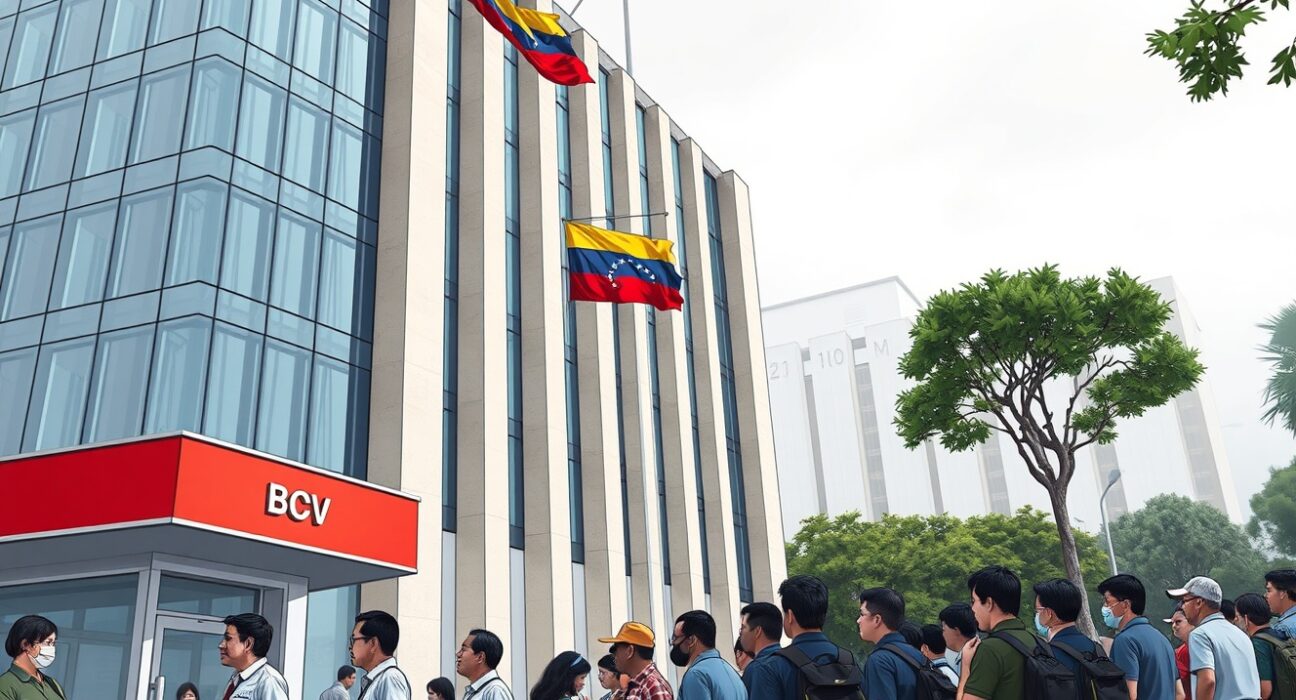
Caracas, Venezuela — The Venezuela central bank (BCV) has released a new economic outlook. It forecasts exchange rate stability and cooling inflation in the coming months. This announcement marks a potential turning point for the nation’s troubled economy.
BCV Forecasts Exchange Rate Stability and Cooling Inflation
The BCV expects the bolivar to remain steady against the US dollar. It also projects a continued decline in monthly inflation rates. These predictions follow a period of intense economic volatility. The bank cites improved monetary policy and tighter fiscal controls as key drivers. Analysts view this as a cautious but credible signal. The Venezuela central bank aims to restore confidence in the national currency.
Historical Context of Venezuela’s Economic Crisis
Venezuela has suffered hyperinflation since 2017. The bolivar lost nearly all its value. Millions of citizens fled the country. The economy contracted by over 75% between 2013 and 2020. Previous stabilization attempts failed due to political instability. The BCV now implements a more disciplined approach. It limits money printing and supports the bolivar through foreign exchange interventions.
Key Drivers Behind the Cooling Inflation Trend
Several factors contribute to the cooling inflation forecast. The BCV has reduced the growth of the monetary base. It also increased interest rates on reserve requirements. Additionally, the government has slowed public spending. The central bank uses dollar auctions to manage the exchange rate. These measures show a commitment to orthodox economic policies. Exchange rate stability depends on continued discipline.
- Monetary tightening: Reduced money supply growth.
- Fiscal restraint: Lower government expenditure.
- Dollar auctions: Regular interventions to stabilize the bolivar.
- Interest rate hikes: Higher rates to curb demand.
Impact on Venezuelan Households and Businesses
For ordinary Venezuelans, cooling inflation means slower price increases. Basic goods may become more affordable. Businesses can plan with greater certainty. However, wages remain low in dollar terms. Many still struggle to meet basic needs. The exchange rate stability helps protect savings. Yet, trust in the banking system remains fragile. Long-term recovery requires sustained policy consistency.
Expert Analysis and International Perspectives
Economists from the International Monetary Fund (IMF) have noted the improvement. They caution that risks remain high. Political uncertainty and oil price volatility could derail progress. The BCV’s credibility hinges on its ability to maintain the current course. Independent analysts point to a 60% chance of continued exchange rate stability through 2025. The Venezuela central bank must resist pressure to print money before elections.
Timeline of Recent Economic Measures
| Date | Measure | Effect |
|---|---|---|
| January 2025 | BCV raises reserve requirements | Reduced bank lending |
| February 2025 | Dollar auction volume increased | Stabilized bolivar rate |
| March 2025 | Government cuts spending by 15% | Lower fiscal deficit |
| April 2025 | Inflation drops to single digits monthly | Sign of cooling inflation |
Challenges to Sustaining Exchange Rate Stability
Maintaining exchange rate stability requires large dollar reserves. Venezuela’s oil exports remain constrained. Sanctions limit access to international markets. The black market still operates alongside the official rate. A sudden drop in oil prices could strain reserves. The BCV must balance intervention with reserve preservation. Cooling inflation may tempt the government to loosen policy prematurely.
Comparison with Other Latin American Economies
Argentina faced similar hyperinflation. It adopted dollarization as a solution. Ecuador uses the US dollar as its official currency. Venezuela has rejected full dollarization. Instead, it pursues a managed float. This approach offers more flexibility. However, it requires constant vigilance. The Venezuela central bank studies these regional examples. It adapts strategies to local conditions.
Future Outlook for the Venezuelan Economy
The BCV’s forecast suggests a gradual recovery. Inflation could fall to 50% annually by year-end. That remains high by global standards. Yet, it represents significant progress. Exchange rate stability supports foreign investment. It also encourages repatriation of capital. The Venezuela central bank must maintain transparent communication. Trust is the most valuable asset in this process.
Role of Digital Currency and Financial Innovation
The BCV has launched a digital bolivar. It simplifies transactions and reduces cash dependency. Digital payments gain traction among younger Venezuelans. The central bank uses blockchain technology for tracking. This innovation supports cooling inflation by increasing transaction efficiency. It also aids in monitoring money supply. The digital bolivar could become a tool for financial inclusion.
Conclusion
The Venezuela central bank provides a hopeful outlook. Exchange rate stability and cooling inflation offer a path to recovery. However, sustained effort is essential. Political will and international cooperation will determine success. For now, Venezuelans have reason for cautious optimism. The BCV’s disciplined approach marks a departure from past failures.
FAQs
Q1: What is the Venezuela central bank’s main forecast?
The BCV forecasts exchange rate stability and cooling inflation in the coming months, based on tighter monetary and fiscal policies.
Q2: How does exchange rate stability help ordinary Venezuelans?
It protects the value of savings, reduces price volatility, and makes basic goods more affordable over time.
Q3: What are the risks to this positive outlook?
Political instability, oil price drops, and premature policy loosening could reverse the progress made.
Q4: How does the BCV manage the exchange rate?
It conducts regular dollar auctions, adjusts interest rates, and limits money supply growth to support the bolivar.
Q5: Is Venezuela’s inflation fully under control?
Not yet. Monthly inflation has dropped significantly, but annual rates remain high by international standards.
Q6: What role does the digital bolivar play?
The digital bolivar improves transaction efficiency, supports financial inclusion, and helps the central bank monitor the money supply.
Disclaimer: The information provided is not trading advice, Bitcoinworld.co.in holds no liability for any investments made based on the information provided on this page. We strongly recommend independent research and/or consultation with a qualified professional before making any investment decisions.
