

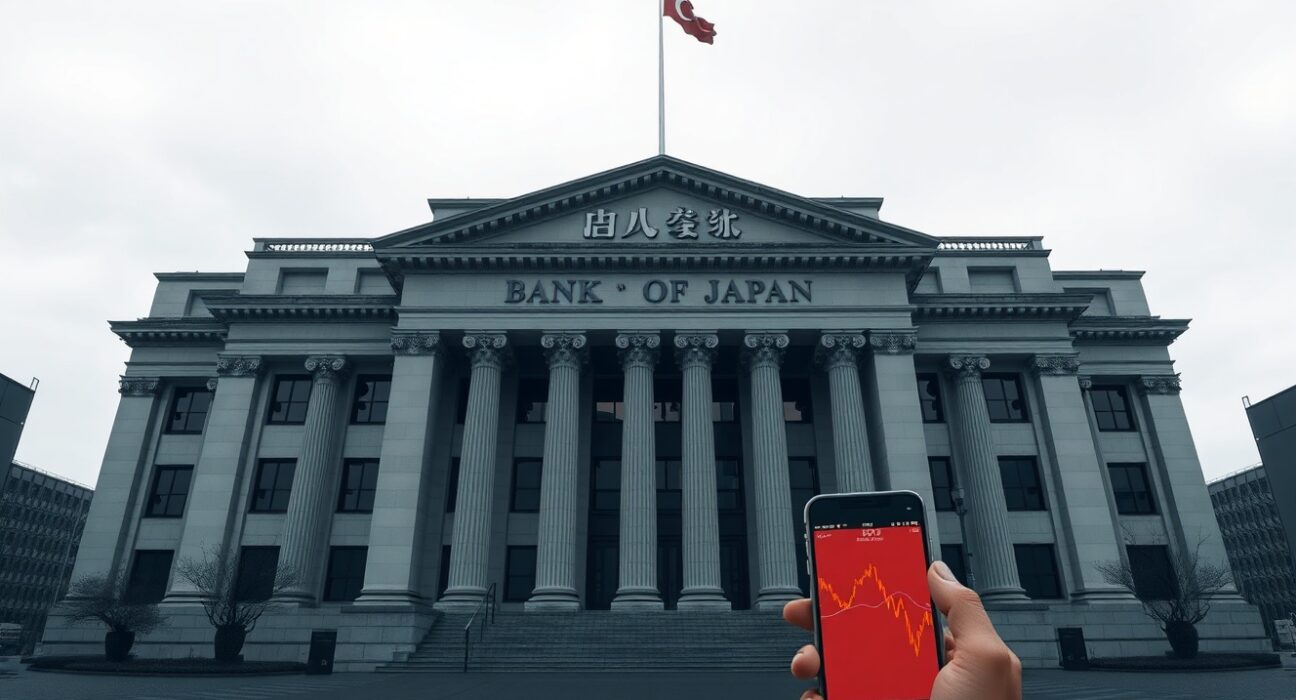
The Bank of Japan (BOJ) is widely expected to hold its benchmark interest rate steady at its upcoming policy meeting. This decision comes amid escalating inflation fears triggered by the ongoing Iran war. Global markets now brace for significant economic ripple effects.
Bank of Japan Holds Rates: A Cautious Stance
Market analysts predict the BOJ will maintain its current rate. The central bank prioritizes stability over aggressive tightening. This cautious approach reflects deep uncertainty about the global economy.
Geopolitical tensions in the Middle East drive energy prices higher. Consequently, Japan faces imported inflation. The BOJ must balance price stability with economic growth.
Iran War-Driven Inflation Fears Intensify
The conflict in Iran disrupts global oil supply chains. Crude oil prices have surged by over 15% since the conflict escalated. This directly impacts Japan, a major energy importer.
Higher energy costs increase production expenses for Japanese manufacturers. Consumers also face rising utility bills and transportation costs. The BOJ’s decision reflects these mounting pressures.
Impact on Japanese Yen and Trade Balance
The yen remains under pressure against the US dollar. A weaker yen amplifies import costs, fueling inflation further. Japan’s trade deficit widens as import bills rise.
Key data points include:
- Consumer Price Index (CPI): Expected to remain above the BOJ’s 2% target.
- GDP Growth: Forecasts revised downward due to reduced export demand.
- Industrial Production: Slowing as energy costs bite.
Global Market Impact and Expert Analysis
International investors watch the BOJ closely. A rate hold signals a dovish stance. This could weaken the yen further, affecting global currency markets.
Experts argue the BOJ faces a difficult trade-off. Raising rates could curb inflation but hurt growth. Holding rates risks letting inflation become entrenched.
Former BOJ board member Sayuri Shirai notes, ‘The BOJ must communicate clearly to avoid market panic. The Iran war creates unprecedented uncertainty.’
Comparison with Other Central Banks
Unlike the Federal Reserve and ECB, the BOJ remains accommodative. The Fed has paused rate hikes, while the ECB continues tightening. Japan’s unique economic structure explains this divergence.
| Central Bank | Current Rate | Recent Action |
|---|---|---|
| Bank of Japan | -0.1% | Expected to hold |
| Federal Reserve | 5.25-5.50% | Paused |
| European Central Bank | 4.00% | Raised rates |
Timeline of Key Events
Understanding the sequence helps clarify the BOJ’s decision.
- October 2024: Iran conflict escalates, oil prices spike.
- November 2024: Japan’s CPI rises to 3.5%.
- December 2024: BOJ holds rates, cites uncertainty.
- January 2025: Yen falls to 150 against USD.
- February 2025: BOJ meeting; rate hold expected.
Impact on Japanese Households and Businesses
Ordinary Japanese citizens feel the strain. Food prices rise alongside energy costs. Wage growth fails to keep pace with inflation.
Small businesses struggle with higher input costs. Many pass costs to consumers, reducing demand. The BOJ’s policy aims to support economic activity.
Long-Term Outlook for Japan
The Iran war’s duration remains unknown. A prolonged conflict could force the BOJ to act. Analysts suggest a rate hike later in 2025 if inflation persists.
Japan’s aging population adds structural challenges. The BOJ must navigate demographic headwinds alongside external shocks.
Conclusion
The Bank of Japan holds rates amid Iran war-driven inflation fears, prioritizing stability. This decision reflects a complex balancing act. Global markets now adjust to a period of uncertainty. Japan’s economic resilience will be tested in the months ahead.
FAQs
Q1: Why is the Bank of Japan expected to hold rates?
The BOJ holds rates due to uncertainty from the Iran war and its impact on inflation and growth.
Q2: How does the Iran war affect Japan’s inflation?
The war drives up oil prices, increasing import costs and consumer prices in Japan.
Q3: What happens to the yen if the BOJ holds rates?
The yen may weaken further against the dollar, making imports more expensive.
Q4: Will the BOJ raise rates later in 2025?
Analysts see a possible rate hike if inflation persists and the conflict ends.
Q5: How does this compare to other central banks?
The BOJ is more dovish than the Fed or ECB, reflecting Japan’s unique economic challenges.
Disclaimer: The information provided is not trading advice, Bitcoinworld.co.in holds no liability for any investments made based on the information provided on this page. We strongly recommend independent research and/or consultation with a qualified professional before making any investment decisions.
