

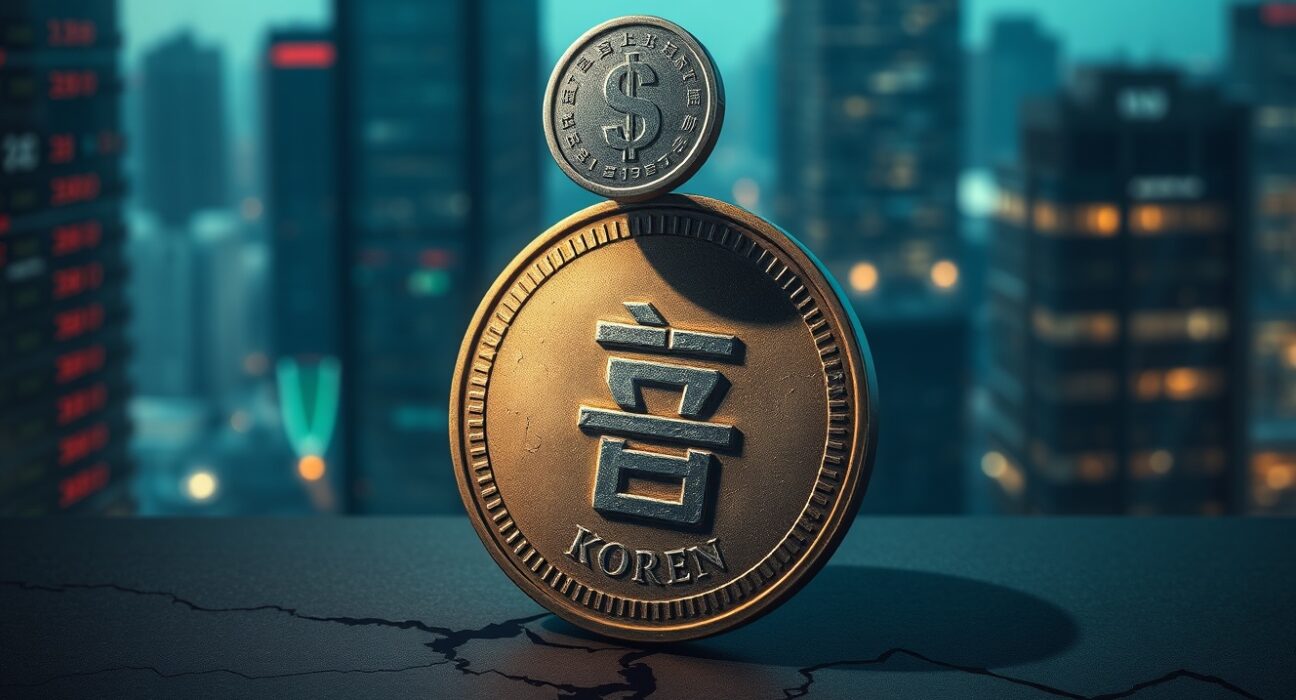
The USD/KRW exchange rate faces mounting pressure as Bank of America (BofA) analysts highlight the accelerating trend of Korean outbound investment. This development places the Korean won under significant strain, potentially reshaping currency dynamics in the region. Understanding this pressure is crucial for investors and policymakers alike.
BofA’s Analysis of Korean Won Pressure
Bank of America’s latest report underscores a critical shift in capital flows. Korean investors increasingly seek opportunities abroad. This outbound investment trend exerts consistent downward pressure on the won. The report identifies this as a structural factor, not a temporary one. Consequently, the USD/KRW pair may remain elevated. BofA’s analysis uses data from the Bank of Korea and international financial statistics. It shows a clear correlation between rising foreign asset purchases and won weakness. The trend spans several quarters, indicating deep-rooted changes.
Drivers of Outbound Investment from South Korea
Several factors fuel this capital exodus. First, domestic yields remain relatively low. Korean investors chase higher returns in overseas markets. Second, the domestic economy faces structural challenges. These include an aging population and slowing growth. Third, Korean corporations expand globally. They acquire foreign assets and build overseas facilities. This corporate activity directly increases demand for foreign currency. As a result, the won sells off against the dollar. Individual investors also participate. They buy foreign stocks and real estate. This broad-based trend amplifies the pressure.
Impact on USD/KRW Exchange Rate
The direct impact on USD/KRW is clear. Sustained outflows create a constant bid for the dollar. The won, in turn, weakens. BofA’s model suggests a potential for further depreciation. Key levels to watch include the 1,400 won per dollar mark. A breach could trigger additional selling. The central bank may intervene. However, intervention often provides only temporary relief. The underlying trend remains powerful. Traders should monitor monthly balance of payments data. This data reveals the scale of outflows. It also offers clues about future exchange rate direction.
Comparative Analysis: Won vs. Regional Peers
The won’s performance lags behind other Asian currencies. The Japanese yen, for instance, faces its own pressures. However, the won’s weakness is more pronounced. The table below compares key metrics.
| Currency | Year-to-Date Performance vs. USD | Primary Driver |
|---|---|---|
| Korean Won (KRW) | -6.5% | Outbound investment |
| Japanese Yen (JPY) | -4.2% | Monetary policy divergence |
| Chinese Yuan (CNY) | -2.1% | Economic slowdown |
This data highlights the unique pressure on the won. Outbound investment acts as a specific drag. Other currencies face broader macroeconomic headwinds.
Policy Implications and Central Bank Response
The Bank of Korea (BOK) faces a difficult choice. Raising interest rates could attract capital. However, it might also slow domestic growth. The BOK uses verbal intervention. It also conducts smoothing operations. These actions aim to reduce volatility. They do not reverse the trend. The government could implement capital controls. This step remains unlikely. South Korea benefits from open capital markets. Policymakers may instead encourage domestic investment. They could offer tax incentives. These measures might retain capital. However, their impact takes time.
Expert Perspectives on Future Trends
Market analysts offer varied views. Some see the won stabilizing. They cite high export revenues. South Korea’s trade surplus provides a buffer. Others agree with BofA. They expect continued weakness. The structural nature of outflows supports this view. A key factor is the US dollar’s strength. A strong dollar amplifies won pressure. The Federal Reserve’s policy stance matters. If US rates remain high, the dollar stays strong. This environment favors further USD/KRW upside.
Strategic Considerations for Investors
Investors must adapt to this new reality. Hedging currency risk becomes more important. Importers face higher costs. They should lock in rates. Exporters benefit from a weaker won. They can price goods competitively. However, volatility creates uncertainty. Long-term investors should monitor the trend. It affects portfolio returns. Diversification across currencies helps. The won’s weakness is not uniform. It varies against different currencies. The USD/KRW pair shows the most stress. The euro and yen offer alternative exposures.
Conclusion
BofA’s analysis confirms significant USD/KRW pressure from rising outbound investment. This structural trend weakens the Korean won. It challenges policymakers and offers opportunities for traders. Understanding these dynamics is essential for navigating the foreign exchange market. The won’s trajectory depends on global and domestic factors. Investors should remain vigilant. The trend shows no immediate signs of reversal.
FAQs
Q1: What is the main reason for the Korean won’s weakness?
A1: The primary reason is rising outbound investment from South Korea. Investors and corporations buy foreign assets, increasing demand for the US dollar and other currencies. This outflow directly pressures the won.
Q2: How does BofA’s analysis impact trading decisions?
A2: BofA’s report provides a data-driven view. It helps traders anticipate continued USD/KRW strength. Traders may use this information to position for a weaker won, using options or forward contracts.
Q3: Can the Bank of Korea stop the won from falling?
A3: The BOK can intervene to slow the decline. It can also raise interest rates. However, these measures often provide temporary relief. The structural nature of outflows makes a full reversal difficult.
Q4: Is the won’s weakness good for the Korean economy?
A4: It has mixed effects. Exporters benefit from cheaper goods. Importers face higher costs. Consumers pay more for foreign products. Overall, a weaker won can boost export-led growth but may fuel inflation.
Q5: What should individual investors do about USD/KRW pressure?
A5: Individual investors should assess their currency exposure. Hedging with currency ETFs or forward contracts can protect against further won weakness. Diversifying investments across different currencies also helps manage risk.
Disclaimer: The information provided is not trading advice, Bitcoinworld.co.in holds no liability for any investments made based on the information provided on this page. We strongly recommend independent research and/or consultation with a qualified professional before making any investment decisions.
