

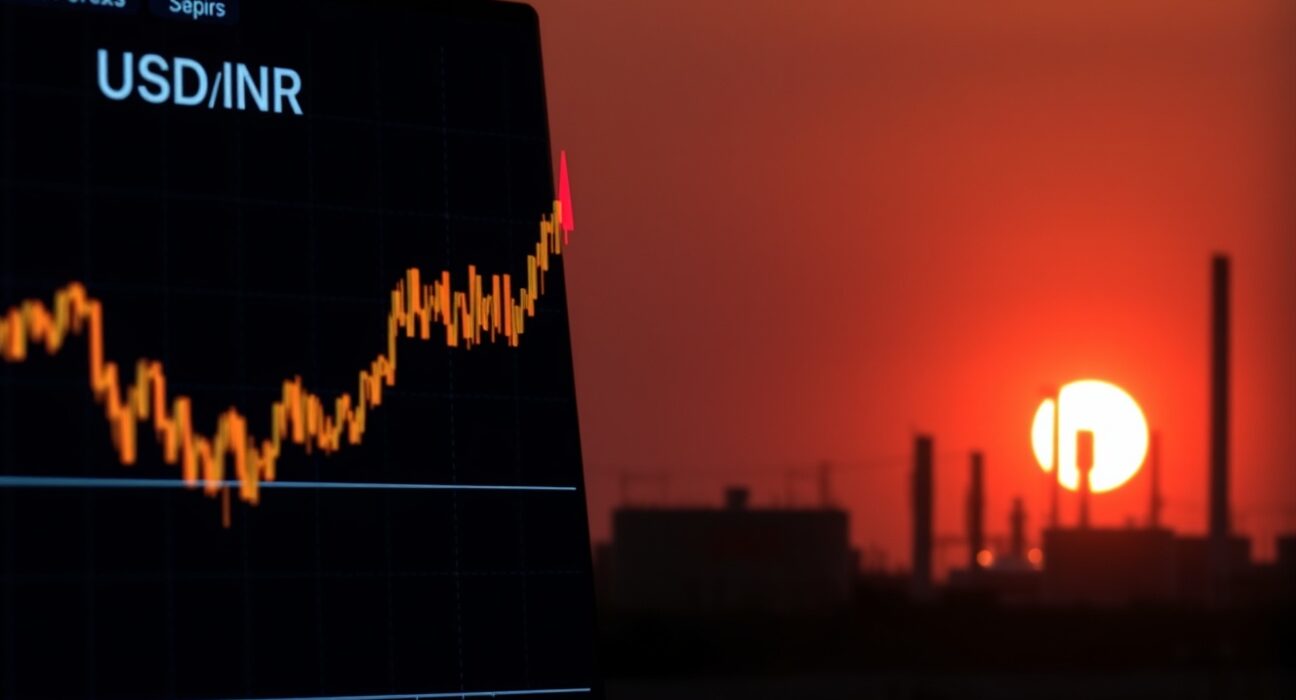
The USD/INR currency pair is approaching its all-time highs, driven by persistently elevated global oil prices. This development places the Indian rupee under significant strain, as the country’s heavy reliance on oil imports creates a direct link between crude costs and currency valuation. For traders and investors, this juncture represents a critical moment to assess the rupee’s trajectory.
USD/INR Approaches All-Time Highs: The Core Drivers
The USD/INR pair has been on a steady upward trend for several months. The primary catalyst remains the high cost of crude oil. India imports over 80% of its oil needs. When oil prices rise, the country’s import bill swells. This increases demand for US dollars to pay for those imports. Consequently, the rupee weakens against the dollar.
Several factors are keeping oil prices elevated. Supply constraints from OPEC+ nations, geopolitical tensions in the Middle East, and a global economic recovery all contribute. The combination of these forces creates a persistent headwind for the rupee.
Another key driver is the relative strength of the US dollar. The Federal Reserve maintains a hawkish monetary policy stance. Higher US interest rates attract global capital. This strengthens the dollar against most emerging market currencies, including the Indian rupee.
The Reserve Bank of India (RBI) has intervened in the forex market. It sells dollars to support the rupee. However, the central bank cannot indefinitely counter the market forces. The USD/INR’s movement toward its all-time high reflects this fundamental imbalance.
Historical Context: Previous All-Time Highs
The USD/INR pair previously touched its record high in October 2022. It briefly crossed the 83.00 mark. That peak coincided with a spike in global oil prices following the Russia-Ukraine conflict. The current approach to similar levels indicates a recurrence of similar pressures.
The historical data shows a clear correlation between oil price spikes and rupee depreciation. In 2013, the taper tantrum saw the rupee fall sharply. In 2018, rising oil prices again weakened the currency. Each cycle tests the RBI’s ability to manage volatility.
Impact of Elevated Oil Prices on the Indian Economy
Elevated oil prices have a multi-layered impact on India. The most immediate effect is on the current account deficit (CAD). A higher oil import bill widens the CAD. This creates additional demand for foreign currency, putting further downward pressure on the rupee.
The inflationary impact is equally significant. Higher fuel costs increase transportation and production expenses. This feeds into consumer prices. The RBI must then balance its inflation-fighting mandate with the need to support growth. Higher interest rates to control inflation can slow economic activity.
Corporate earnings also suffer. Companies in sectors like aviation, logistics, and manufacturing face higher input costs. They may pass these costs to consumers or absorb them, reducing profit margins. This can affect stock market performance and investor sentiment.
For the common citizen, elevated oil prices mean higher petrol, diesel, and LPG costs. This reduces disposable income and can dampen domestic consumption. The government may also face pressure to cut taxes on fuel, affecting fiscal revenues.
| Impact Area | Effect of High Oil Prices |
|---|---|
| Current Account Deficit | Widens, increasing USD demand |
| Inflation | Rises, prompting RBI action |
| Corporate Profits | Margins compress |
| Consumer Spending | Declines due to higher fuel costs |
Expert Analysis: What This Means for Traders
Forex traders are closely watching the 83.00–83.50 range. A decisive break above this level could trigger further momentum. Technical analysts note that the pair is forming a bullish flag pattern. This suggests potential for continued upside.
However, the RBI’s intervention creates a two-sided risk. The central bank has demonstrated a willingness to defend the rupee. It may use its foreign exchange reserves to smooth volatility. Traders should monitor RBI statements and dollar-selling operations for clues.
Options markets show increased demand for USD/INR call options. This indicates that market participants are hedging against further rupee weakness. The implied volatility has risen, reflecting uncertainty about the near-term direction.
Fundamentally, the outlook depends on oil price trends. If crude remains above $85 per barrel, the rupee faces sustained pressure. A decline in oil prices could provide relief. Geopolitical developments, such as a ceasefire in the Middle East, could also shift the dynamics.
Global Context: Dollar Strength and Emerging Markets
The USD/INR trend is not isolated. Many emerging market currencies are under pressure. The Brazilian real, Turkish lira, and South African rand have all weakened against the dollar. The common factor is the strong US economy and high US interest rates.
The Federal Reserve’s rate decisions are critical. If the Fed cuts rates later in 2025, the dollar could weaken. This would support the rupee. However, if inflation remains sticky, the Fed may hold rates higher for longer. This scenario would keep the dollar strong.
India’s macroeconomic fundamentals remain relatively strong. The country has robust foreign exchange reserves. GDP growth is among the fastest in the world. These factors can limit the rupee’s downside. But they do not eliminate the risk from oil price shocks.
Timeline of Key Events
- January 2025: Oil prices begin to rise due to OPEC+ production cuts.
- March 2025: USD/INR crosses 82.50, approaching the all-time high.
- April 2025: RBI intervenes, selling dollars to curb volatility.
- May 2025: Pair tests 82.80 level; market watches for breakout.
- June 2025: Federal Reserve holds rates steady; dollar remains strong.
Strategies for Investors and Businesses
Businesses with foreign currency exposure should review their hedging strategies. Importers face higher costs. They can use forward contracts or options to lock in rates. Exporters benefit from a weaker rupee. They may choose to delay repatriation of earnings.
For retail investors, the situation underscores the importance of diversification. A weakening rupee can boost returns from US dollar-denominated assets. International mutual funds and ETFs become more attractive. However, currency risk cuts both ways.
Long-term investors should focus on fundamentals. India’s economic growth story remains intact. The rupee’s depreciation is a cyclical challenge, not a structural failure. Patience and strategic allocation are key.
Conclusion
The USD/INR approaches all-time highs amid elevated oil prices, creating a challenging environment for the Indian rupee. The interplay of high crude costs, a strong US dollar, and domestic economic factors drives this trend. While the RBI can manage short-term volatility, the long-term direction depends on global oil markets and monetary policy. Traders and investors must stay informed, hedge risks, and prepare for potential further movement. The coming weeks will be critical in determining whether the rupee breaks its record or finds support.
FAQs
Q1: Why is the USD/INR approaching all-time highs?
The primary reason is elevated global oil prices, which increase India’s import bill and demand for US dollars. A strong US dollar and RBI intervention dynamics also contribute.
Q2: What is the current all-time high for USD/INR?
The pair touched approximately 83.00 in October 2022. It is now approaching that level again in 2025.
Q3: How does the RBI respond to rupee depreciation?
The RBI sells US dollars from its foreign exchange reserves to support the rupee. It may also tighten monetary policy or use regulatory measures to curb speculation.
Q4: Will the rupee continue to weaken?
The outlook depends on oil prices and the Federal Reserve’s actions. If oil stays high and the Fed remains hawkish, the rupee could weaken further. A decline in oil or a Fed rate cut could provide relief.
Q5: How can I protect my investments from rupee depreciation?
Consider diversifying into US dollar-denominated assets, hedging currency exposure, or investing in export-oriented sectors. Consult a financial advisor for personalized advice.
Disclaimer: The information provided is not trading advice, Bitcoinworld.co.in holds no liability for any investments made based on the information provided on this page. We strongly recommend independent research and/or consultation with a qualified professional before making any investment decisions.
