

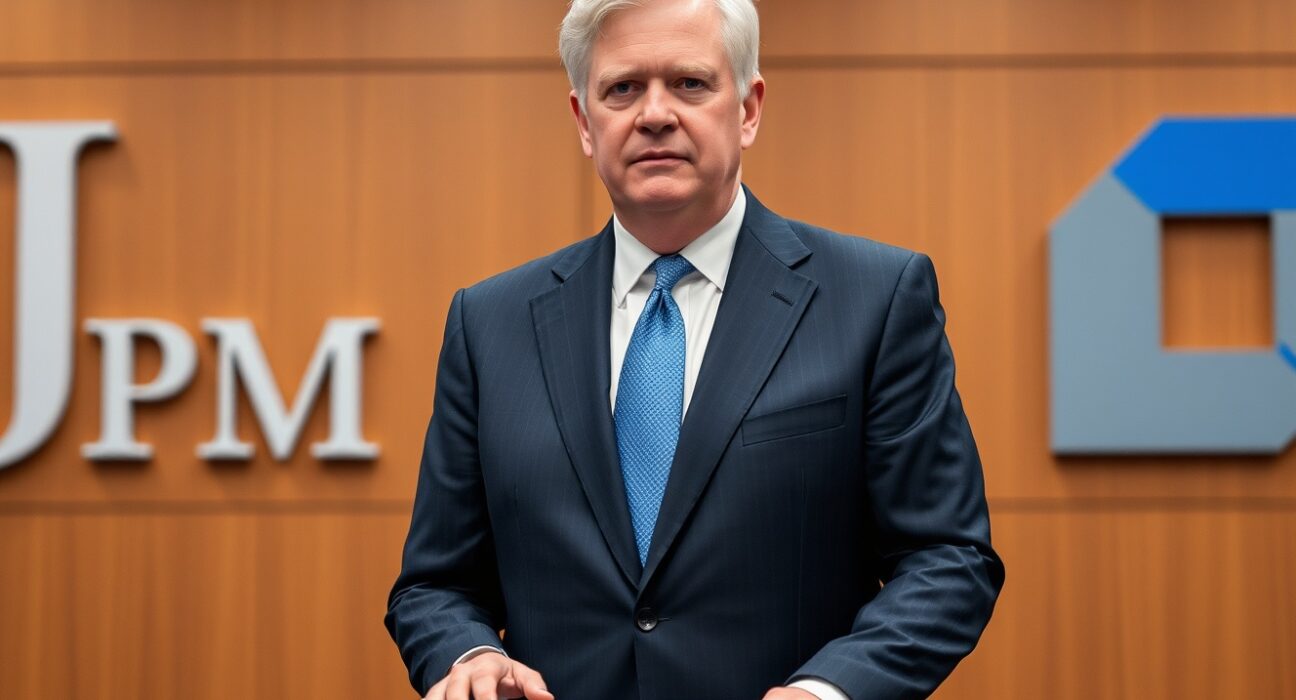
In a recent statement that has captured the attention of global financial markets, JPMorgan CEO Jamie Dimon said he is not worried about the U.S. economy. Speaking at a banking conference in New York on May 15, 2025, Dimon expressed a measured confidence in the nation’s economic trajectory, despite ongoing debates about inflation, interest rates, and geopolitical risks. His remarks come at a time when investors and policymakers are closely watching for signals from one of the most influential voices in American finance.
Why JPMorgan CEO Jamie Dimon Is Not Worried About the U.S. Economy
Dimon’s reassurance is rooted in several key factors. First, he pointed to the resilience of the American consumer. Consumer spending, which accounts for roughly 70% of U.S. GDP, remains robust. Second, he highlighted the strength of the labor market. Unemployment rates are near historic lows, and wage growth continues to outpace inflation in many sectors. Third, Dimon emphasized the stability of the banking sector. Following the regional banking crises of 2023, major institutions like JPMorgan have bolstered their capital reserves and liquidity positions.
Additionally, Dimon noted that corporate balance sheets are generally healthy. Many companies have locked in low-interest debt during the pandemic era, reducing immediate refinancing risks. He also mentioned that supply chain disruptions have largely normalized, easing cost pressures for businesses. Consequently, the risk of a severe recession appears diminished.
Market Reaction to Jamie Dimon’s Economic Outlook
Financial markets responded positively to Dimon’s comments. The S&P 500 index rose by 0.8% on the day of his speech, with banking stocks leading the gains. JPMorgan’s own shares climbed 1.2%. Analysts at Goldman Sachs and Morgan Stanley echoed Dimon’s sentiment, revising their recession probability estimates downward. However, some caution remains. Bond yields have stayed elevated, and the Federal Reserve has signaled that it will keep interest rates higher for longer to combat sticky inflation.
Dimon’s outlook also contrasts with more pessimistic voices. For instance, economist Nouriel Roubini has warned of a potential debt crisis. Yet, Dimon’s track record lends weight to his perspective. He successfully navigated JPMorgan through the 2008 financial crisis and the 2020 pandemic downturn.
Key Factors Behind Dimon’s Confidence
- Consumer Resilience: Household savings remain above pre-pandemic levels, and credit card delinquencies are low.
- Labor Market Strength: The U.S. added 253,000 jobs in April 2025, exceeding expectations.
- Banking Sector Stability: Major banks have passed the Federal Reserve’s stress tests with strong capital ratios.
- Corporate Health: Corporate debt-to-GDP ratios have declined from peak 2023 levels.
- Inflation Moderation: Core PCE inflation has fallen to 2.8%, down from 5.4% in 2022.
Background: Jamie Dimon’s History of Economic Predictions
Jamie Dimon has a long history of making prescient economic calls. In 2006, he warned about the risks of subprime mortgages before the housing crash. In 2020, he predicted a sharp but short recession due to COVID-19. His current stance is notably more optimistic than his 2023 warnings about a potential economic hurricane. At that time, Dimon cited geopolitical tensions, quantitative tightening, and the war in Ukraine as storm clouds. Now, he sees those clouds parting.
Dimon’s shift reflects real-world improvements. Inflation has cooled from its 2022 peak. The labor market has remained tight. And corporate earnings have been resilient. Moreover, the banking sector has strengthened its risk management practices. JPMorgan itself reported a record net income of $49.6 billion in 2024.
Impact on the Banking Sector and 2025 Economic Outlook
Dimon’s confidence has direct implications for the banking sector. As the CEO of the largest U.S. bank by assets, his views influence lending practices, investment strategies, and regulatory discussions. A stable economic outlook encourages banks to increase lending to businesses and consumers, fueling further growth. It also reduces the need for aggressive loan loss provisions, boosting profitability.
For the broader economy, Dimon’s stance supports the narrative of a soft landing—where the Fed successfully tames inflation without triggering a recession. This scenario is increasingly favored by market participants. According to a recent survey by the National Association for Business Economics, 68% of economists now expect a soft landing in 2025.
Expert Perspectives on Dimon’s Economic View
Other financial leaders have weighed in. BlackRock CEO Larry Fink noted that while risks remain, the U.S. economy is more adaptable than many assume. Former Treasury Secretary Lawrence Summers, however, cautioned that inflation could reaccelerate if the Fed cuts rates too soon. Dimon himself acknowledged these risks but maintained that the base case is positive.
Dimon also highlighted the role of technology and innovation. AI adoption is boosting productivity across industries. Energy independence is strengthening the U.S. trade balance. And reshoring efforts are creating new manufacturing jobs. These structural tailwinds, he argued, provide a buffer against cyclical downturns.
Conclusion
In summary, JPMorgan CEO Jamie Dimon has delivered a vote of confidence in the U.S. economy, citing consumer strength, labor market resilience, and banking stability. While risks such as inflation and geopolitical tensions persist, Dimon’s outlook reflects a pragmatic optimism grounded in data and experience. For investors, businesses, and policymakers, his words serve as a reassuring signal that the foundation of the American economy remains solid. As 2025 unfolds, the key will be monitoring whether these positive trends continue or whether new challenges emerge.
FAQs
Q1: Why is JPMorgan CEO Jamie Dimon not worried about the U.S. economy?
Dimon cites strong consumer spending, a robust labor market, stable banking sector, and healthy corporate balance sheets as key reasons for his confidence.
Q2: What did Jamie Dimon say about the U.S. economy in 2025?
He stated that he is not worried about the U.S. economy, emphasizing resilience and a likely soft landing scenario.
Q3: How did the stock market react to Dimon’s comments?
The S&P 500 rose 0.8%, and JPMorgan’s stock gained 1.2%, reflecting positive investor sentiment.
Q4: What are the main risks to the U.S. economy according to experts?
Key risks include persistent inflation, high interest rates, geopolitical tensions, and potential corporate debt defaults.
Q5: How does Dimon’s current view compare to his 2023 warnings?
In 2023, Dimon warned of an economic hurricane due to inflation and geopolitical risks. In 2025, he sees those risks receding.
Q6: What is a soft landing in economic terms?
A soft landing occurs when the central bank raises interest rates to control inflation without causing a recession.
Disclaimer: The information provided is not trading advice, Bitcoinworld.co.in holds no liability for any investments made based on the information provided on this page. We strongly recommend independent research and/or consultation with a qualified professional before making any investment decisions.
