

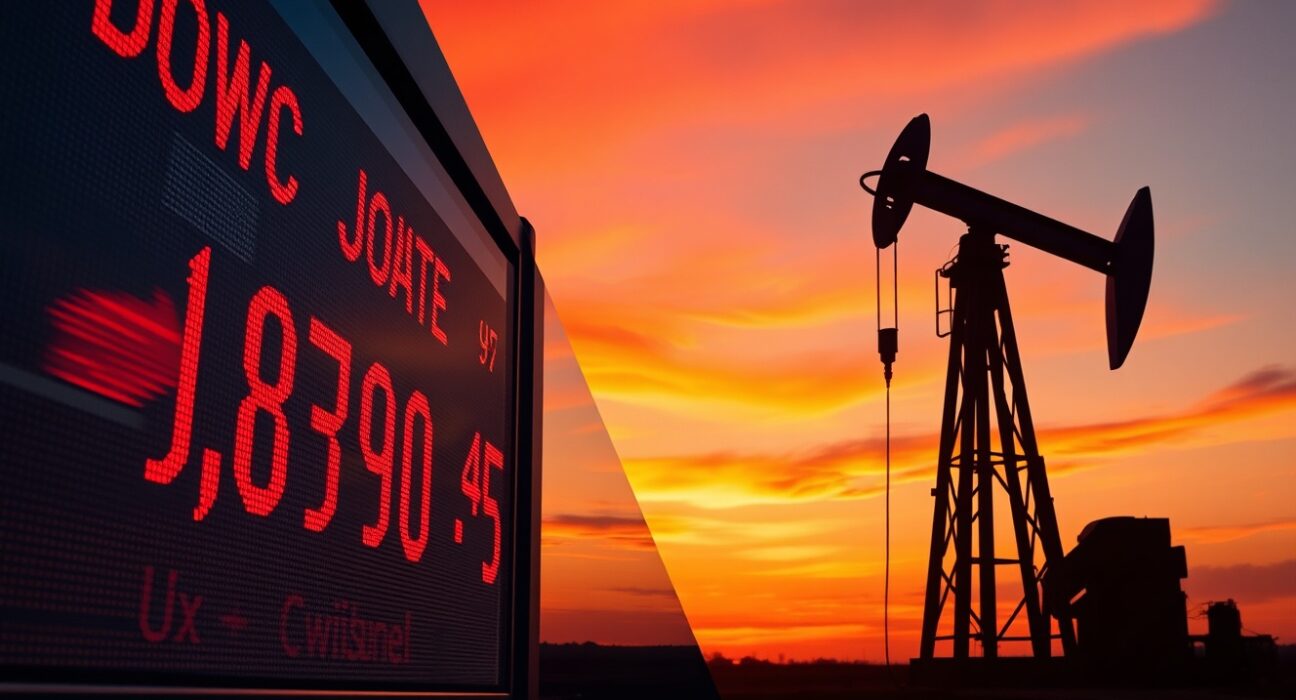
The Dow Jones Industrial Average futures wobbled on Tuesday as diplomatic talks with Iran stalled, sending crude oil prices sharply higher and injecting fresh uncertainty into global markets. Investors now weigh the implications of a potential supply disruption against broader economic headwinds.
Dow Jones Futures Wobble Amid Geopolitical Tensions
The Dow Jones Industrial Average futures experienced a volatile session, fluctuating between gains and losses. This movement reflects growing investor anxiety. The stalemate in nuclear negotiations with Iran directly impacts energy markets. Higher oil prices threaten to increase inflation. This scenario complicates the Federal Reserve’s monetary policy decisions.
Market participants now focus on the breakdown of talks. They assess the risk of renewed sanctions. They also consider the possibility of supply cuts from OPEC+. The Dow Jones futures wobble signals a cautious sentiment. Traders reduce risk exposure ahead of key economic data releases.
Key factors driving the Dow Jones futures wobble:
- Iran talks stall: Negotiations in Vienna failed to produce a breakthrough. This dims the prospect of increased Iranian oil exports.
- Crude oil jumps: Brent crude surged above $85 per barrel. West Texas Intermediate (WTI) followed suit.
- Inflation fears: Higher energy costs could prolong elevated consumer prices.
- Fed policy uncertainty: The central bank may need to maintain higher interest rates for longer.
Crude Oil Jumps on Supply Concerns
Crude oil jumps sharply as the market reacts to the stalled Iran talks. Analysts had anticipated a potential deal that could add up to 1.5 million barrels per day to global supply. Without this, the market remains tight. Geopolitical risk premiums now rise.
The International Energy Agency (IEA) recently warned of a supply deficit in the second half of the year. The crude oil jumps underscore this imbalance. OPEC+ production cuts further constrain availability. The combination of strong demand and limited supply pushes prices higher.
Impact of crude oil jumps on different sectors:
| Sector | Effect |
|---|---|
| Energy | Positive – higher revenues for producers |
| Airlines | Negative – increased fuel costs |
| Transportation | Negative – higher operating expenses |
| Consumer Discretionary | Negative – reduced spending power |
Market Volatility Returns as Iran Talks Stall
The stalled Iran talks reintroduce market volatility. The CBOE Volatility Index (VIX) rose above 20. This indicates heightened fear. The Dow Jones futures wobble reflects this uncertainty. Investors now monitor diplomatic channels closely. Any progress could reverse the crude oil jumps.
Historical patterns show that geopolitical shocks often create buying opportunities. However, the current environment differs. Inflation remains stubbornly high. The labor market stays tight. These factors limit the Fed’s flexibility. The Dow Jones futures wobble may persist until clarity emerges.
Expert Analysis: What the Stalled Iran Talks Mean for Markets
Market strategists emphasize the importance of the Iran talks. “The breakdown is a significant negative for risk assets,” says a senior analyst at a major investment bank. “It removes a key disinflationary catalyst. The crude oil jumps add to cost pressures. This is a headwind for equities.”
Another expert highlights the timing. “We are entering a period of seasonal demand strength. The crude oil jumps could accelerate. This forces the Fed to remain hawkish. The Dow Jones futures wobble is a rational response.”
Timeline of events leading to the Dow Jones futures wobble:
- Monday: Iran talks reach an impasse. Diplomatic sources report no progress.
- Tuesday morning: Crude oil jumps 3% in early Asian trading. Dow Jones futures wobble, falling 100 points.
- Tuesday afternoon: Futures recover slightly. Investors digest the news. Volume remains elevated.
Broader Economic Implications of the Crude Oil Surge
The crude oil jumps have ripple effects across the global economy. Higher energy prices increase production costs for manufacturers. They also reduce disposable income for consumers. This dynamic slows economic growth. The Dow Jones futures wobble captures this tension.
Central banks face a dilemma. They must balance inflation control with growth support. The crude oil jumps complicate this task. The European Central Bank and the Bank of England also watch closely. Energy importers like Japan and India face particular pressure.
How different asset classes respond to the crude oil jumps:
- Equities: Cyclical sectors underperform. Energy stocks outperform.
- Bonds: Yields rise on inflation expectations. Safe-haven demand limits the move.
- Currencies: Oil-linked currencies strengthen. The Canadian dollar and Norwegian krone gain.
- Commodities: Precious metals benefit from uncertainty. Gold edges higher.
Investor Strategies Amid the Dow Jones Futures Wobble
Investors should prepare for continued volatility. The Dow Jones futures wobble may not resolve quickly. Diplomatic efforts could resume. However, the path forward remains unclear. A diversified portfolio helps manage risk.
Consider these strategies:
- Hedge energy exposure: Use commodity ETFs or energy sector funds.
- Focus on quality: Invest in companies with strong balance sheets and pricing power.
- Monitor Fed communication: Pay attention to speeches and meeting minutes.
- Stay liquid: Maintain cash reserves to take advantage of potential dips.
Conclusion
The Dow Jones Industrial Average futures wobble reflects a market grappling with new geopolitical risks. The stalled Iran talks and the resulting crude oil jumps create a challenging environment. Investors must navigate higher inflation, tighter monetary policy, and supply uncertainty. Staying informed and adaptable remains crucial. The Dow Jones futures wobble serves as a reminder of how quickly sentiment can shift. Careful portfolio management and a long-term perspective help weather these storms.
FAQs
Q1: Why did the Dow Jones futures wobble?
A1: The Dow Jones futures wobble occurred because Iran talks stalled, raising geopolitical tensions and causing crude oil prices to jump. This increased uncertainty about inflation and Fed policy.
Q2: How much did crude oil jump?
A2: Crude oil jumped by approximately 3% in early trading, with Brent crude surpassing $85 per barrel and WTI following a similar trajectory.
Q3: What does the stalled Iran talks mean for oil prices?
A3: The stalled Iran talks reduce the likelihood of increased Iranian oil exports, keeping global supply tight. This supports higher oil prices in the near term.
Q4: How does the crude oil jump affect the stock market?
A4: The crude oil jump negatively impacts sectors like airlines and transportation due to higher costs. It also fuels inflation fears, which can pressure equity valuations.
Q5: Should I sell my stocks because of the Dow Jones futures wobble?
A5: Selling stocks based on short-term volatility is generally not recommended. The Dow Jones futures wobble may present buying opportunities for long-term investors with a diversified portfolio.
Disclaimer: The information provided is not trading advice, Bitcoinworld.co.in holds no liability for any investments made based on the information provided on this page. We strongly recommend independent research and/or consultation with a qualified professional before making any investment decisions.
