

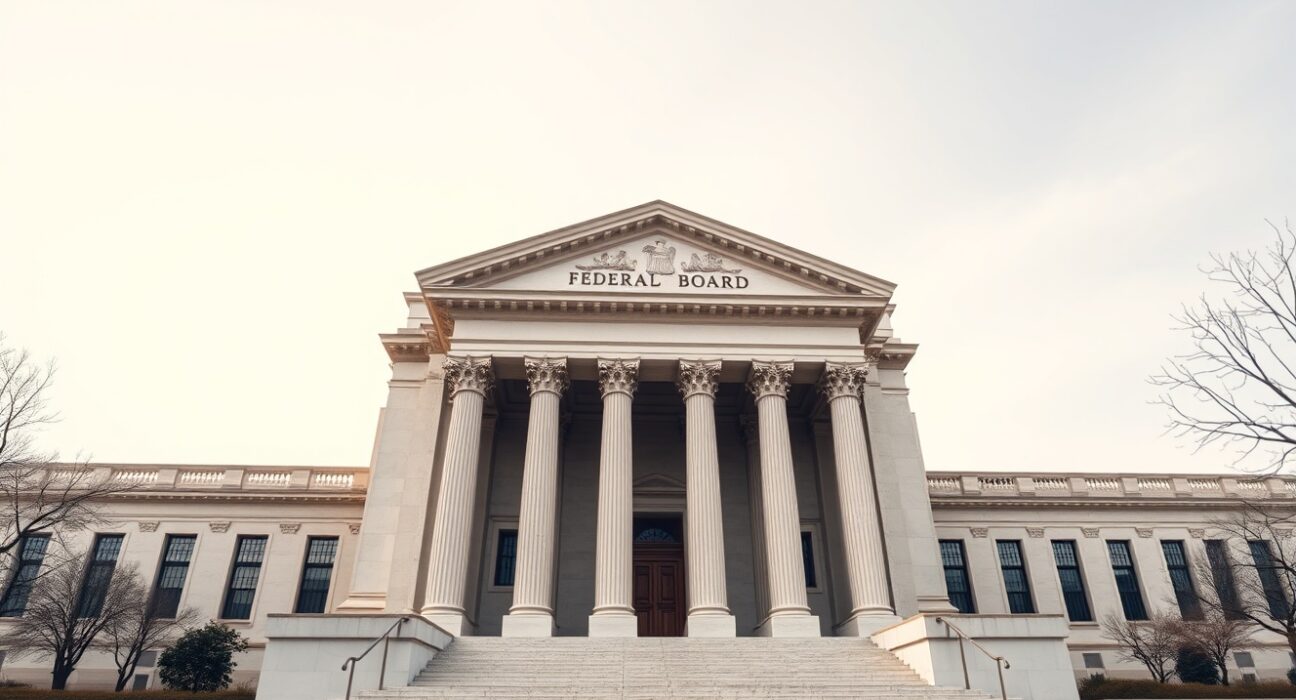
The Federal Reserve is likely to maintain a neutral stance heading into the April Federal Open Market Committee (FOMC) meeting, according to a new analysis from TD Securities. This forecast comes amid mixed economic signals and persistent inflation concerns.
Fed Neutral Stance: What It Means for Markets
TD Securities economists predict the Fed will keep interest rates unchanged at the April 2025 FOMC meeting. This neutral stance reflects the central bank’s cautious approach. Policymakers are waiting for more data before making any moves.
The neutral stance suggests the Fed sees no urgent need to cut or raise rates. This position supports stable market conditions. Investors have been watching closely for any shift in tone.
According to TD Securities, the Fed’s language will likely emphasize patience. The central bank wants to see sustained progress on inflation. It also needs to assess the full impact of previous rate hikes.
Key Drivers Behind the Forecast
- Inflation data remains above the Fed’s 2% target. Core PCE readings show sticky price pressures in services.
- Labor market conditions stay tight. Unemployment remains low, but wage growth is cooling.
- Consumer spending shows signs of slowing. Retail sales have dipped in recent months.
- Global uncertainties persist. Trade tensions and geopolitical risks add complexity.
These factors combine to create a cautious outlook. The Fed does not want to overreact to short-term fluctuations. It prefers to wait for clearer trends.
April FOMC Meeting: Timeline and Expectations
The April FOMC meeting will take place on April 29-30, 2025. This is a two-day event where policymakers discuss the economy. They will release a statement and hold a press conference.
TD Securities expects the statement to maintain a neutral tone. The Fed will likely acknowledge progress on inflation. But it will also note that more work remains.
Market participants expect no rate change. The CME FedWatch Tool shows a 95% probability of rates staying steady. This aligns with the neutral stance forecast.
Comparing Current vs. Previous FOMC Language
| Meeting | Key Phrase | Market Reaction |
|---|---|---|
| January 2025 | “Remain vigilant” | Modest bond sell-off |
| March 2025 | “Proceed carefully” | Stocks edged higher |
| April 2025 (Expected) | “Patient and data-dependent” | Minimal volatility expected |
The shift from “vigilant” to “patient” signals a more neutral Fed. This evolution reflects improving but incomplete economic conditions.
Impact on Financial Markets
A neutral Fed stance typically supports risk assets. Stocks often perform well when the central bank stays on hold. Bond yields may remain range-bound.
The US dollar could weaken slightly. A patient Fed reduces the interest rate advantage. This makes the dollar less attractive to foreign investors.
Cryptocurrency markets may see mixed reactions. Bitcoin has shown sensitivity to Fed policy. A neutral stance removes some uncertainty.
TD Securities: Expert Credibility
TD Securities is a leading investment bank. Its research team provides in-depth analysis of central bank policy. The firm has a strong track record of accurate forecasts.
Their call for a neutral stance aligns with broader market consensus. But TD Securities adds nuance. They highlight specific risks that could change the outlook.
These risks include a sudden spike in oil prices. Another risk is a sharp slowdown in consumer spending. Either event could force the Fed to act.
Historical Context: Fed Neutral Stance in 2024
The Fed adopted a neutral stance in late 2024. At that time, inflation was declining but still elevated. The labor market was starting to cool.
This period marked a pivot from aggressive rate hikes. The Fed had raised rates to 5.5% by mid-2024. Then it paused to assess the impact.
By maintaining neutrality, the Fed avoided policy mistakes. It did not cut rates too early. It also did not keep hiking unnecessarily.
Lessons from Previous Neutral Periods
- 1995-1996: The Fed held rates steady after a tightening cycle. This allowed the economy to achieve a soft landing.
- 2006: A neutral stance preceded the housing crisis. The Fed missed warning signs of financial instability.
- 2019: The Fed cut rates after a neutral period. This helped extend the economic expansion.
Each period teaches a different lesson. The current neutral stance reflects a data-driven approach. The Fed wants to avoid past mistakes.
What Investors Should Watch
Investors should monitor several key indicators. These will determine if the Fed shifts from its neutral stance.
- Monthly CPI reports: Any surprise upside could force a hawkish tilt.
- Jobless claims: Rising claims would signal labor market weakness.
- Retail sales data: A sharp drop would raise recession fears.
- Fed speeches: Comments from officials offer clues about internal debates.
TD Securities advises staying diversified. A neutral Fed reduces directional risk. But unexpected events can still cause volatility.
Conclusion
The Fed neutral stance into the April FOMC reflects a cautious and data-dependent approach. TD Securities provides a credible forecast based on current economic conditions. Investors should prepare for rates to remain steady. They should also watch for any change in the Fed’s tone. This neutral period offers stability. But it also requires vigilance. The Fed stands ready to act if the data shifts. For now, patience remains the guiding principle.
FAQs
Q1: What does a neutral Fed stance mean?
A1: A neutral stance means the Federal Reserve is not leaning toward cutting or raising interest rates. It signals a wait-and-see approach based on incoming economic data.
Q2: When is the April FOMC meeting?
A2: The April FOMC meeting is scheduled for April 29-30, 2025. The Fed will release its policy statement and hold a press conference on the second day.
Q3: How does a neutral stance affect stock markets?
A3: A neutral stance often supports stock markets by reducing uncertainty. Investors prefer stable policy over surprise moves. However, other factors like earnings and geopolitics also matter.
Q4: Why does TD Securities predict a neutral stance?
A4: TD Securities bases its forecast on sticky inflation, a cooling but resilient labor market, and global uncertainties. The firm believes the Fed needs more time to assess the economy.
Q5: Could the Fed change its stance after April?
A5: Yes, the Fed could shift to a hawkish or dovish stance depending on future data. Key indicators include inflation trends, employment numbers, and consumer spending. The Fed remains data-dependent.
Disclaimer: The information provided is not trading advice, Bitcoinworld.co.in holds no liability for any investments made based on the information provided on this page. We strongly recommend independent research and/or consultation with a qualified professional before making any investment decisions.
