

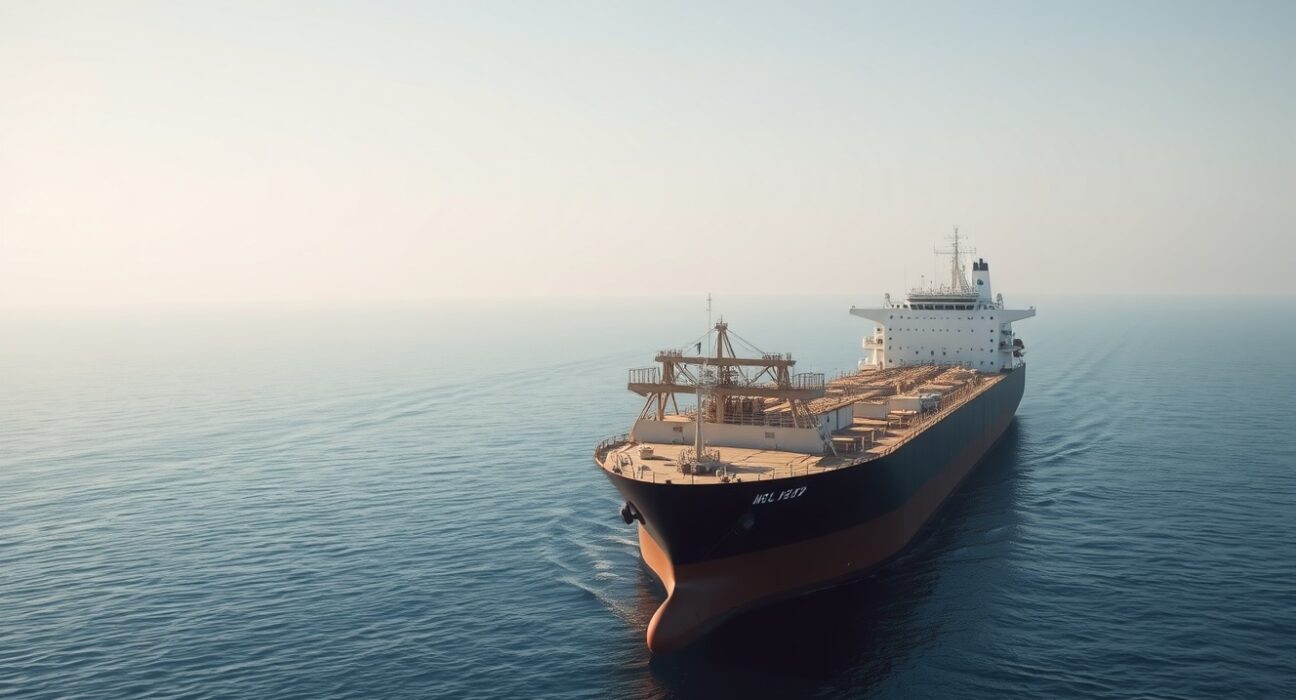
The White House confirmed that President Donald Trump discussed a potential Iran blockade with oil companies, a strategy that could last for several months if implemented. This revelation, reported by Walter Bloomberg, signals a significant escalation in U.S. pressure on Iran’s oil exports.
White House Confirms Iran Blockade Discussions
A White House official stated that President Trump held talks with major oil firms about measures for a potential Iran blockade. The discussions focused on a multi-month timeline, reflecting the administration’s willingness to sustain economic pressure. This move targets Iran’s primary revenue source: oil exports.
These talks mark a strategic shift. Previous sanctions targeted specific entities. Now, the focus is on a comprehensive maritime blockade. This approach aims to cut off Iran’s access to global oil markets entirely. The White House did not specify which companies participated. However, the implication is clear: the U.S. is preparing for a prolonged standoff.
The Iran blockade discussions come amid heightened tensions in the Middle East. Iran has threatened to close the Strait of Hormuz in the past. A U.S.-led blockade would likely provoke a strong response from Tehran. This could include naval confrontations or cyberattacks on oil infrastructure.
Oil Companies React to Potential Iran Blockade
Oil companies expressed caution about the proposed Iran blockade. Many firms operate in the region. They fear disruptions to global supply chains. A blockade would force them to reroute tankers. It would also increase insurance costs for vessels passing through the Persian Gulf.
Industry experts note that a multi-month blockade would have severe consequences. Global oil prices could spike by 15-20%. This would hurt consumers and businesses worldwide. The U.S. could use its Strategic Petroleum Reserve to stabilize markets. However, this is a temporary measure.
Key concerns for oil companies include:
- Supply chain disruptions: Tankers would need alternative routes, increasing transit times.
- Insurance premiums: War risk insurance would skyrocket, raising operational costs.
- Legal risks: Companies could face lawsuits if they violate international maritime laws.
- Reputation damage: Public backlash could harm brands associated with the blockade.
The Iran blockade plan also raises questions about enforcement. The U.S. Navy would need to patrol the Strait of Hormuz. This requires significant naval assets. It also risks direct conflict with Iran’s Revolutionary Guard Corps.
Geopolitical Implications of the Iran Blockade
The Iran blockade is not just an economic tool. It is a geopolitical statement. The Trump administration aims to isolate Iran further. This strategy aligns with the “maximum pressure” campaign. It seeks to force Iran to renegotiate its nuclear program and regional policies.
Allies in Europe and Asia have mixed reactions. Some support tougher sanctions. Others fear economic fallout. China and India are major buyers of Iranian oil. A blockade would force them to find alternative suppliers. This could strain diplomatic relations with the U.S.
A timeline of key events leading to this point:
| Date | Event |
|---|---|
| 2018 | U.S. withdraws from JCPOA, reimposes sanctions on Iran |
| 2019 | Iran breaches nuclear deal limits, attacks oil tankers in Gulf |
| 2020 | U.S. kills Qasem Soleimani, Iran retaliates with missile strikes |
| 2025 | White House confirms Trump discussed multi-month Iran blockade with oil companies |
The Iran blockade could trigger a regional arms race. Gulf states like Saudi Arabia and UAE may increase military spending. Iran could accelerate its nuclear program. This would undermine global non-proliferation efforts.
Expert Analysis on Iran Blockade Strategy
Experts argue that a Iran blockade is legally complex. International law requires a UN Security Council resolution for a full blockade. The U.S. could use “interdiction” instead. This involves stopping and searching vessels suspected of carrying Iranian oil. This approach has been used in the past against North Korea.
Dr. Sarah Miller, a geopolitical analyst, notes: “A multi-month blockade is unprecedented in modern history. The last major blockade was during the Iran-Iraq War in the 1980s. That conflict caused massive economic damage. Today’s interconnected global economy is more vulnerable.”
The Iran blockade also tests U.S. naval capabilities. The Navy must maintain a constant presence. This stretches resources thin. Other regions, like the South China Sea, may see reduced U.S. presence. This could embolden China or Russia.
Impact on Global Oil Markets
The Iran blockade would immediately affect oil prices. Iran exports about 1.5 million barrels per day. Removing this supply from the market would create a shortage. OPEC+ could increase production to compensate. However, spare capacity is limited. Saudi Arabia and the UAE have the most spare capacity. But they may not want to alienate Iran.
Short-term effects include:
- Price spikes: Brent crude could rise above $100 per barrel.
- Volatility: Markets would react to every news update about the blockade.
- Supply shifts: Buyers would turn to Russia, Iraq, and the U.S.
- Storage draws: Countries would use strategic reserves to cushion the blow.
Long-term consequences are more severe. A prolonged Iran blockade could accelerate the transition to renewable energy. High oil prices make alternatives more competitive. It could also weaken the petrodollar system. Iran could sell oil in yuan or other currencies. This would challenge U.S. dollar dominance.
The Iran blockade also impacts shipping lanes. The Strait of Hormuz is a chokepoint for 20% of global oil. Any disruption here affects tanker rates and insurance. Companies like Maersk and Frontline would see higher revenues. But they also face operational risks.
Conclusion
The White House confirmation of President Trump’s discussions with oil companies about a potential Iran blockade marks a critical moment in U.S.-Iran relations. This multi-month strategy aims to cripple Iran’s economy but carries significant risks. Global oil markets, regional stability, and international law all hang in the balance. As the situation develops, stakeholders must prepare for a prolonged period of uncertainty. The Iran blockade is not just a policy option—it is a potential turning point in global energy politics.
FAQs
Q1: What is the Iran blockade that Trump discussed?
The Iran blockade is a potential multi-month strategy to prevent Iranian oil exports by sea. The White House confirmed President Trump discussed this with oil companies to cut off Iran’s primary revenue source.
Q2: How would the Iran blockade affect global oil prices?
An Iran blockade would likely spike oil prices by 15-20%, pushing Brent crude above $100 per barrel. It would create supply shortages and increase market volatility.
Q3: Is a multi-month Iran blockade legal under international law?
A full blockade requires a UN Security Council resolution. The U.S. may use “interdiction” instead, which involves stopping and searching vessels. This is legally contentious and could face challenges in international courts.
Q4: Which oil companies were involved in the Iran blockade discussions?
The White House did not name specific companies. However, major firms with operations in the Persian Gulf, such as ExxonMobil, Chevron, and Shell, are likely participants.
Q5: What are the risks of a prolonged Iran blockade?
Risks include direct military confrontation with Iran, disruptions to global shipping, higher energy costs for consumers, and damage to diplomatic relations with allies who buy Iranian oil.
Q6: How would the Iran blockade impact the U.S. economy?
Higher oil prices would increase costs for transportation and manufacturing. The U.S. could use its Strategic Petroleum Reserve to mitigate short-term effects, but a prolonged blockade would hurt economic growth.
Disclaimer: The information provided is not trading advice, Bitcoinworld.co.in holds no liability for any investments made based on the information provided on this page. We strongly recommend independent research and/or consultation with a qualified professional before making any investment decisions.
