

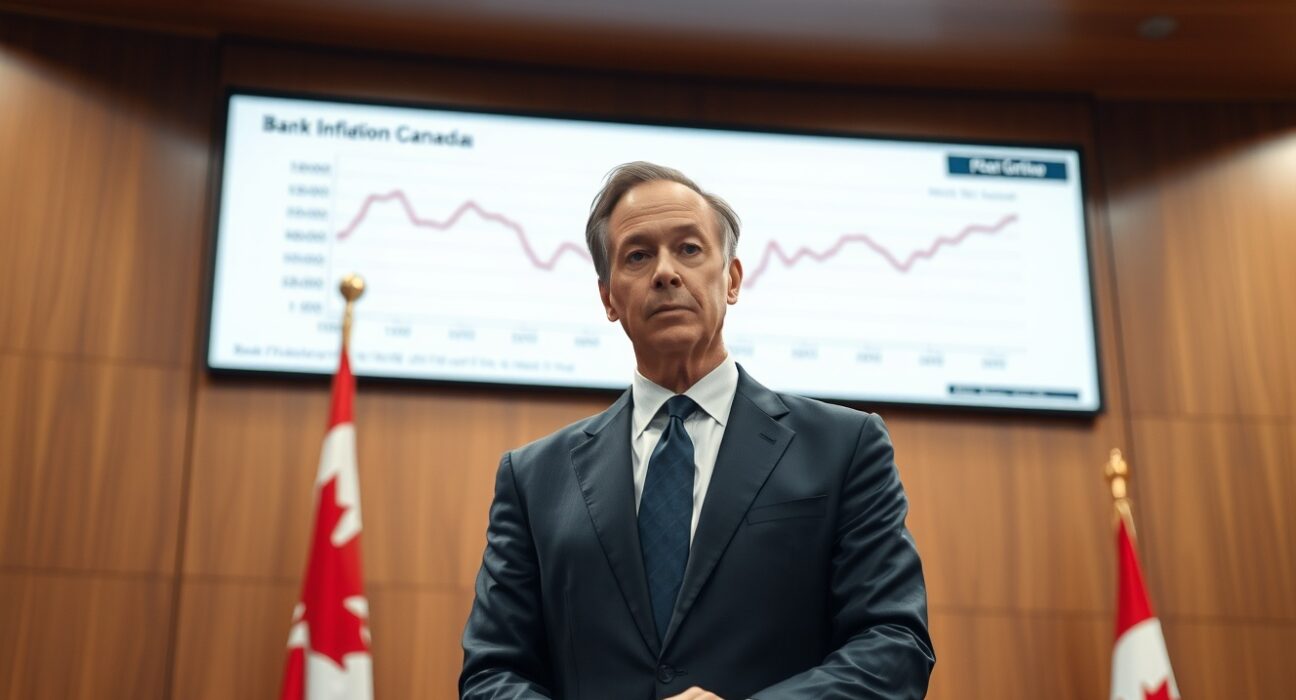
Bank of Canada (BoC) Governor Tiff Macklem has delivered a stark warning: inflation expectations are no longer as firmly anchored as they were before the COVID-19 pandemic. This statement, made during a recent speech, signals a critical shift in the central bank’s assessment of economic stability. For Canadians and financial markets, this raises pressing questions about the path of interest rates and the overall health of the economy in 2025.
Macklem’s Core Warning on Inflation Expectations
Governor Macklem’s remarks directly address a fundamental pillar of central banking: anchored inflation expectations. When expectations are stable, businesses and consumers make long-term decisions with confidence. However, Macklem now observes that this anchor has loosened. He stated that inflation expectations are not as well anchored as they were before the pandemic, a condition that makes the BoC’s job of controlling inflation significantly harder.
This is not a minor adjustment. Unanchored expectations can become self-fulfilling. If people expect higher inflation, they may demand higher wages and raise prices, creating a persistent inflationary cycle. The BoC’s primary tool, the policy interest rate, must work harder to break this cycle. Consequently, the central bank may need to maintain a restrictive monetary policy stance for longer than previously anticipated.
The Post-COVID Context: A Changed Landscape
The pandemic fundamentally disrupted the global economy. Supply chains snapped, fiscal stimulus surged, and consumer behavior shifted dramatically. Before 2020, Canada enjoyed a long period of low and stable inflation. Expectations were well anchored, allowing the BoC to focus on other objectives. The post-COVID reality is different. The chart data accompanying Macklem’s speech likely shows a divergence between actual inflation and the central bank’s 2% target.
This divergence creates a credibility challenge. A central bank’s effectiveness depends on the public’s trust that it will control inflation. Macklem’s admission that expectations are less anchored is an honest acknowledgment of this challenge. It also serves as a preemptive communication strategy. By being transparent, the BoC aims to guide expectations back toward the target, even as it maintains high interest rates.
Impact on Canadian Households and Businesses
For the average Canadian, this news translates into continued financial pressure. Mortgage rates, credit card interest, and loan costs are likely to remain elevated. The BoC’s key interest rate, currently at 5%, may stay higher for longer. This directly impacts variable-rate mortgage holders and those renewing fixed terms. Businesses face similar headwinds. Higher borrowing costs dampen investment and expansion plans.
Furthermore, the labor market may cool. As the BoC fights unanchored expectations, economic growth slows. This can lead to higher unemployment. The balancing act is delicate: the BoC must curb inflation without triggering a severe recession. Macklem’s warning suggests the bank is prioritizing inflation control over short-term economic growth.
Comparing Pre- and Post-COVID Anchoring
A clear comparison highlights the shift. The table below outlines the key differences in the inflation expectation environment.
| Period | Inflation Expectation Status | Monetary Policy Stance | Key Risk |
|---|---|---|---|
| Pre-COVID (2015-2019) | Well anchored near 2% | Accommodative to neutral | Low inflation, deflation risk |
| Post-COVID (2023-2025) | Less anchored, above target | Restrictive (5% rate) | Persistent inflation, wage-price spiral |
This table illustrates a stark reversal. The BoC now operates in a high-stakes environment where every policy decision carries significant weight.
Expert Analysis and Market Reaction
Economists have responded to Macklem’s statement with caution. Many view it as a signal that rate cuts are not imminent. Markets, which had priced in a potential cut in early 2025, have adjusted their expectations. The Canadian dollar saw modest gains following the speech, reflecting a more hawkish outlook.
Some experts argue that Macklem’s warning is a necessary step. By highlighting the risk, he pressures businesses and unions to moderate their price and wage demands. This is a form of jawboning—using communication to influence economic behavior. However, others warn that such statements can become self-fulfilling if they erode confidence in the central bank’s ability to meet its target.
Timeline of Key Events
Understanding the sequence of events helps contextualize Macklem’s warning.
- 2020-2021: Pandemic triggers massive fiscal and monetary stimulus. Inflation begins to rise.
- 2022: BoC starts aggressive rate hikes. Inflation peaks at 8.1%.
- 2023: Inflation falls to around 3.5%. BoC pauses rate hikes but keeps rates high.
- 2024: Inflation stalls above 2%. Macklem signals concerns about expectations.
- 2025 (Present): Macklem declares expectations are less anchored. Policy remains restrictive.
This timeline shows a prolonged battle. The BoC has not yet declared victory, and Macklem’s latest comments indicate the fight is far from over.
The Role of Communication in Monetary Policy
Central banks increasingly rely on forward guidance. Macklem’s speech is a prime example. By clearly stating that expectations are less anchored, he shapes market behavior. This reduces uncertainty. Investors and businesses now have a clearer picture of the BoC’s thinking. They can plan accordingly, even if the news is negative.
Effective communication also reinforces credibility. A central bank that speaks honestly about challenges is more trusted. Macklem’s approach contrasts with earlier periods where central banks downplayed risks. This transparency is a key lesson from the pandemic era.
Global Comparisons
Canada is not alone. The Federal Reserve in the United States and the European Central Bank face similar challenges. Global inflation has been stubborn. Supply-side shocks, including the war in Ukraine and energy price volatility, have kept prices elevated. However, Canada’s housing market makes it particularly sensitive to interest rate changes. This adds a layer of complexity to the BoC’s task.
Compared to the Fed, the BoC may be more cautious. The Fed has signaled potential rate cuts later in 2025. Macklem’s comments suggest the BoC is not yet ready to follow suit. This divergence could impact the Canadian dollar and trade dynamics.
Conclusion
Governor Macklem’s warning that inflation expectations are less anchored post-COVID is a pivotal moment for Canadian monetary policy. It underscores the persistent challenge of returning inflation to the 2% target. For Canadians, this means higher interest rates for longer, continued financial strain, and a cautious economic outlook. The BoC’s commitment to anchoring expectations will define its policy decisions throughout 2025. The road to price stability remains uncertain, but Macklem’s clear-eyed assessment provides a necessary foundation for navigating it.
FAQs
Q1: What does it mean for inflation expectations to be anchored?
A: Anchored inflation expectations mean that households and businesses confidently believe inflation will stay near the central bank’s target over the long term. This stability helps prevent self-fulfilling inflation cycles.
Q2: Why are inflation expectations less anchored now than before COVID?
A: The pandemic caused severe economic disruptions, including supply chain issues and massive fiscal stimulus. These factors pushed actual inflation far above the 2% target, eroding confidence that it would return quickly.
Q3: How does this affect interest rates in Canada?
A: Less anchored expectations make it harder for the Bank of Canada to control inflation. As a result, the central bank may need to keep interest rates higher for longer to convince the public that it is serious about fighting inflation.
Q4: What can the Bank of Canada do to re-anchor expectations?
A: The BoC can use clear communication, maintain a restrictive policy stance, and demonstrate a consistent commitment to its 2% target. Governor Macklem’s public statements are a key part of this strategy.
Q5: How does this impact my personal finances?
A: Higher-for-longer interest rates mean higher costs for mortgages, loans, and credit cards. It may also slow economic growth, potentially affecting job security and wage increases. Budgeting for higher borrowing costs is advisable.
Disclaimer: The information provided is not trading advice, Bitcoinworld.co.in holds no liability for any investments made based on the information provided on this page. We strongly recommend independent research and/or consultation with a qualified professional before making any investment decisions.
