

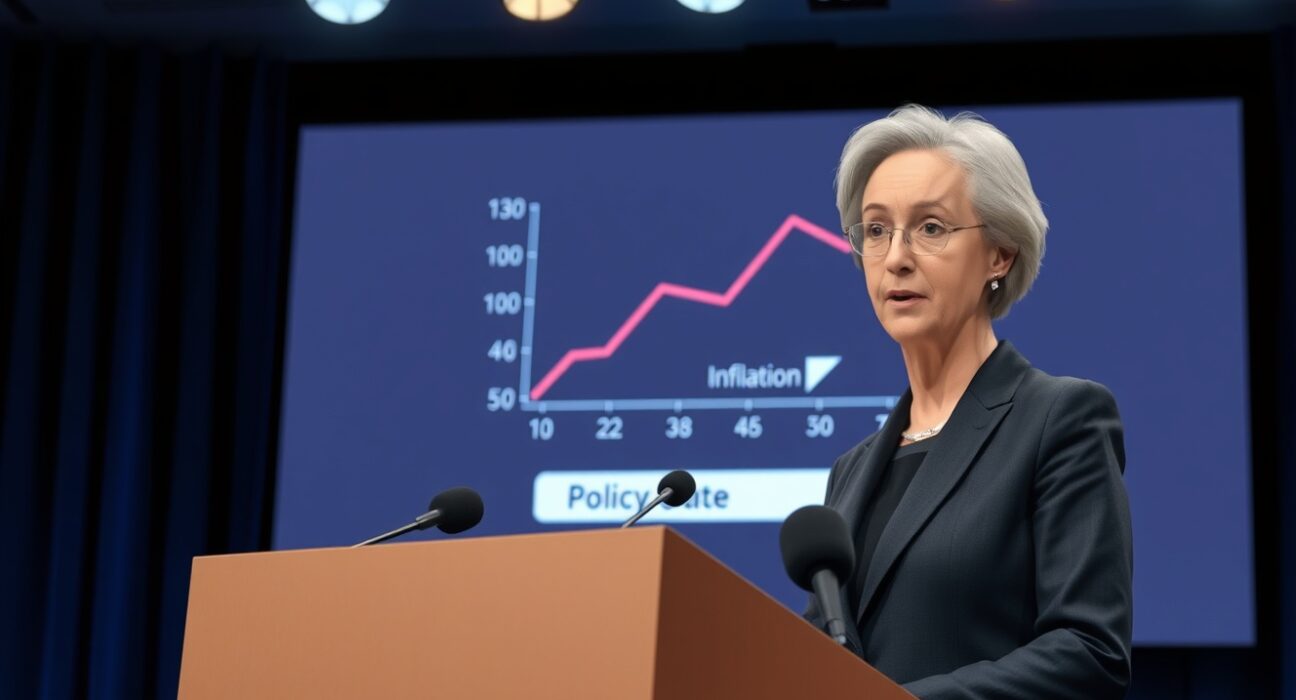
European Central Bank President Christine Lagarde has reaffirmed that interest rates remain the institution’s most effective tool for managing inflation. Speaking at a recent press conference in Frankfurt, Lagarde emphasized the central bank’s commitment to using rate adjustments as the primary mechanism to steer the eurozone economy. This statement carries significant weight for global financial markets, including the cryptocurrency market impact, as higher rates typically reduce liquidity and risk appetite.
Lagarde’s Core Message on Interest Rates
During her address, Lagarde stated clearly: “Interest rates are the best tool we can use.” She argued that rate changes directly influence borrowing costs, consumer spending, and investment. This approach contrasts with other unconventional measures, such as quantitative easing or forward guidance. The ECB monetary policy stance remains data-dependent, with Lagarde noting that future decisions will hinge on incoming economic indicators.
Her comments come at a critical juncture. The eurozone faces persistent inflationary pressures, driven by energy costs and wage growth. By prioritizing rate policy, the ECB signals a return to more traditional central banking methods. For investors, this clarity reduces uncertainty. However, it also implies that rates may stay higher for longer, affecting asset valuations across the board.
Impact on Cryptocurrency Markets
The cryptocurrency market impact of Lagarde’s stance is multifaceted. Higher interest rates make traditional savings accounts and bonds more attractive. This often draws capital away from riskier assets like Bitcoin and altcoins. Historically, periods of aggressive rate hikes correlate with crypto market downturns. For example, during the ECB’s 2023 tightening cycle, Bitcoin dropped by over 15% in three months.
Conversely, Lagarde’s focus on rate policy could stabilize the macroeconomic environment. If inflation is successfully tamed, it may restore confidence in fiat currencies. This could reduce the urgency for investors to seek inflation hedges like crypto. Yet, the long-term narrative for digital assets remains tied to technological adoption and regulatory clarity, not just monetary policy.
Expert Analysis on Rate Hikes and Digital Assets
Financial analysts note that Lagarde’s approach reinforces the traditional finance system. Dr. Elena Rossi, a monetary policy expert at the University of Milan, explains: “When central banks rely on interest rates, they validate the existing financial order. This can dampen enthusiasm for decentralized alternatives.” However, she adds that crypto markets often move on their own catalysts, such as ETF approvals or blockchain upgrades.
Comparing ECB Policy to the Federal Reserve
Lagarde’s emphasis on interest rates aligns with the U.S. Federal Reserve’s strategy. Both central banks have used rate hikes to combat post-pandemic inflation. However, the ECB faces unique challenges. The eurozone economy is more fragmented, with varying fiscal policies across member states. This makes the transmission of rate changes less uniform.
| Central Bank | Current Rate | Recent Action | Inflation Target |
|---|---|---|---|
| ECB | 4.50% | Held steady in June 2025 | 2.0% |
| Federal Reserve | 5.50% | Cut rates by 25 bps in May 2025 | 2.0% |
The table shows that while the ECB maintains a higher rate, the Fed has begun easing. This divergence creates opportunities for currency traders. A stronger euro could result from sustained high rates, impacting export-driven economies. For crypto traders, this means monitoring EUR/USD pairs becomes more important.
Inflation Control Tools Beyond Rates
While Lagarde champions inflation control tools like interest rates, the ECB also uses other instruments. These include:
- Quantitative tightening: Reducing the central bank’s bond holdings.
- Minimum reserve requirements: Adjusting the amount banks must hold.
- Forward guidance: Communicating future policy intentions.
However, Lagarde argued that these tools are supplementary. Rates remain the most direct lever. This perspective is supported by historical data. In the 1980s, central banks successfully curbed double-digit inflation through aggressive rate hikes. The current environment, while less severe, requires similar conviction.
Timeline of ECB Rate Decisions in 2025
The ECB’s policy path in 2025 has been cautious. Here is a brief timeline:
- January 2025: Rates held at 4.50% amid mixed economic data.
- March 2025: Lagarde signals potential cuts if inflation falls below 2.5%.
- June 2025: No change, with Lagarde citing sticky services inflation.
This measured approach reflects the ECB’s commitment to data dependency. Markets have priced in a possible cut in September 2025. However, Lagarde’s latest speech suggests no urgency to ease. For crypto investors, this means a continued high-rate environment, which typically depresses speculative activity.
Global Economic Context and Central Bank Rates
The broader economic backdrop supports Lagarde’s focus on central bank rates. Global inflation remains above targets in many regions. Supply chain disruptions and geopolitical tensions, particularly the war in Ukraine, keep energy prices volatile. The ECB must navigate these headwinds while avoiding a recession.
Emerging markets are also watching ECB policy closely. Higher eurozone rates can attract capital inflows, strengthening the euro. This can create debt repayment challenges for countries borrowing in euros. For crypto, a stronger euro may reduce demand for stablecoins pegged to the dollar, as traders seek alternative stores of value.
How Traders Should Interpret Lagarde’s Statement
For traders, Lagarde’s statement provides a clear signal. The ECB will not resort to unconventional tools unless absolutely necessary. This means interest rate expectations will drive market sentiment. Key takeaways include:
- Bond yields: Likely to remain elevated, making fixed-income assets attractive.
- Equity markets: Growth stocks, especially in tech, may face headwinds.
- Cryptocurrency: Bitcoin’s correlation with tech stocks suggests continued pressure.
However, some analysts see a silver lining. If the ECB successfully controls inflation without triggering a recession, risk assets could rally. Lagarde’s credibility as a policymaker adds weight to this outcome. Her experience during the 2012 eurozone crisis lends authority to her current stance.
Conclusion
Christine Lagarde’s assertion that interest rates are the best tool for controlling inflation reinforces the ECB’s traditional policy framework. This clarity benefits financial markets by reducing uncertainty. For the cryptocurrency sector, the implication is clear: high rates will persist, limiting speculative capital. However, a stable macroeconomic environment could ultimately support broader adoption. Investors should monitor ECB meetings closely, as rate decisions will remain the primary driver of market sentiment in 2025.
FAQs
Q1: Why does Lagarde consider interest rates the best tool for controlling inflation?
A1: Lagarde believes interest rates directly influence borrowing, spending, and investment, making them the most effective mechanism to cool an overheating economy. Unlike quantitative easing, rates have a predictable impact on consumer behavior.
Q2: How do ECB interest rate decisions affect cryptocurrency prices?
A2: Higher ECB rates make traditional savings and bonds more attractive, drawing capital away from riskier assets like crypto. This typically leads to short-term price declines for Bitcoin and altcoins.
Q3: What other tools does the ECB use besides interest rates?
A3: The ECB also uses quantitative tightening, minimum reserve requirements, and forward guidance. However, Lagarde emphasized that these are supplementary to the primary tool of rate adjustments.
Q4: Will the ECB cut rates in 2025?
A4: Markets expect a potential cut in September 2025, but Lagarde’s recent speech indicates no urgency. Future decisions depend on inflation data, particularly services inflation and wage growth.
Q5: How does ECB policy compare to the Federal Reserve’s approach?
A5: Both central banks prioritize rate hikes, but the Fed has begun easing in 2025, while the ECB holds steady. This divergence creates currency volatility and impacts global capital flows, including into crypto markets.
Disclaimer: The information provided is not trading advice, Bitcoinworld.co.in holds no liability for any investments made based on the information provided on this page. We strongly recommend independent research and/or consultation with a qualified professional before making any investment decisions.
