

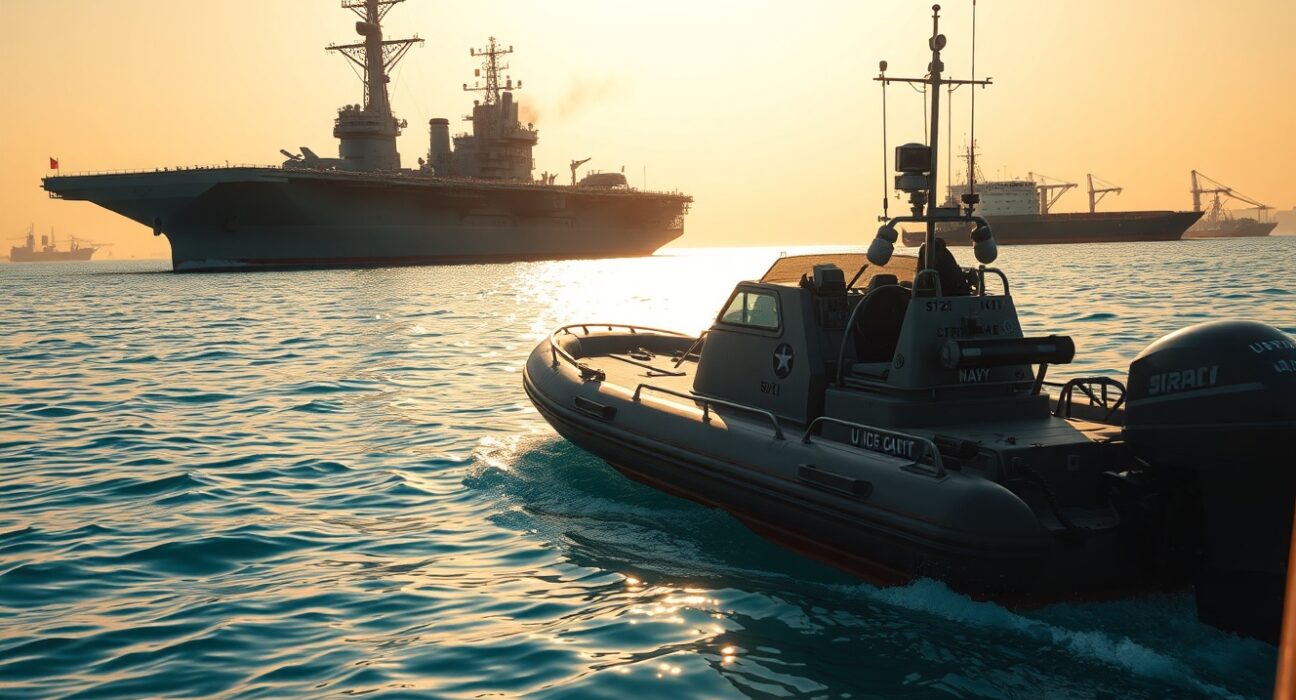
President Donald Trump has presented a new plan to reopen the Strait of Hormuz, a critical chokepoint for global oil shipments, The Associated Press reported on Thursday. The plan, outlined by an anonymous senior administration official, calls for the United States to maintain its naval blockade of Iranian ports while coordinating with allied nations to escalate economic and diplomatic pressure on Tehran. This strategy directly targets Iran’s obstruction of free energy flow through the waterway. The Strait of Hormuz reopening plan represents a significant shift in U.S. foreign policy toward the Middle East.
Strait of Hormuz Reopening: Key Details of the New Plan
The new plan to reopen the Strait of Hormuz relies on a multi-pronged approach. First, the U.S. Navy will continue its existing blockade of Iranian commercial ports. This action prevents Iranian oil exports and restricts imports of goods. Second, Washington will seek formal commitments from European and Asian allies to join a maritime security coalition. This coalition would enforce freedom of navigation through the strait. Third, the plan includes new economic sanctions targeting entities that facilitate Iran’s blockade activities. A senior official confirmed that President Trump is reviewing various diplomatic and policy options to end Iran’s control over the waterway.
Background: Why the Strait of Hormuz Matters
The Strait of Hormuz connects the Persian Gulf with the Gulf of Oman and the Arabian Sea. Approximately 20% of the world’s petroleum passes through this narrow channel. Any disruption to shipping here directly impacts global oil prices and energy security. Iran has historically threatened to close the strait in response to sanctions or military pressure. In 2019, Iran seized several oil tankers, sparking international condemnation. The current blockade follows a series of tit-for-tat escalations between Washington and Tehran. The U.S. imposed maximum sanctions on Iran’s oil sector in 2018 after withdrawing from the nuclear deal.
Impact on Global Oil Supply Chains
Analysts warn that a prolonged closure of the Strait of Hormuz could trigger a sharp rise in crude oil prices. Countries heavily dependent on Persian Gulf oil, including Japan, South Korea, and India, face the greatest risk. The International Energy Agency (IEA) estimates that alternative shipping routes would add significant costs and delays. For example, rerouting tankers around the Cape of Good Hope increases voyage times by 30%. The U.S. plan aims to avoid such disruptions by restoring free passage without direct military confrontation with Iran.
Expert Analysis: Strategic Options and Risks
Foreign policy experts view the plan as a calculated risk. Dr. Sarah Miller, a Middle East security analyst at the Council on Foreign Relations, explains that the strategy seeks to isolate Iran diplomatically while avoiding a costly ground war. However, she cautions that Iran may respond asymmetrically, using mines, small boats, or cyberattacks against commercial shipping. The U.S. Navy’s Fifth Fleet, based in Bahrain, maintains a strong presence in the region. But coordinating a multinational coalition requires time and political will. European allies have previously hesitated to join such operations without a clear United Nations mandate.
Timeline of Key Events
- 2018: U.S. withdraws from the JCPOA nuclear deal; reimposes oil sanctions on Iran.
- 2019: Iran seizes tankers; U.S. launches Operation Sentinel for maritime security.
- 2020: U.S. kills Qasem Soleimani; Iran retaliates with missile strikes on Iraqi bases.
- 2024: Iran escalates blockade of Hormuz after new U.S. sanctions on its oil exports.
- 2025: Trump administration presents the new reopening plan to allies.
Comparison: Previous U.S. Strategies vs. New Plan
| Aspect | Previous Strategy | New Plan |
|---|---|---|
| Military posture | Defensive patrols | Active blockade enforcement |
| Diplomatic approach | Unilateral sanctions | Multilateral coalition building |
| Economic tools | Secondary sanctions | Targeted sanctions on blockade facilitators |
| Endgame | Negotiated settlement | Regime behavior change through pressure |
International Reactions and Diplomatic Fallout
Reactions to the plan have been mixed. Saudi Arabia and the United Arab Emirates support any effort to secure the strait. Both nations rely heavily on the waterway for their oil exports. Conversely, Russia and China have criticized the U.S. approach, calling it an act of aggression. Iran’s Foreign Ministry dismissed the plan as a pretext for further military escalation. The United Nations has urged all parties to exercise restraint and seek a negotiated solution. The U.S. plan, however, does not include direct talks with Tehran at this stage.
Economic Consequences for Iran
The ongoing blockade has already crippled Iran’s economy. Oil revenues have dropped by over 60% since 2018. Inflation exceeds 50%, and the rial has lost significant value. The new plan would intensify these pressures by targeting remaining loopholes. Iranian officials claim they can withstand the pressure, but internal dissent is growing. The plan’s success depends on whether the U.S. can maintain allied support over the long term.
Strategic Importance of the Strait of Hormuz
The Strait of Hormuz reopening plan highlights the waterway’s strategic importance. At its narrowest point, the strait is only 33 kilometers wide. Tankers must pass through Omani and Iranian territorial waters. This geography gives Iran significant leverage. The U.S. plan aims to reduce that leverage by creating a secure corridor for commercial shipping. The plan also includes provisions for escorting tankers through the strait using coalition naval assets.
Military Capabilities and Readiness
The U.S. Navy maintains a robust presence in the region. The Fifth Fleet includes aircraft carriers, destroyers, and submarines. These assets can conduct mine-clearing operations and provide air cover. However, Iran has invested heavily in anti-access/area denial (A2/AD) capabilities. These include anti-ship missiles, fast-attack boats, and naval mines. The new plan acknowledges these threats and calls for enhanced intelligence sharing among coalition partners.
Conclusion
The Strait of Hormuz reopening plan presented by President Trump represents a bold and multifaceted strategy to counter Iran’s blockade. By combining military deterrence with diplomatic coalition-building and targeted economic pressure, the plan seeks to restore free navigation through one of the world’s most critical energy chokepoints. While risks remain high, the potential benefits for global energy markets and regional stability are significant. The success of the plan will depend on the willingness of international allies to join the effort and on Iran’s response to mounting pressure.
FAQs
Q1: What is the Strait of Hormuz reopening plan?
The plan, presented by President Trump, calls for the U.S. to maintain its blockade of Iranian ports while coordinating with allies to increase pressure on Iran for obstructing the free flow of energy through the Strait of Hormuz.
Q2: Why is the Strait of Hormuz important?
About 20% of the world’s oil passes through this narrow waterway. Any disruption to shipping here directly impacts global oil prices and energy security.
Q3: How does the new plan differ from previous strategies?
The new plan combines active blockade enforcement with multilateral coalition building and targeted sanctions, whereas previous strategies relied more on defensive patrols and unilateral measures.
Q4: What are the main risks of the plan?
Iran may respond asymmetrically with mines, small boats, or cyberattacks. Coordinating a multinational coalition also requires significant time and political will.
Q5: How have international allies reacted?
Saudi Arabia and the UAE support the plan. Russia and China criticize it. The UN urges restraint. European allies remain cautious without a UN mandate.
Disclaimer: The information provided is not trading advice, Bitcoinworld.co.in holds no liability for any investments made based on the information provided on this page. We strongly recommend independent research and/or consultation with a qualified professional before making any investment decisions.
