

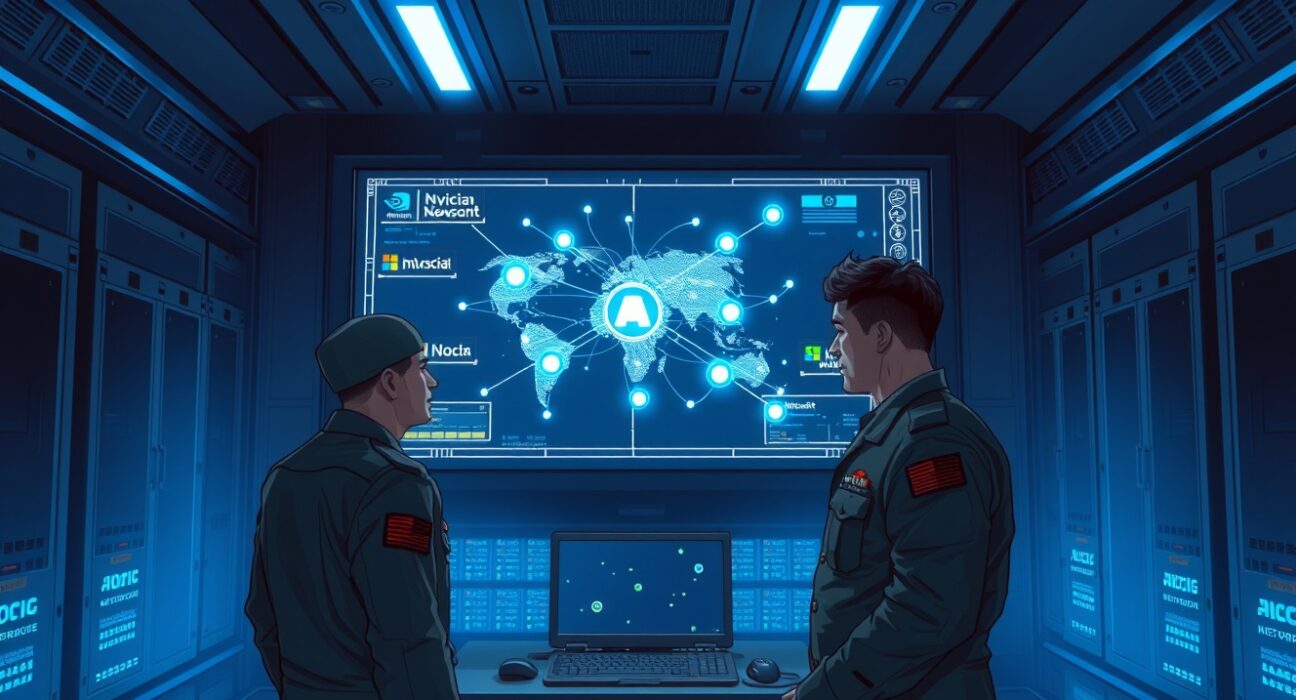
The U.S. Defense Department has signed landmark agreements with Nvidia, Microsoft, Amazon Web Services (AWS), and Reflection AI to deploy their artificial intelligence technologies on classified networks. This move marks a significant step in transforming the United States military into an AI-first fighting force. The deals, announced on Friday, follow similar pacts with Google, SpaceX, and OpenAI. They authorize the Pentagon to use these companies’ AI hardware and models for lawful operational use on high-security systems.
Pentagon AI Deals: A Strategic Shift Toward Military Modernization
The Pentagon’s statement emphasizes that these agreements accelerate the transformation toward establishing the U.S. military as an AI-first fighting force. They strengthen warfighters’ ability to maintain decision superiority across all domains of warfare. The deals allow the Defense Department to integrate advanced AI tools directly into its classified networks, enabling faster data analysis and improved situational awareness.
These pacts come amid the Pentagon’s accelerated diversification of AI vendors. This strategy follows a controversial dispute with Anthropic over usage terms. The Pentagon sought unrestricted use of Anthropic’s AI models, but the AI lab insisted on guardrails to prevent use for domestic mass surveillance and autonomous weapons. The two entities are currently in litigation, with Anthropic winning an injunction in March against the Pentagon’s move to brand the company a supply chain risk.
Key companies involved:
- Nvidia – Provides AI hardware and chips for high-performance computing.
- Microsoft – Offers cloud infrastructure and AI models through Azure.
- Amazon Web Services (AWS) – Supplies cloud computing and AI services.
- Reflection AI – A newer AI firm specializing in secure AI deployments.
Classified Networks and Security Classifications
The DoD will deploy these AI systems on Impact Level 6 (IL6) and Impact Level 7 (IL7) environments. These are high-level security classifications for data and information systems deemed critical to national security. IL6 and IL7 require physical protection, strict access controls, and regular audits. The Pentagon aims to streamline data synthesis, elevate situational understanding, and augment warfighter decision-making using these advanced tools.
This deployment ensures that sensitive military data remains secure while leveraging cutting-edge AI capabilities. The Pentagon’s statement highlights the importance of building an architecture that prevents AI vendor lock-in. It ensures long-term flexibility for the Joint Force by accessing a diverse suite of AI capabilities from across the resilient American technology stack.
Background: The Anthropic Dispute and Vendor Diversification
The Pentagon’s push for diverse AI vendors stems directly from its conflict with Anthropic. The Defense Department wanted unrestricted access to Anthropic’s AI models for military applications. However, Anthropic insisted on ethical guardrails to prevent misuse, particularly for domestic mass surveillance and autonomous weapons. This disagreement escalated into a legal battle, with Anthropic securing a court injunction against the Pentagon’s supply chain risk designation.
This dispute prompted the Pentagon to seek alternative AI providers. By signing deals with Nvidia, Microsoft, AWS, and Reflection AI, the DoD reduces its reliance on any single vendor. This strategy aligns with the Pentagon’s goal of maintaining operational flexibility and avoiding dependency on companies that impose usage restrictions.
GenAI.mil: The Pentagon’s Secure AI Platform
The Pentagon has already deployed GenAI.mil, a secure enterprise platform for generative AI. More than 1.3 million DoD personnel have used this platform to access large language models (LLMs) and other AI tools within government-approved cloud environments. GenAI.mil primarily supports non-classified tasks such as research, document drafting, and data analysis.
The new agreements extend these capabilities to classified networks, allowing warfighters to use AI for sensitive operations. This expansion marks a critical milestone in the military’s digital transformation. It enables real-time data synthesis and decision support in high-stakes environments.
GenAI.mil usage statistics:
- 1.3 million+ DoD personnel have used the platform.
- Primary uses: Research, document drafting, data analysis.
- Environment: Government-approved cloud systems.
Impact on Warfighter Decision-Making
The integration of AI into classified networks promises to revolutionize how military personnel process information. By streamlining data synthesis, AI tools can provide warfighters with actionable insights faster than traditional methods. This capability is crucial for maintaining decision superiority in complex, rapidly evolving combat scenarios.
Experts note that AI can analyze vast amounts of intelligence data, identify patterns, and recommend courses of action. This augmentation of human decision-making reduces cognitive load and improves response times. The Pentagon’s statement underscores that these tools will give warfighters the confidence to act and safeguard the nation against any threat.
Real-World Context: AI in Modern Warfare
Other nations, including China and Russia, are also investing heavily in military AI. The United States aims to maintain its technological edge by integrating AI across all domains of warfare. These deals with leading tech companies ensure that the U.S. military has access to the most advanced AI capabilities available.
The Pentagon’s focus on AI-first transformation reflects a broader trend in defense strategy. Autonomous systems, predictive analytics, and machine learning are becoming central to modern military operations. The new agreements position the U.S. military to leverage these technologies securely and effectively.
Timeline of Pentagon AI Initiatives
The Pentagon’s AI journey has accelerated rapidly in recent years:
- 2023: Launch of GenAI.mil for non-classified tasks.
- 2024: Initial agreements with Google, SpaceX, and OpenAI.
- 2025: Deals with Nvidia, Microsoft, AWS, and Reflection AI for classified networks.
- Ongoing: Legal dispute with Anthropic over usage terms.
This timeline shows the Pentagon’s increasing reliance on commercial AI technologies. It also highlights the challenges of balancing military needs with ethical considerations raised by AI developers.
Expert Insights on AI Vendor Lock-In
Defense analysts emphasize the importance of avoiding vendor lock-in. By diversifying its AI suppliers, the Pentagon ensures it can adapt to changing technological landscapes and avoid being constrained by any single company’s policies. This approach also fosters competition, potentially driving innovation and reducing costs.
The Pentagon’s statement explicitly mentions building an architecture that prevents AI vendor lock-in. This strategy ensures long-term flexibility for the Joint Force. Access to a diverse suite of AI capabilities from across the resilient American technology stack will give warfighters the tools they need.
Conclusion
The Pentagon’s AI deals with Nvidia, Microsoft, AWS, and Reflection AI represent a major leap forward in military technology. By deploying these advanced systems on classified networks, the U.S. Defense Department aims to transform its forces into an AI-first fighting force. These agreements follow earlier pacts with Google, SpaceX, and OpenAI, and come amid a legal dispute with Anthropic over usage restrictions. The Pentagon’s focus on vendor diversification ensures long-term flexibility and operational superiority. As AI continues to reshape modern warfare, these partnerships will play a critical role in maintaining national security and decision superiority across all domains.
FAQs
Q1: What companies are involved in the Pentagon’s new AI deals?
The Pentagon signed agreements with Nvidia, Microsoft, Amazon Web Services (AWS), and Reflection AI to deploy AI on classified networks.
Q2: What security levels are these AI systems deployed on?
The AI systems will be deployed on Impact Level 6 (IL6) and Impact Level 7 (IL7) environments, which are high-security classifications for national security data.
Q3: Why did the Pentagon diversify its AI vendors?
The Pentagon diversified its AI vendors after a dispute with Anthropic over usage restrictions. This strategy prevents vendor lock-in and ensures long-term flexibility.
Q4: What is GenAI.mil?
GenAI.mil is the Pentagon’s secure enterprise platform for generative AI. Over 1.3 million DoD personnel use it for non-classified tasks like research and data analysis.
Q5: How will these AI deals impact warfighter decision-making?
The AI tools will streamline data synthesis, elevate situational understanding, and augment decision-making, giving warfighters faster and more accurate insights.
Disclaimer: The information provided is not trading advice, Bitcoinworld.co.in holds no liability for any investments made based on the information provided on this page. We strongly recommend independent research and/or consultation with a qualified professional before making any investment decisions.
