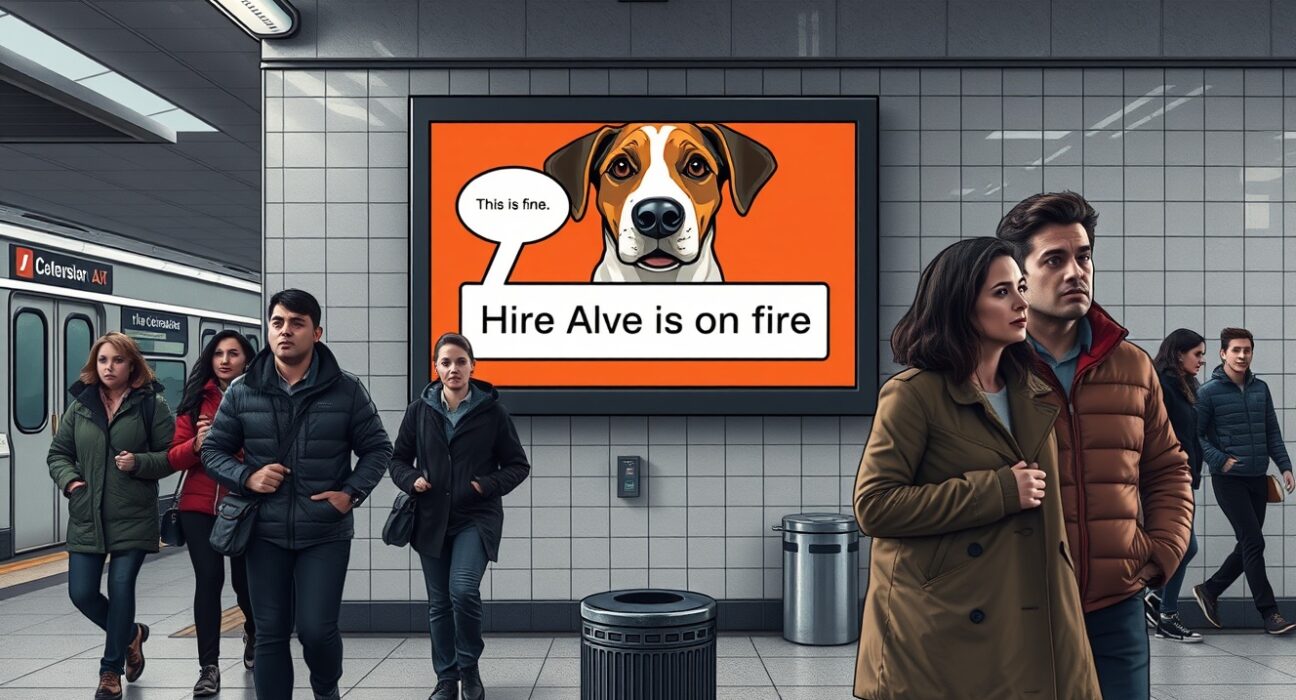
KC Green, the artist behind the viral ‘This is fine’ meme, has publicly accused AI startup Artisan of stealing his artwork for a new subway advertisement. The ad, spotted in a transit station, modifies Green’s iconic comic to promote an AI sales tool. This incident reignites debates about intellectual property and AI-generated content in 2026.
The ‘This is fine’ Meme and Its Creator
KC Green first published ‘This is fine’ in 2013 on his webcomic ‘Gunshow.’ The comic features a smiling dog sitting in a burning room, declaring everything is fine. It quickly became a staple of internet culture, used to express denial or absurdity in chaotic situations. Green has since turned the comic into a video game, but he has not licensed it for commercial use by AI companies.
The meme’s widespread recognition makes it a prime target for unauthorized use. Green’s frustration highlights a growing tension between original creators and AI startups that often train on or directly copy existing works without permission.
Artisan’s Controversial Ad Campaign
Artisan, an AI sales automation company, launched a subway ad featuring Green’s dog. The dog’s speech bubble now reads, ‘[M]y pipeline is on fire,’ and a message below urges commuters to ‘Hire Ava the AI BDR.’ Green discovered the ad through a Bluesky post and stated he never agreed to its use. He called it ‘stolen like AI steals’ and encouraged followers to vandalize the ad if seen.
This is not Artisan’s first provocative campaign. Earlier in 2026, the company placed billboards telling businesses to ‘Stop hiring humans.’ Founder and CEO Jaspar Carmichael-Jack defended that message, saying it targeted ‘a category of work,’ not people. The new ad continues this aggressive marketing strategy, but now faces direct legal threats.
Artisan’s Response and Legal Implications
When contacted by Bitcoin World, Artisan initially said it ‘has a lot of respect for KC Green’ and was reaching out directly. In a follow-up, the company claimed it had scheduled a conversation with him. However, Green told Bitcoin World he is now ‘looking into legal representation.’ He expressed frustration at having to ‘try my hand at the American court system’ instead of creating art.
This case echoes previous artist-led lawsuits. Cartoonist Matt Furie sued Infowars for using his character Pepe the Frog, eventually settling. Legal experts note that while memes often spread freely, commercial use without permission can constitute copyright infringement. Green’s case may set a precedent for how AI companies handle viral internet art.
The Broader Impact on AI and Copyright
The Artisan controversy is part of a larger pattern. Many AI startups scrape online content, including art, to train models or create marketing materials. Artists argue this amounts to theft, as their work is used without compensation or consent. In 2025, several class-action lawsuits were filed against AI image generators, though few have reached verdicts.
Green’s situation is distinct because Artisan directly copied his specific artwork, not just a style. This makes the infringement claim stronger. If Green pursues legal action, the outcome could influence how AI companies source material for ads. It may also push platforms to better protect creator rights.
Timeline of Events
- 2013: KC Green publishes ‘This is fine’ in his webcomic ‘Gunshow.’
- 2023-2025: The meme spreads globally, used in countless contexts.
- May 2026: Artisan launches a subway ad featuring an altered version of the meme.
- May 3, 2026: Green posts on Bluesky, calling the ad theft and urging vandalism.
- May 2026: Bitcoin World contacts Artisan; the company expresses respect and plans to speak with Green.
- May 2026: Green tells Bitcoin World he is seeking legal representation.
Expert Perspectives on AI Art Theft
Intellectual property lawyers note that copyright law protects specific expressions, not ideas. Green’s comic is a fixed, original work, giving him legal standing. However, proving damages from a single ad can be challenging. Some experts suggest Green may seek a licensing fee or an injunction to remove the ads.
Tech ethicists also weigh in. They argue that AI startups often ignore creator rights in their rush to market. ‘These no-thought A.I. losers aren’t untouchable,’ Green said, reflecting a sentiment shared by many artists. The case highlights the need for clearer guidelines on AI-generated content and commercial use of memes.
Conclusion
KC Green’s accusation against Artisan underscores the ongoing conflict between artists and AI companies. The ‘This is fine’ meme, a symbol of internet resilience, now represents a legal battle over ownership. As Green explores his options, the outcome may reshape how AI startups approach advertising and copyright. For now, the dog sits smiling, but the flames around it are very real.
FAQs
Q1: What is the ‘This is fine’ meme?
A: It is a comic by KC Green showing a smiling dog in a burning room, saying ‘This is fine.’ It symbolizes denial in absurd situations.
Q2: What did Artisan do with the meme?
A: Artisan used an altered version in a subway ad, changing the text to promote its AI sales tool without Green’s permission.
Q3: Is using a meme in an ad legal?
A: Commercial use without permission can be copyright infringement. Green is considering legal action.
Q4: Has Artisan responded?
A: Yes, Artisan said it respects Green’s work and has scheduled a conversation with him.
Q5: What could happen next?
A: Green may sue for copyright infringement. A settlement or court ruling could set a precedent for AI art use.
Q6: How does this affect other artists?
A: It highlights the need for better protections against AI theft and may encourage more creators to take legal action.
Disclaimer: The information provided is not trading advice, Bitcoinworld.co.in holds no liability for any investments made based on the information provided on this page. We strongly recommend independent research and/or consultation with a qualified professional before making any investment decisions.