

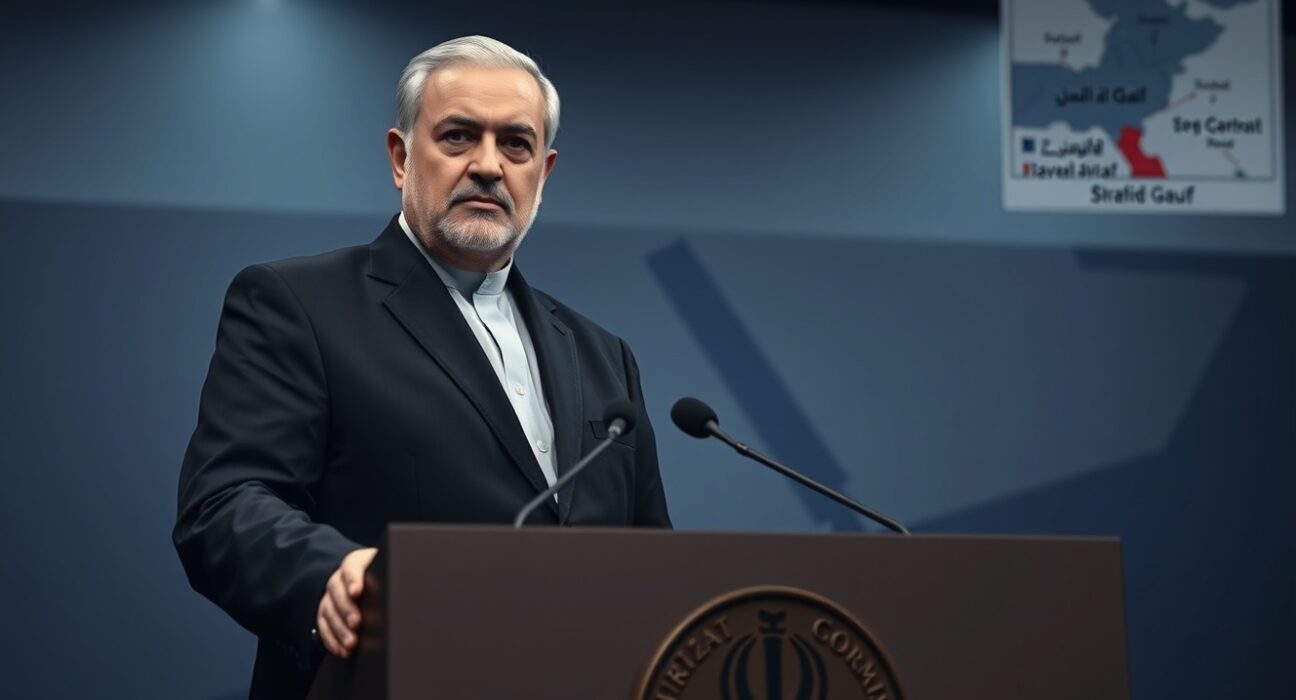
Iran’s top security official, Admiral Ali Azizi, has issued a stark warning: any US interference in the Strait of Hormuz will be considered a direct violation of the existing ceasefire. This statement escalates tensions in a region already fraught with geopolitical risk. The Strait of Hormuz is a critical chokepoint for global oil supplies. Azizi’s remarks come amid heightened US naval presence in the Persian Gulf. He specifically cited recent US patrols as a provocation.
Azizi’s Warning and the Ceasefire Context
Admiral Azizi serves as the deputy chief of Iran’s Armed Forces for Political Affairs. He made the statement during a televised address on state media. He argued that the 2023 ceasefire agreement, brokered by China, includes implicit clauses about regional security. According to Azizi, any unilateral US military action in the Strait constitutes a breach. He warned of “unpredictable consequences” if the US continues its current posture. This warning directly links US naval movements to the fragile truce.
The ceasefire in question ended direct hostilities between Iran and its regional rivals. It also de-escalated tensions with the US following a series of drone and missile exchanges. However, the agreement did not formally include the US as a signatory. Iran now uses this ambiguity to frame US actions as violations. Azizi’s language is deliberately legalistic. He frames the issue as a matter of international law and treaty obligations.
What Does the Ceasefire Actually Cover?
The 2023 ceasefire primarily halted military strikes between Iran and US-backed forces in Iraq and Syria. It also reduced tit-for-tat attacks on commercial shipping. The Strait of Hormuz was not explicitly mentioned in the text. However, Iran argues that the spirit of the agreement requires all parties to avoid provocative actions. Azizi’s interpretation expands the ceasefire’s scope significantly. This creates a new diplomatic flashpoint.
- Ceasefire Scope: Originally limited to Iraq, Syria, and direct naval engagements.
- Iran’s Position: US naval patrols in Hormuz are a “hostile act” violating the truce.
- US Position: Freedom of navigation is a non-negotiable right under international law.
- Risk: Miscalculation could trigger a direct military confrontation.
The Strategic Importance of the Strait of Hormuz
The Strait of Hormuz is one of the world’s most strategic maritime chokepoints. Approximately 20% of all global oil consumption passes through its narrow waters. This includes crude from Saudi Arabia, Iraq, Kuwait, and the UAE. Any disruption directly impacts global energy prices. Iran has historically threatened to close the strait during periods of tension. Azizi’s warning suggests this option remains on the table.
Global oil markets reacted immediately to the news. Brent crude futures rose by 2.3% within hours of the statement. Analysts at Goldman Sachs noted that the risk premium on oil is now at its highest level since 2022. The market is pricing in a potential supply disruption. Insurance premiums for tankers transiting the strait have also increased. This adds a direct economic cost to the geopolitical tension.
Historical Precedents for Hormuz Threats
Iran has used the Hormuz threat repeatedly over the past four decades. During the Iran-Iraq War, both sides attacked oil tankers. In 2012, Iran threatened to close the strait in response to EU oil sanctions. The US responded by deploying additional naval assets. In 2019, Iran seized several tankers after the US withdrew from the nuclear deal. Each time, the crisis de-escalated without a full closure. However, the current context is different.
The difference now lies in the ceasefire framework. Azizi’s warning is not just a military threat. It is a legal and diplomatic argument. By framing US actions as a ceasefire violation, Iran seeks international sympathy. It also tries to isolate the US diplomatically. This is a sophisticated strategy that blends hard power with legal maneuvering.
Expert Analysis: What Azizi’s Statement Really Means
Dr. Fatima al-Mansouri, a Gulf security expert at the London School of Economics, provides context. She states: “Azizi is testing the boundaries of the ceasefire. He wants to see how far the US will go before reacting. This is classic Iranian brinkmanship.” She adds that the warning is also directed at regional allies. Iran wants to reassure China and Russia that it remains committed to the truce. At the same time, it signals strength to domestic audiences.
Military analysts note that Iran’s naval capabilities have improved. They now possess fast attack craft, anti-ship missiles, and drones. These assets can disrupt shipping without a full blockade. Azizi’s warning may be a precursor to more aggressive patrols. The US Navy’s Fifth Fleet remains on high alert. Both sides are engaged in a dangerous game of signaling.
Timeline of Key Events
| Date | Event |
|---|---|
| March 2023 | China brokers a ceasefire between Iran and Saudi Arabia. |
| June 2024 | US increases naval patrols in the Persian Gulf. |
| January 2025 | Iran seizes a tanker near the Strait of Hormuz. |
| February 2025 | Azizi issues the ceasefire violation warning. |
Impact on Global Energy Markets
The immediate impact is on oil prices. But the longer-term effect is on energy security. Asian economies, particularly Japan, South Korea, and India, rely heavily on Hormuz transit. They import the majority of their crude oil through the strait. Any disruption would force them to draw on strategic reserves. It would also accelerate the search for alternative supply routes.
The US is now a net exporter of oil. This reduces its direct vulnerability. However, global oil prices are set by the marginal barrel. A Hormuz disruption would raise prices for everyone. This includes American consumers at the pump. The Biden administration (and any successor) must balance deterrence with economic stability. Azizi’s warning directly challenges that balance.
Alternative Routes and Strategic Options
There are few alternatives to the Strait of Hormuz. The UAE operates a pipeline that bypasses the strait. It can carry about 1.5 million barrels per day. Saudi Arabia also has a pipeline to the Red Sea. However, these routes have limited capacity. They cannot replace the 17 million barrels that transit the strait daily. The only long-term solution is diversification of energy sources. This takes years and massive investment.
Military options are equally limited. A full blockade would require a massive naval operation. The US could escort tankers through the strait. This would risk direct engagement with Iranian forces. Both sides have shown restraint in the past. But the risk of miscalculation is now higher than ever.
International Reactions and Diplomatic Fallout
The United Nations called for restraint. A spokesperson stated that any unilateral action threatening freedom of navigation is unacceptable. China, the ceasefire broker, urged both sides to respect the agreement. Russia offered to mediate but was met with skepticism. The European Union expressed concern over rising oil prices. It called for immediate dialogue.
Gulf states are in a difficult position. They depend on the strait for their own exports. But they also rely on US security guarantees. Saudi Arabia and the UAE have not publicly commented. Privately, they are urging Washington to avoid escalation. They fear a conflict would devastate their economies. Iran’s warning is also a message to them: do not side with the US.
Azizi’s Domestic Political Calculus
Admiral Azizi is a hardliner within the Iranian establishment. His statement serves multiple domestic purposes. It rallies nationalist sentiment. It also puts pressure on President Raisi’s more moderate faction. By framing the US as a ceasefire violator, Azizi strengthens his own position. He argues that Iran cannot trust American promises. This makes future negotiations more difficult.
The warning also distracts from internal economic problems. Iran faces high inflation and unemployment. A foreign policy crisis shifts public attention. It also justifies increased military spending. Azizi’s rhetoric is carefully calibrated. It raises tensions without crossing the line into open conflict.
What Happens Next: Scenarios and Predictions
Three scenarios are possible. The first is de-escalation. The US could reduce patrols temporarily. Iran would claim victory. The ceasefire would hold. This is the most likely outcome in the short term. Both sides have incentives to avoid war.
The second scenario is a limited confrontation. An Iranian fast boat could harass a US warship. The US would respond with warning shots. No casualties would occur. Both sides would then back down. This has happened before. It is a dangerous but familiar pattern.
The third scenario is a major escalation. A US or Iranian vessel could be hit. This would trigger a cycle of retaliation. Oil prices would spike. Global markets would panic. Diplomatic channels would collapse. This is the least likely but most consequential scenario. Azizi’s warning makes it more possible than it was a week ago.
Conclusion
Iran’s Azizi warning that US interference in Hormuz violates the ceasefire is a significant escalation. It redefines the terms of the 2023 truce. It directly challenges US naval presence in the Gulf. The warning has immediate effects on oil markets and regional stability. Experts view it as a calculated test of American resolve. The coming weeks will determine whether this leads to de-escalation or confrontation. The world watches as tensions rise in the world’s most important waterway.
FAQs
Q1: What exactly did Admiral Azizi say about the ceasefire?
A1: He stated that any US military interference in the Strait of Hormuz constitutes a direct violation of the 2023 ceasefire agreement. He warned of unpredictable consequences if the US continues its current patrols.
Q2: Is the Strait of Hormuz really that important?
A2: Yes. About 20% of the world’s oil passes through the strait. It is the most critical chokepoint for global energy supplies. Any disruption causes immediate price spikes.
Q3: Did the 2023 ceasefire actually cover the Strait of Hormuz?
A3: No. The ceasefire text did not explicitly mention the strait. Iran is now interpreting the spirit of the agreement to include it. This is a new and controversial expansion of the ceasefire’s scope.
Q4: How did oil markets react to Azizi’s warning?
A4: Brent crude rose by 2.3% within hours. Analysts say the risk premium is now at its highest since 2022. Insurance costs for tankers also increased.
Q5: Could this lead to a war between the US and Iran?
A5: It is unlikely but not impossible. Both sides have strong incentives to avoid direct war. However, the risk of miscalculation is higher now. A minor incident could spiral out of control.
Q6: What can other countries do to reduce the risk?
A6: Diplomatic pressure on both sides is essential. China, as the ceasefire broker, has a key role. Alternative energy routes and strategic reserves can mitigate economic impacts. But there is no quick fix for the underlying tension.
Disclaimer: The information provided is not trading advice, Bitcoinworld.co.in holds no liability for any investments made based on the information provided on this page. We strongly recommend independent research and/or consultation with a qualified professional before making any investment decisions.
