

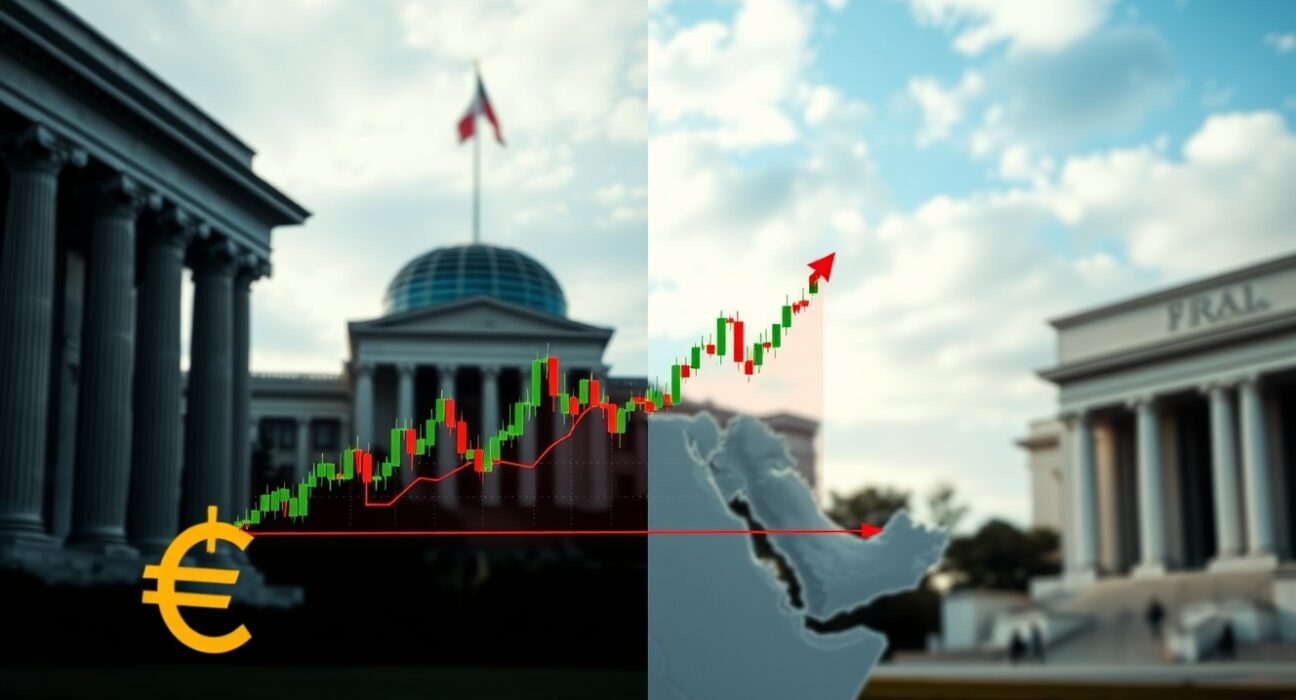
EUR/USD edges higher above 1.1700 during early European trading on Wednesday. This movement reflects growing optimism surrounding a potential peace deal between the United States and Iran. Traders now focus on the implications for global energy markets and currency stability.
EUR/USD Edges Higher: Market Context and Drivers
The euro-dollar pair broke through the 1.1700 resistance level for the first time in two weeks. Investors interpret this as a direct response to diplomatic signals from Washington and Tehran. Reports indicate that both sides have made significant progress in indirect negotiations.
A peace deal would likely lift sanctions on Iranian oil exports. This could increase global supply and lower energy prices. Lower energy costs typically benefit the eurozone, which imports a substantial portion of its energy. Consequently, the euro gains strength against the dollar.
The US dollar index (DXY) dropped 0.3% on the day, further supporting the EUR/USD rally. The dollar often weakens when geopolitical tensions ease, as safe-haven demand declines. This dynamic creates a favorable environment for the euro.
Geopolitical Risk Premium Declines
Analysts at Commerzbank note that the market has priced in a reduced risk premium. They argue that a US-Iran peace deal would remove a key source of instability in the Middle East. This would reduce volatility in oil prices and support risk-on sentiment.
Historical data shows that EUR/USD often rallies during periods of de-escalation. For example, the pair surged 2.5% in 2015 after the Joint Comprehensive Plan of Action (JCPOA) was announced. A similar pattern is now unfolding.
Technical Analysis: Key Levels and Support
From a technical perspective, EUR/USD edges higher above the 50-day moving average (1.1680). The next resistance level sits at 1.1750, followed by 1.1800. Support remains at 1.1650 and 1.1600.
The Relative Strength Index (RSI) stands at 58, indicating bullish momentum without overbought conditions. This suggests room for further upside. Traders should watch for a close above 1.1720 to confirm the breakout.
Volume data shows increased buying pressure during the London session. This aligns with institutional repositioning ahead of potential deal announcements. Market participants expect volatility to remain elevated.
Impact of US-Iran Peace Deal on Forex Markets
A comprehensive peace agreement would have several implications for forex markets. First, it would reduce the dollar’s safe-haven appeal. Second, it would boost currencies of energy-importing nations, including the euro. Third, it could weaken commodity-linked currencies like the Canadian dollar and Norwegian krone.
The table below summarizes potential impacts:
| Currency Pair | Expected Direction | Key Driver |
|---|---|---|
| EUR/USD | Bullish | Lower energy costs, risk-on sentiment |
| USD/JPY | Bullish | Risk appetite, higher yields |
| GBP/USD | Bullish | Risk-on, weaker dollar |
| USD/CAD | Bearish | Higher oil prices (if sanctions remain) |
However, traders must remain cautious. Negotiations can collapse unexpectedly. Any negative headlines could reverse gains quickly. Position sizing and risk management remain critical.
Expert Opinions on the Deal’s Probability
Political analysts at the International Crisis Group estimate a 60% chance of a preliminary agreement within the next month. They cite recent backchannel communications as evidence of progress. However, they warn that domestic political pressures in both countries could derail talks.
Former US diplomat Dr. James F. Collins emphasizes that trust remains low. He states, “Both sides need concrete verification mechanisms. Without them, any deal is fragile.” This uncertainty keeps some investors on the sidelines.
Broader Economic Implications for the Eurozone
Beyond forex, a US-Iran peace deal would benefit the eurozone economy. Lower oil prices reduce production costs for businesses. They also increase disposable income for consumers. This could boost GDP growth and support the European Central Bank’s policy normalization.
The ECB has signaled a potential rate hike in 2025. A stronger euro and lower inflation could influence the timing. Markets currently price in a 25-basis-point increase in September. A peace deal might accelerate this timeline.
Conversely, a weaker dollar makes US exports more competitive. This could pressure eurozone exporters. However, the net effect is likely positive for the single currency.
Timeline of Recent Diplomatic Developments
Key events over the past week include:
- Monday: Iranian Foreign Minister signals willingness to resume talks.
- Tuesday: US State Department confirms indirect negotiations in Oman.
- Wednesday: EUR/USD edges higher above 1.1700 on deal optimism.
This rapid progression suggests that both sides are eager to reach an agreement. The humanitarian situation in Iran and the upcoming US presidential election provide incentives for a breakthrough.
Conclusion
EUR/USD edges higher above 1.1700 as hopes for a US-Iran peace deal reshape market dynamics. The pair benefits from reduced geopolitical risk, lower energy price expectations, and a weaker dollar. While technical indicators support further gains, traders must monitor diplomatic developments closely. A successful deal could propel EUR/USD toward 1.1800, while any setbacks may trigger a sharp reversal. The coming days will be crucial for the currency pair’s direction.
FAQs
Q1: What is the main reason for EUR/USD edges higher above 1.1700?
A1: The primary driver is growing optimism about a potential peace deal between the US and Iran. This reduces geopolitical risk and lowers energy costs, supporting the euro against the dollar.
Q2: How does a US-Iran peace deal affect the forex market?
A2: It typically weakens the US dollar as safe-haven demand declines. It also boosts currencies of energy-importing nations like the eurozone. The overall effect is a bullish bias for EUR/USD.
Q3: What are the key technical levels for EUR/USD?
A3: Immediate resistance is at 1.1750 and 1.1800. Support lies at 1.1650 and 1.1600. The 50-day moving average at 1.1680 provides dynamic support.
Q4: Could the peace deal negotiations fail?
A4: Yes, negotiations remain fragile. Domestic political pressures and lack of trust could derail talks. Any negative headlines would likely reverse EUR/USD gains quickly.
Q5: What other currencies are affected by the US-Iran deal?
A5: The Japanese yen and British pound also benefit from risk-on sentiment. The Canadian dollar and Norwegian krone may weaken if oil prices fall due to increased supply.
Q6: How should traders position themselves?
A6: Traders should consider long positions on EUR/USD with tight stop-losses below 1.1650. Monitoring news headlines is essential. Diversifying across currency pairs can reduce risk.
Disclaimer: The information provided is not trading advice, Bitcoinworld.co.in holds no liability for any investments made based on the information provided on this page. We strongly recommend independent research and/or consultation with a qualified professional before making any investment decisions.
