

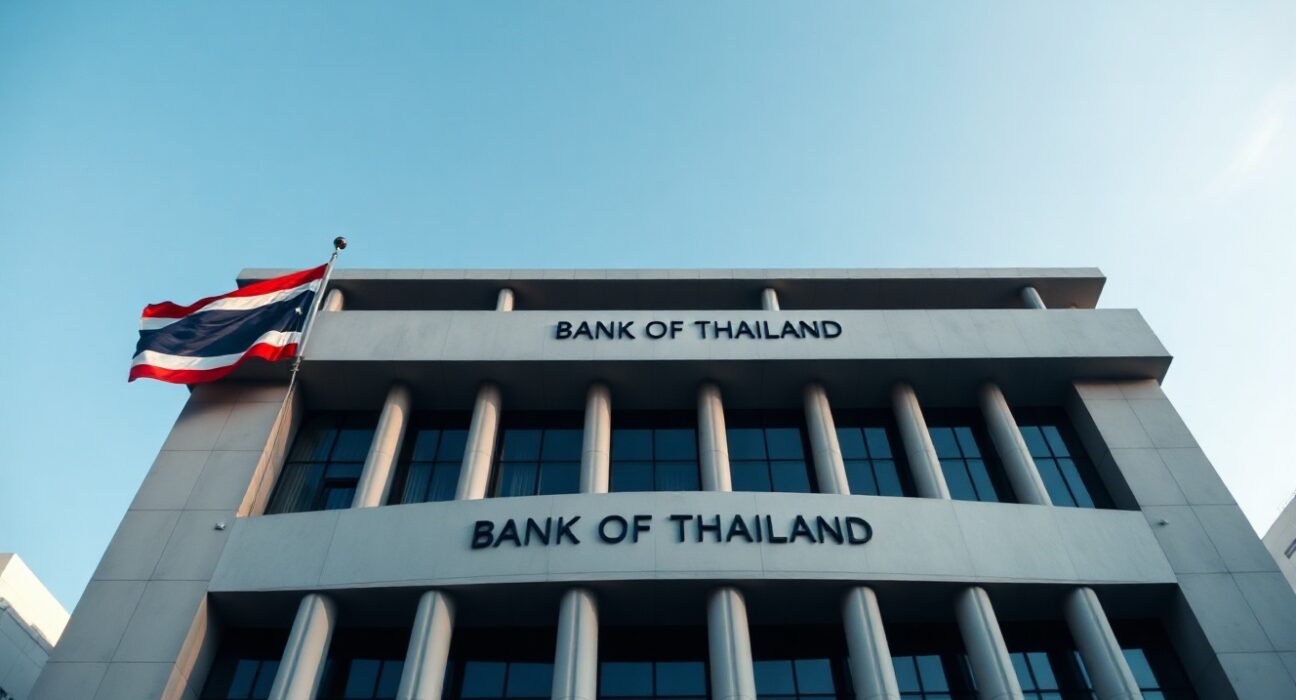
Thailand’s recent inflationary pressures are being driven primarily by cost-push factors rather than demand-side overheating, according to a new analysis from UOB. The assessment comes as the Bank of Thailand (BoT) maintains its policy rate at 2.00%, signaling a cautious approach to monetary policy amid a still-fragile economic recovery.
UOB: Cost-Push Inflation Dominates
In a research note published this week, UOB economists highlighted that Thailand’s headline inflation has been influenced by rising energy and food prices, as well as supply chain disruptions. These cost-push elements, the analysts argue, are largely outside the BoT’s direct control and do not necessarily warrant a tightening cycle.
The BoT’s Monetary Policy Committee (MPC) voted unanimously to keep the policy rate unchanged at its latest meeting, a decision widely expected by markets. The central bank has maintained that the current rate remains appropriate to support economic growth while keeping inflation within its target range of 1% to 3%.
Economic Recovery Still Uneven
Thailand’s economy has shown signs of improvement, driven by a rebound in tourism and private consumption. However, the recovery remains uneven, with export-oriented sectors and small businesses still facing headwinds from global demand weakness and elevated input costs.
UOB’s analysis suggests that the BoT is likely to remain on hold for the foreseeable future, balancing the need to contain inflation expectations against the risk of stifling growth. The bank expects headline inflation to moderate in the coming months as base effects fade and supply-side pressures ease, but upside risks remain from potential energy price volatility and fiscal stimulus measures.
What This Means for Investors and Consumers
For consumers, the steady rate environment means borrowing costs for mortgages and personal loans are unlikely to rise in the near term. However, cost-push inflation continues to erode purchasing power, particularly for lower-income households that spend a larger share of their income on food and energy.
For investors, the BoT’s cautious stance reinforces a view that Thai bonds may remain attractive for carry trades, while the baht could face modest depreciation pressure if the U.S. dollar strengthens further. Equity markets may benefit from the accommodative policy backdrop, but stock selection should favor domestic demand plays over export-sensitive sectors.
Conclusion
UOB’s assessment underscores the complexity of Thailand’s current macroeconomic environment. While cost-push inflation presents a challenge, the BoT’s decision to hold rates steady reflects a deliberate strategy to support growth without prematurely tightening financial conditions. The path forward will depend on how global commodity prices, domestic demand, and geopolitical risks evolve in the coming quarters.
FAQs
Q1: What is cost-push inflation?
Cost-push inflation occurs when overall prices rise due to increases in the cost of production inputs, such as raw materials, energy, or labor. Unlike demand-pull inflation, it is not driven by excess consumer spending.
Q2: Why did the Bank of Thailand keep interest rates unchanged?
The BoT kept the rate at 2.00% to support economic recovery while managing inflation. The MPC judged that the current rate is appropriate given that inflation is primarily cost-push and growth remains uneven.
Q3: How does the BoT’s decision affect the Thai baht?
A steady policy rate can make the baht more predictable for investors, but global factors like U.S. interest rate expectations and trade flows will also influence its direction. UOB’s analysis suggests the baht may face modest depreciation pressure if the dollar strengthens.
Disclaimer: The information provided is not trading advice, Bitcoinworld.co.in holds no liability for any investments made based on the information provided on this page. We strongly recommend independent research and/or consultation with a qualified professional before making any investment decisions.
