

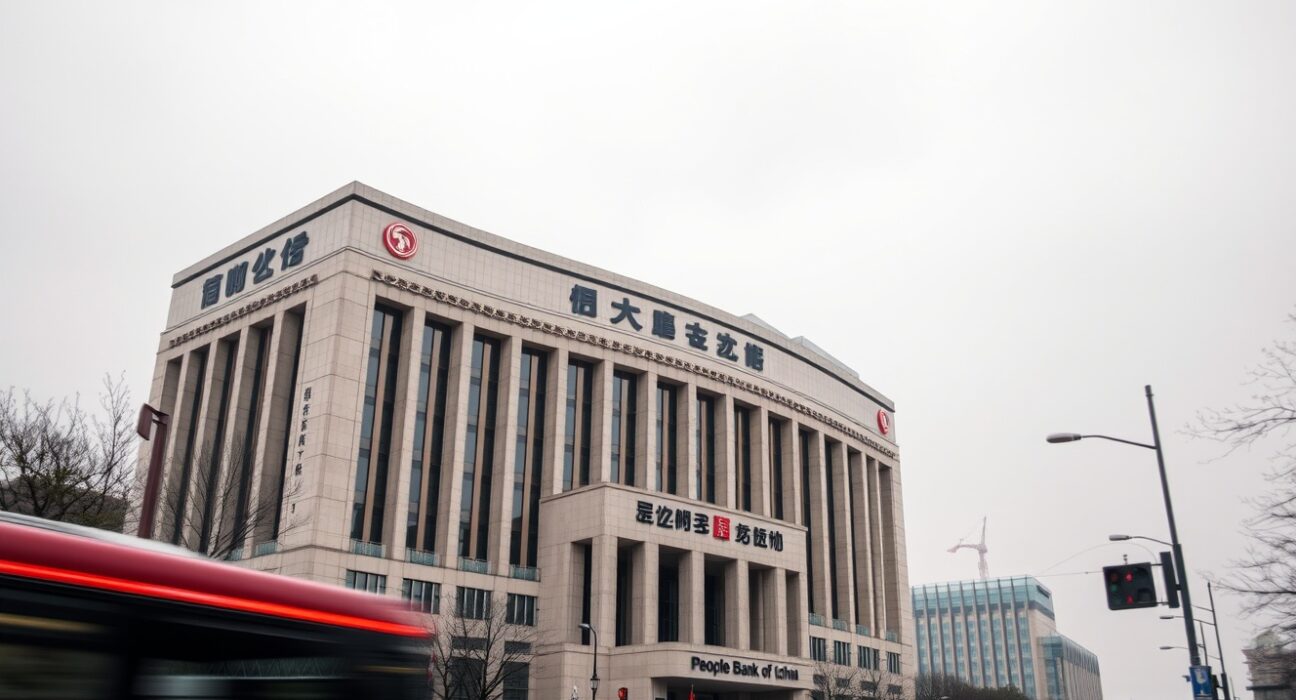
China’s recent reflationary trends are reducing the likelihood of imminent interest rate cuts by the People’s Bank of China (PBoC), according to a new analysis from ING. The report suggests that rising consumer prices and a stabilizing economy are giving policymakers room to hold off on further monetary easing.
What Is Driving the Reflation Narrative?
China’s economy has shown signs of recovering from a prolonged period of deflationary pressure. Recent data indicates a modest uptick in the Consumer Price Index (CPI), driven by higher food and energy costs, as well as improved domestic demand. This shift has led analysts to reassess the trajectory of monetary policy.
ING’s analysis highlights that the PBoC is likely to prioritize price stability and financial system health over aggressive stimulus. The central bank has already implemented several rounds of rate cuts and reserve requirement ratio (RRR) reductions over the past year, but further moves may now be postponed as inflation risks emerge.
Implications for Investors and Markets
The potential delay in rate cuts has significant implications for Chinese bond markets, the yuan exchange rate, and global investors exposed to Chinese assets. A hold on easing could support the yuan by narrowing interest rate differentials with the US dollar, but it may also slow the pace of economic recovery in sectors reliant on cheap credit.
Equity markets, particularly real estate and small-cap stocks, could face headwinds if liquidity conditions tighten. However, ING notes that the overall macroeconomic outlook remains stable, and the PBoC retains the flexibility to act if growth falters.
What This Means for the Global Economy
China’s monetary policy stance has ripple effects across emerging markets and global supply chains. A delay in Chinese rate cuts could reduce capital outflows from China, stabilizing regional currencies. Conversely, it may also dampen commodity demand if Chinese industrial activity slows.
The analysis comes as central banks worldwide grapple with balancing inflation control against growth support. China’s unique position—emerging from deflation while facing moderate inflation—offers a case study in nuanced policy management.
Conclusion
ING’s report underscores a key shift in China’s economic narrative: reflation is gaining traction, and the PBoC is likely to adopt a wait-and-see approach before cutting rates further. Investors should monitor upcoming CPI and industrial production data for confirmation of this trend. The central bank’s next moves will depend on whether inflation remains contained or accelerates beyond targets.
FAQs
Q1: Why is China experiencing reflation now?
A1: Reflation is driven by recovering domestic demand, rising food and energy prices, and government stimulus measures that have boosted consumer spending after a period of deflation.
Q2: How might delayed PBoC cuts affect Chinese stocks?
A2: Sectors sensitive to interest rates, such as real estate and small-cap companies, may face pressure if borrowing costs remain higher. However, stable monetary policy could benefit financial and export-oriented stocks.
Q3: What should global investors watch for next?
A3: Key indicators include monthly CPI and Producer Price Index (PPI) data, PBoC policy statements, and loan prime rate (LPR) announcements. Any signs of sustained inflation above 3% could further delay easing.
Disclaimer: The information provided is not trading advice, Bitcoinworld.co.in holds no liability for any investments made based on the information provided on this page. We strongly recommend independent research and/or consultation with a qualified professional before making any investment decisions.
