

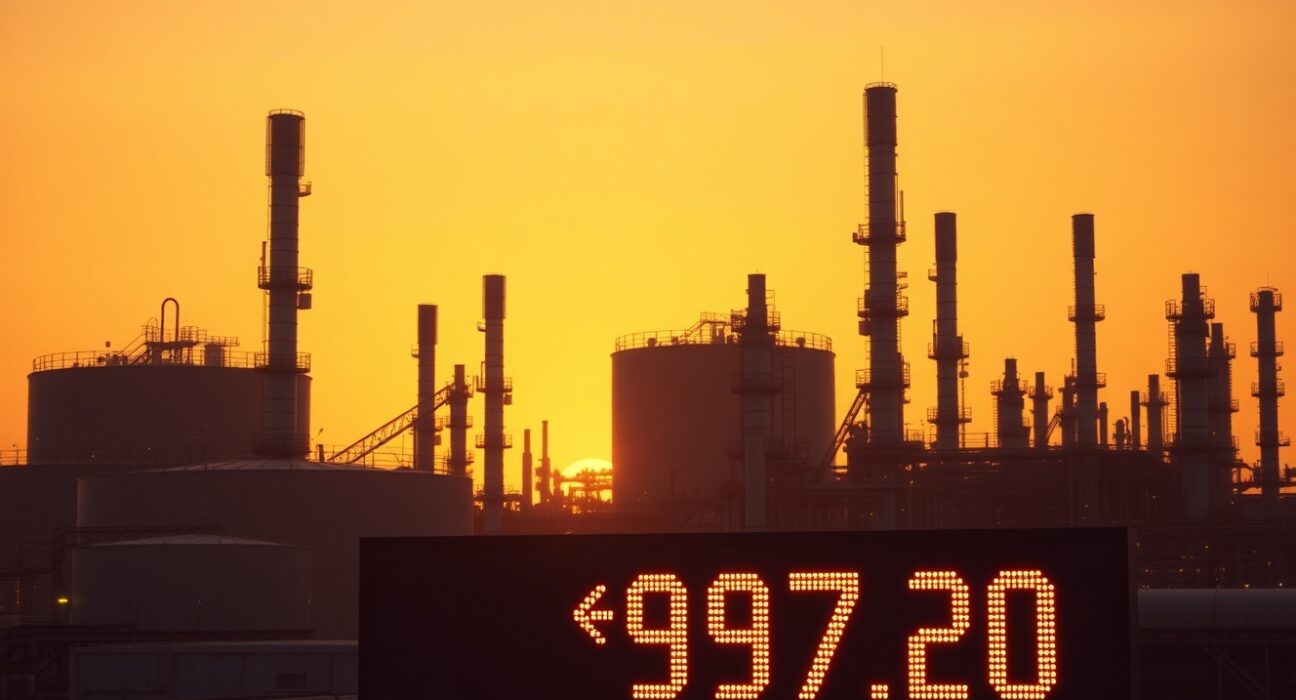
West Texas Intermediate (WTI) crude oil futures edged lower on Tuesday, correcting toward the $97.20 per barrel mark as renewed concerns over global demand offset earlier gains. The pullback comes as traders closely monitor the upcoming meeting between former U.S. President Donald Trump and Chinese President Xi Jinping, a high-stakes diplomatic engagement that could reshape trade and energy flows between the world’s two largest economies.
Demand Concerns Resurface
The correction in WTI prices reflects a broader market sentiment that has turned cautious in recent sessions. While supply-side disruptions — including ongoing OPEC+ production cuts and geopolitical tensions in the Middle East — have provided a floor under prices, the demand outlook has become increasingly uncertain. Slowing economic data from China, the world’s largest crude importer, and mixed signals from the U.S. economy have weighed on investor confidence. Traders are also digesting the latest inventory data from the American Petroleum Institute, which showed a modest build in crude stocks, further dampening bullish momentum.
Trump-Xi Meeting in Focus
The impending face-to-face talks between Trump and Xi are the dominant geopolitical variable for energy markets this week. Market participants are assessing the potential outcomes of the meeting, which could range from a renewed trade truce to the imposition of additional tariffs. A constructive dialogue could ease trade tensions, potentially boosting economic activity and oil demand. Conversely, a breakdown in talks or heightened rhetoric could trigger risk-off sentiment, pressuring crude prices further. Analysts caution that the meeting’s outcome is highly uncertain, and any headlines from the discussions could spark sharp intraday volatility in WTI and Brent contracts.
Market Implications for Traders
For traders and energy sector investors, the current price action underscores the delicate balance between supply constraints and demand fragility. The $97 level has emerged as a near-term technical support zone, with a break below potentially opening the door to a test of the $95 area. On the upside, resistance is seen near the $100 psychological barrier. The Trump-Xi meeting represents a binary risk event: a positive outcome could propel WTI back above $100, while a negative result could accelerate the correction. Broader macroeconomic factors, including central bank policy decisions and global manufacturing data, will also play a role in shaping the demand narrative in the coming weeks.
Conclusion
WTI crude’s correction to near $97.20 reflects the market’s cautious stance as it awaits clarity from the Trump-Xi meeting. While supply-side fundamentals remain supportive, demand concerns are tempering upside momentum. Traders should prepare for heightened volatility as diplomatic developments unfold, with the $95–$100 range likely to define near-term price action. The broader trend will depend on whether geopolitical and economic signals align to support a sustained recovery in global oil demand.
FAQs
Q1: Why is WTI crude oil correcting near $97.20?
The correction is driven by renewed concerns over global oil demand, particularly from China and the U.S., as well as uncertainty ahead of the Trump-Xi meeting. Technical selling after recent gains also contributed to the pullback.
Q2: How could the Trump-Xi meeting affect oil prices?
The meeting could lead to either a de-escalation of trade tensions, which would support oil demand and prices, or increased friction, which could dampen economic growth and reduce crude consumption. The outcome is highly uncertain and likely to cause volatility.
Q3: What are the key support and resistance levels for WTI crude?
Near-term support is around $95 per barrel, with resistance at the $100 psychological level. A break above $100 could signal renewed bullish momentum, while a drop below $95 may accelerate selling.
Disclaimer: The information provided is not trading advice, Bitcoinworld.co.in holds no liability for any investments made based on the information provided on this page. We strongly recommend independent research and/or consultation with a qualified professional before making any investment decisions.
