

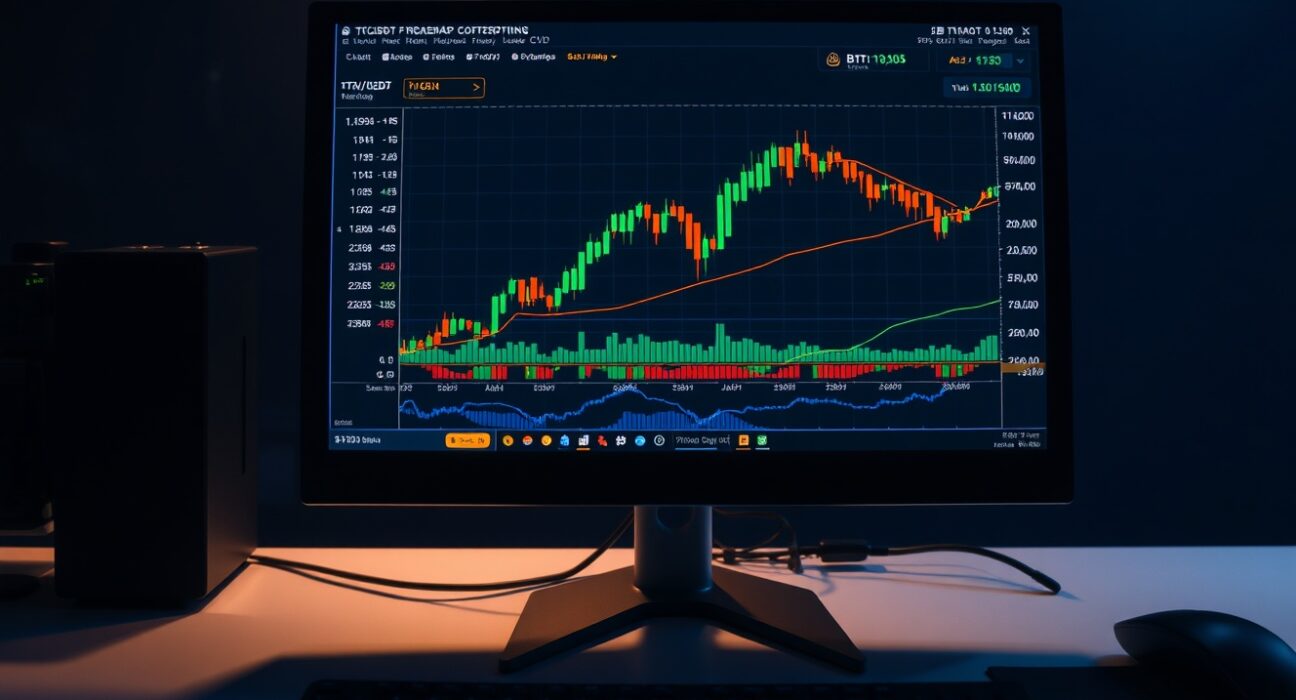
The Spot Cumulative Volume Delta (CVD) chart is a tool used by cryptocurrency traders to analyze order book activity for the BTC/USDT spot pair. It combines a Volume Heatmap with a CVD indicator to provide insights into buying and selling pressure at different price levels. Understanding this chart can help traders identify potential support and resistance zones and gauge market sentiment.
What the Volume Heatmap Shows
The Volume Heatmap tracks the volume of trades executed at specific price levels over time. The background color brightens when the price remains in a certain range for an extended period or moves significantly through that level. These brighter areas often indicate where large amounts of volume have been traded, which can act as potential support or resistance zones. Traders watch these levels closely for potential price reactions.
Interpreting the CVD Indicator
The CVD indicator displays buy and sell orders categorized by trade size. As buy orders increase, the corresponding colored line rises. The yellow line represents orders between $100 and $1,000, typically associated with retail traders. The brown line tracks large orders between $1 million and $10 million, often attributed to institutional activity. Divergences between these lines can signal shifts in market dynamics.
Why This Matters for Traders
By combining the Volume Heatmap with the CVD indicator, traders can assess whether buying or selling pressure is concentrated at specific price levels. For example, if the CVD shows increasing buy orders while the price approaches a bright area on the heatmap, it may suggest strong support. Conversely, rising sell orders near a bright area could indicate resistance. This information can inform entry and exit decisions.
Conclusion
The Spot CVD chart offers a nuanced view of order book activity for BTC/USDT. While no indicator is infallible, understanding how to read the Volume Heatmap and CVD lines can provide traders with a clearer picture of market structure and potential turning points. As with any trading tool, it is best used in conjunction with other forms of analysis.
FAQs
Q1: What does CVD stand for in trading?
CVD stands for Cumulative Volume Delta. It measures the net difference between buying and selling volume over time, helping traders gauge order flow.
Q2: How is the Volume Heatmap different from a regular volume indicator?
A Volume Heatmap shows volume at specific price levels over a period, while a standard volume indicator typically shows total volume per time interval. The heatmap provides a visual representation of where trading activity is concentrated.
Q3: Can the Spot CVD chart be used for other trading pairs?
Yes, while the chart described here focuses on BTC/USDT, the same principles apply to other spot trading pairs with sufficient liquidity.
Disclaimer: The information provided is not trading advice, Bitcoinworld.co.in holds no liability for any investments made based on the information provided on this page. We strongly recommend independent research and/or consultation with a qualified professional before making any investment decisions.
